Real-Time 3D at SIGGRAPH 2026: What the RTL Best in Show Win Means for the Industry
Quick Summary
- SIGGRAPH 2026 Real-Time Live! awarded Best in Show to a system that generates textured, rigged, and animated 3D assets from audience-submitted images in real time, signaling that real-time 3D generation has reached production viability.
- The eight selected demonstrations spanned AI generation, geometry compression, physics simulation, and robotic performance, with the 3D generation winner representing the strongest convergence of AI and real-time graphics.
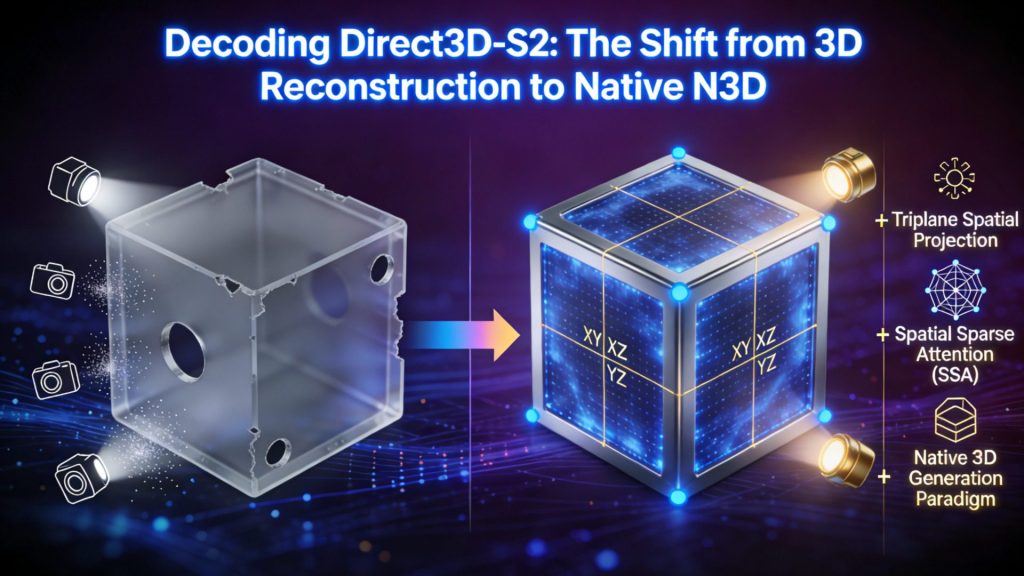
- Neural4D’s Direct3D-S2 architecture, powered by Spatial Sparse Attention, delivers the same production-ready real-time 3D generation standard that won on the SIGGRAPH stage, available today as a browser-based platform.
Real-time 3D generation moved from research demonstration to production-ready capability at SIGGRAPH 2026, where the Real-Time Live! Best in Show award went to a system generating textured, rigged, and animated 3D assets from images in seconds. The win signals that the industry bottleneck has shifted from rendering speed to creation speed, and the technology to act on that shift is already here.
Part 1: The Winning Demo and What It Proves
On July 21, 2026, at the Los Angeles Convention Center, SIGGRAPH’s Real-Time Live! program chaired by Mk Haley presented eight live demonstrations of emerging technology spanning AI-assisted creation, robotics, rendering, simulation, and digital performance (see the official ACM SIGGRAPH recap for the complete program). From a competitive field curated from global submissions, the Best in Show award went to “Create Interactive 3D Assets in Seconds!”
The demo did exactly what the title promised. Audience members submitted images or prompts, and the system returned fully textured, rigged, and animated 3D assets in real time. These creations appeared instantly in a shared interactive scene alongside other audience submissions. The entire process, from submission to playable asset, took seconds.
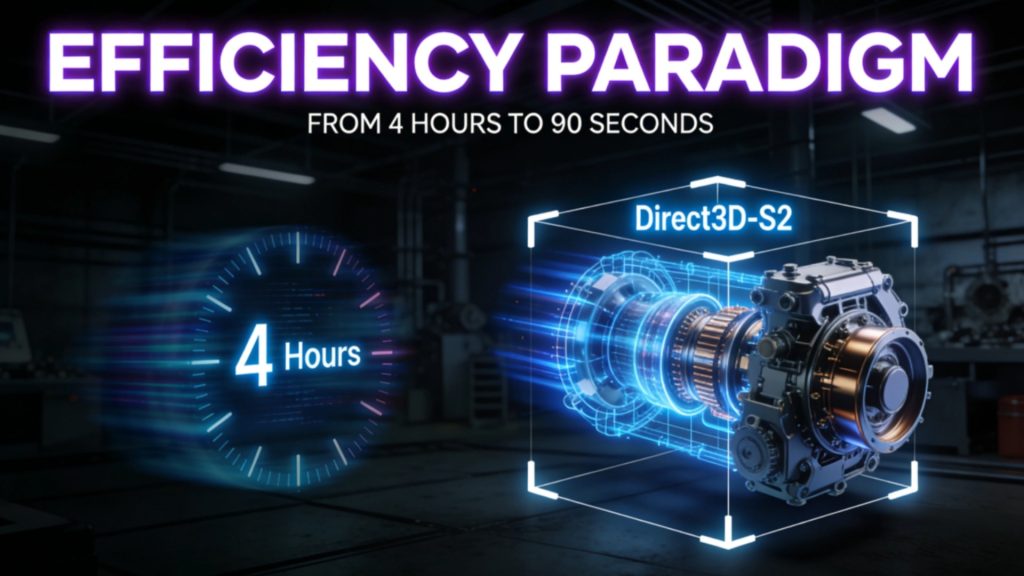
What separated this demo from earlier 3D generation showcases was the completeness of the output. Earlier tools could generate rough geometry, but required extensive manual cleanup for rigging, texturing, and animation. The Best in Show winner compressed what used to be a multi-day pipeline involving modeling, UV mapping, texturing, rigging, and animation into a single real-time step. The output was immediately usable in game engines and interactive applications.
The SIGGRAPH RTL selection process is intentionally rigorous. A panel of industry experts reviews global submissions each year and selects only eight demonstrations. Winning Best in Show means the demo was judged as the most technically impressive and impactful presentation across all categories. That a real-time 3D generation tool won over entries in robotics, compression, rendering, and animation is a clear signal: the community recognizes real-time 3D generation as the defining capability of this cycle.
Part 2: Beyond Generation: The Full RTL 2026 Lineup
The Best in Show winner did not represent the entire story. The full RTL 2026 lineup revealed how AI and real-time techniques are converging across multiple layers of the 3D content pipeline, from creation to compression to rendering.
Hair Mesh Modeling with Physics tackled one of character modeling’s most persistent bottlenecks. By combining mesh modeling tools with real-time physics simulation, the demo compressed the time needed to create game-ready hairstyles from hours to minutes. Hair simulation has historically been a manual, painstaking process in character pipelines. Bringing it into real time removes a significant friction point for character artists.
ZibraGDS: Cinematic-Quality Animated Geometry Compression addressed a downstream problem: once high-quality 3D assets can be generated at speed, how do you store and stream them efficiently? ZibraGDS demonstrated compression that bridged the gap between offline cinematic quality and real-time playback, a critical enabler for interactive applications that need to handle large volumes of 3D content.
HiPR: Hierarchical Progressive Rendering gave artists a smarter rendering workflow by re-rendering only the regions of an image affected by a change. Instead of waiting for a full frame re-render after each edit, artists received near-instant visual feedback. This reduces friction in the creative iteration loop, allowing more experimentation in less time.
Runway Characters extended the “single image to production asset” concept beyond geometry. Starting from a single image, the system transformed static characters into expressive digital performers with real-time lip-syncing, facial expressions, and head motion. The parallel with the Best in Show winner is clear: the industry is moving toward generating complete, production-ready digital assets from minimal input.
Other entries, including Promptable AI Camera for text-driven virtual cinematography, Disney’s Olaf robotic character using reinforcement learning, and the Audience Choice winner Dissectible Anatomy for interactive medical education, completed a program that consistently pushed toward faster, more accessible content creation.
The full Real-Time Live! 2026 program listing on the official SIGGRAPH conference site documents the complete lineup with descriptions of each demonstration.
Across the lineup, three converging themes emerge: generation speed is compressing from days to seconds, output quality now meets production standards, and real-time interactivity has become the expected mode of operation rather than a nice-to-have feature.
Part 3: Why Real-Time 3D Generation Changes the Industry
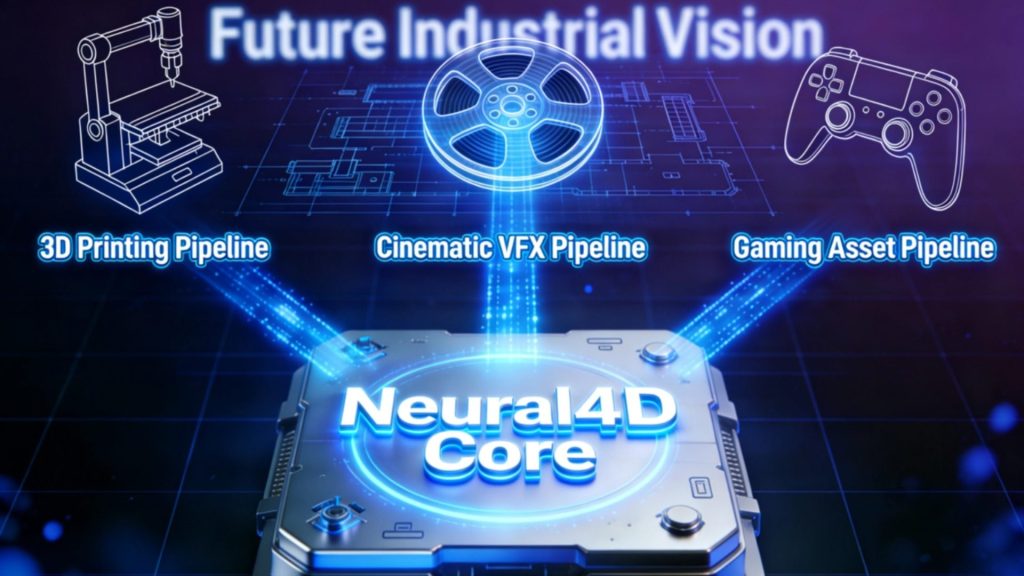
The SIGGRAPH 2026 RTL results reflect a structural shift in how 3D content is produced. Demand for 3D assets across gaming, e-commerce, film, architectural visualization, and 3D printing has grown beyond what traditional modeling pipelines can supply. The industry has been searching for a way to scale, and real-time 3D generation has emerged as the answer.
NVIDIA’s SIGGRAPH 2026 announcements, including advances in agentic and physical AI for graphics and simulation, reinforce this direction. The hardware and infrastructure layers are evolving in parallel with generation software, creating conditions for a platform shift rather than an incremental improvement.
The key difference between current real-time 3D generation and earlier attempts is output quality. Earlier tools produced rough shape approximations requiring substantial manual rework. The current generation, validated by the SIGGRAPH RTL Best in Show award, produces textured, rigged, and animated assets that slot directly into game engines and render pipelines.
For creators and studios, this shift carries three practical implications:
Lower barriers to entry. Artists no longer need to master complex modeling, UV mapping, and rigging workflows to produce 3D content. The generation engine handles the technical pipeline, and the creator focuses on creative direction and iteration.
Faster iteration cycles. When a 3D asset can be generated, reviewed, and refined in minutes instead of days, the creative process changes fundamentally. Designers can explore more variations, test more ideas, and converge on better outcomes in less total time.
New use cases become viable. Applications previously impractical due to 3D production costs, such as personalized avatars, interactive educational models, and real-time product configurators, become economically feasible when asset generation is instantaneous and scalable. The Audience Choice winner at RTL demonstrated exactly this: medical education using real-time simulation was recognized by the audience as one of the most impactful applications on stage.
NVIDIA’s presence at SIGGRAPH 2026, with dedicated sessions on AI-driven graphics and real-time simulation, further validates that the infrastructure for this shift is being built at the hardware level. The combination of generation AI and real-time rendering creates a compound effect that neither technology delivers alone.
Experience the Standard That Won on Stage
The same real-time 3D generation capability recognized at SIGGRAPH is available now in Neural4D Image to 3D.
50 free generations per week. No credit card required.
Part 4: Neural4D in the Real-Time 3D Landscape
The vision that earned Best in Show at SIGGRAPH is the same vision that Neural4D has been building toward since its founding. Neural4D’s Direct3D-S2 architecture, using Spatial Sparse Attention, delivers production-quality 3D generation from images and text inputs in real time. The output is watertight, textured, and ready for import into standard game engines and 3D applications, mirroring exactly the generation experience that won the RTL award.
Neural4D Image to 3D and Text to 3D allow creators to generate high-quality 3D models directly in the browser. No specialized hardware, no complex software setup, no technical expertise required. The platform handles the full pipeline from input to production-ready asset, compressing the same workflow that the SIGGRAPH audience recognized as Best in Show.
The massive capital influx into 3D generation technology throughout 2026, documented in our previous industry analysis, has accelerated development across the sector. Neural4D’s position as a ByteDance-backed company with an annual contract exceeding $1 million provides the engineering resources to compete at the infrastructure level, not just the application layer. The Direct3D-S2 architecture represents this investment: it was designed from the ground up for output determinism and production reliability, not demo speed.
For creators evaluating their options in this rapidly maturing space, the SIGGRAPH 2026 RTL results provide a useful reference point. The leading 3D AI generator pipelines are converging on the same standard: real-time generation of production-ready assets from minimal input. Neural4D meets that standard and invites you to validate it firsthand.
Part 5: Common Questions on Real-Time 3D at SIGGRAPH 2026
The winning demo proved that the industry benchmark has shifted from rendering speed to generation speed. “Real-time” now applies to the creation of the 3D asset itself, not just its display. The ability to generate textured, rigged, and animated assets from a single image in seconds was recognized as the most impactful technical achievement across all RTL categories.
Photogrammetry requires multiple camera angles, controlled lighting, and extensive mesh cleanup. Manual modeling demands hours or days of skilled work for a single asset. The SIGGRAPH winner demonstrated that a single image combined with an AI 3D model generator can produce a rigged, animated asset in seconds, representing a reduction in manual labor of two to three orders of magnitude for standard asset creation tasks.
Yes, and this is precisely what made the demo notable. Because the output included rigging and animation data alongside the mesh and textures, the assets were immediately usable in game engines and interactive applications. This signals that the quality gap between AI-generated 3D assets and manually created ones has narrowed to the point where real-time generation can feed directly into production workflows.
These demos indicate a parallel track focused on storage, streaming, and rendering efficiency. ZibraGDS addressed the compression challenge that comes with generating large volumes of high-quality 3D assets. HiPR solved the feedback-latency problem in the rendering loop. Together with the generation-focused winners, they form a complete picture: the industry is building the entire pipeline, from creation to delivery, for a real-time 3D workflow.
The Audience Choice award went to Dissectible Anatomy, an interactive medical education system using real-time simulation. This signals that the market for AI-generated and real-time 3D content extends well beyond entertainment. Medical simulation, architectural visualization, industrial training, and e-commerce are all verticals where real-time 3D generation can create immediate value, and the SIGGRAPH audience recognized this expanding application scope.
Start Creating in Real Time
The generation standard validated at SIGGRAPH 2026 RTL is available to you today. Neural4D Studio puts real-time 3D generation in your browser with no setup required.
Build Production-Ready 3D Assets in Real Time
Upload an image or enter a text prompt and get a textured, ready-to-use 3D model in seconds.
50 free generations per week. No credit card required.