What Is X-to-4D Generation? Inside AI’s Shift From Static 3D to Dynamic 4D
Quick Summary
- X-to-4D generation refers to AI systems that convert inputs like text, image, or video into 4D content (3D geometry with motion over time).
- Align4D, SV4D 2.0, and L4GM represent three distinct architectural approaches, each with different tradeoffs in speed, quality, and real-world generalization.
- The primary bottleneck across all methods is the scarcity of diverse 4D training data, forcing reliance on synthetic datasets that do not transfer well to real-world video.
- Neural4D’s watertight mesh output and real-world image generalization provide the clean static 3D input layer that 4D pipelines currently lack at scale.
X-to-4D generation is the next frontier in AI-driven content creation. Instead of producing a static 3D mesh from a single image or text prompt, X-to-4D systems output animated 3D sequences where geometry and motion are generated together. The Align4D framework, submitted to arXiv in July 2026, represents the latest attempt to make this practical, but the field still faces fundamental data and generalization barriers.
Part 1: What Is X-to-4D Generation?
4D generation adds a time dimension to 3D content. A static 3D mesh exists at a single point in time. A 4D asset moves, deforms, or changes over a sequence of frames while maintaining consistent geometry and appearance. The “X” in X-to-4D generation covers whatever input modality the user provides to drive that process: a text description, a single image, a video clip, or any combination.
The defining challenge of X-to-4D generation is temporal consistency. A model that generates frame-by-frame 3D output independently will produce visible flickering, topology popping, and motion that violates physics. Every serious 4D method since 2024 has tried to solve this by encoding motion jointly with geometry at the architectural level.
Part 2: The Research Landscape From SV4D 2.0 to Align4D
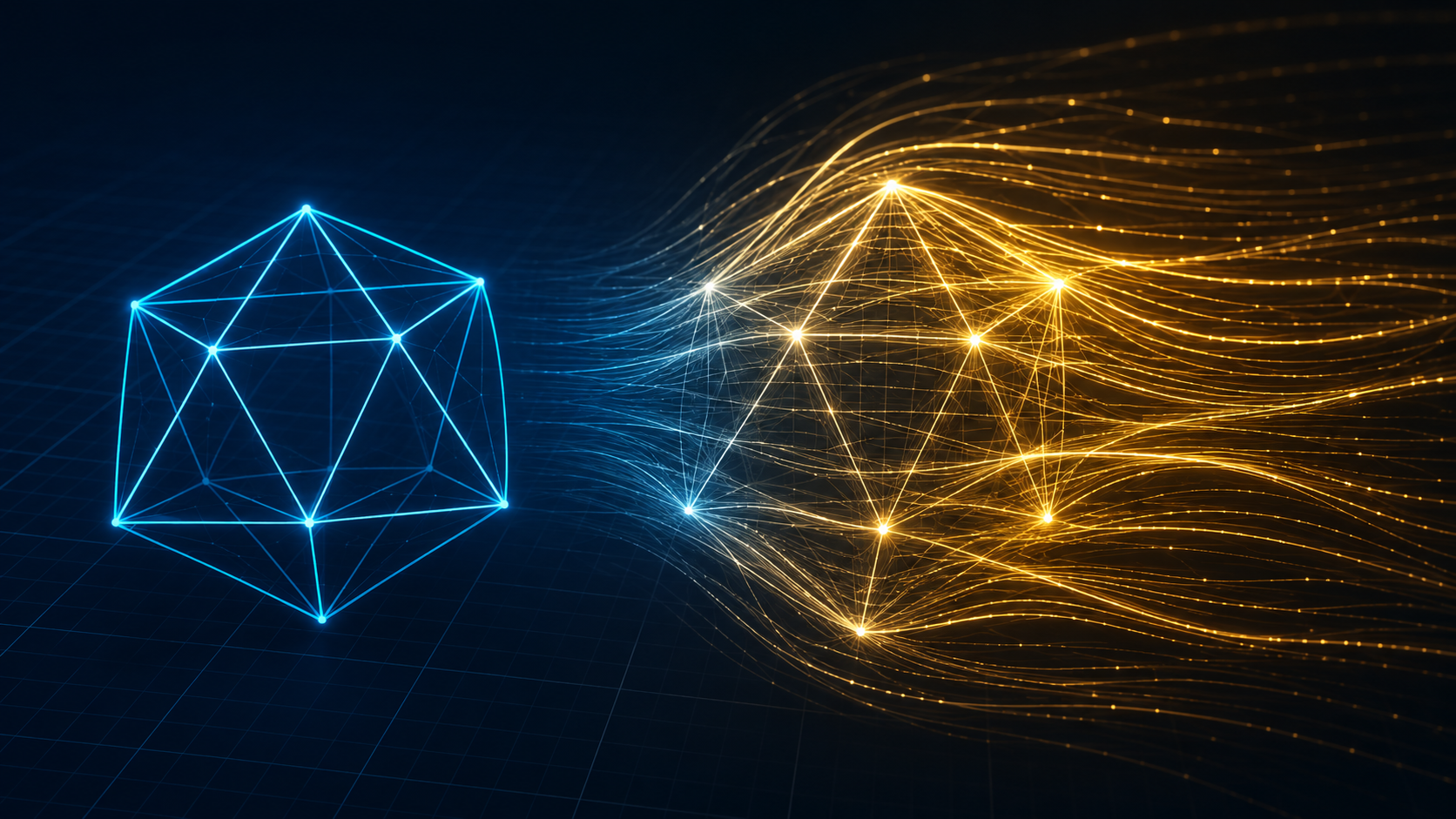
Three major approaches define the current X-to-4D generation landscape. Each makes a different bet on how to represent motion and geometry together.
L4GM (NVIDIA, NeurIPS 2024) was the first 4D Large Reconstruction Model. It builds on 3D Gaussian Splatting and generates 4D output from multi-view video input in roughly three seconds. The tradeoff: L4GM was trained exclusively on synthetic data from Objaverse and struggles significantly with real-world video, non-zero camera elevation, and multi-object scenes. Its speed is impressive, but its generalization is narrow.
SV4D 2.0 (Stability AI, ICCV 2025) takes a different route. Instead of Gaussian Splatting, it uses a multi-view video diffusion architecture with a DyNeRF representation. SV4D 2.0 does not require reference views at inference time and generalizes to real-world video substantially better than L4GM across LPIPS, CLIP-S, PSNR, and FVD metrics. The cost is higher compute requirements at inference.
Align4D (arXiv 2607.02516, submitted July 2026) introduces a framework that converts arbitrary modality input into consistent video-3D pairs. Its core contribution is three-fold: object distance alignment that normalizes scale across input types, motion-geometry joint alignment that binds deformation to structure, and asynchronous optimization that separates the convergence rates of geometry and appearance. Align4D also introduces the X4D benchmark dataset for evaluating X-to-4D generation quality.
| Method | Representation | Training Data | Inference Time | Real-World Generalization |
|---|---|---|---|---|
| L4GM (NVIDIA, 2024) | 3D Gaussian Splatting | Synthetic (Objaverse) | ~3 seconds | Poor |
| SV4D 2.0 (Stability AI, 2025) | Multi-view video diffusion + DyNeRF | Mixed (synthetic + real) | Minutes | Good |
| Align4D (2026) | Video-3D pair optimization | X4D benchmark | Research stage | Not yet evaluated at scale |
Beyond these three, a growing family of 4D Gaussian Splatting methods has emerged through 2025 and 2026: VeGaS decouples motion and geometry using velocity fields, 4DSTR applies Mamba temporal encoding for video-to-4D tasks, STP4D pushes inference down to roughly 4.6 seconds per asset, and Splat4D targets monocular video input for digital human and AR-VR applications. Most share the same fundamental limitation: they work well on the data they were trained on and poorly on anything else. Better watertight mesh generation from real-world input is a capability most of these methods lack at the input stage.
Part 3: Why 4D Data Is the Real Bottleneck
Every serious 4D paper published in 2024-2026 arrives at the same conclusion: 4D training data is scarce and expensive to produce. Capturing multi-view video with synchronized temporal frames at scale requires calibrated camera arrays, controlled lighting, and significant storage. No publicly available dataset today comes close to the scale or diversity that ImageNet provided for 2D vision or that Objaverse provided for static 3D.
The field has responded by leaning on synthetic data. Objaverse provides 800,000+ static 3D assets, and methods like L4GM render these from multiple viewpoints with artificial motion to simulate 4D training pairs. The result is predictable: models that work on synthetic renders and fail on real smartphone video. Real-world footage contains motion blur, inconsistent lighting, partial occlusion, and camera shake none of which exist in synthetic renders. This data gap is the single largest obstacle to practical X-to-4D generation.

Align4D’s X4D benchmark is an attempt to address this, but it is a research evaluation set, not a training corpus. The community needs an order-of-magnitude increase in diverse, real-world 4D capture before these methods can generalize the way static 3D generators already do.
The compute-data spiral: 4D methods currently require more compute per training example than static 3D methods while having access to less training data. This creates a cycle where model improvements are hard to validate because evaluation sets are small, and small evaluation sets make it difficult to prove whether an architectural change generalizes or simply fits the benchmark better.
Part 4: Where Clean 3D Generation Fits In
The 4D generation research community has largely focused on the motion side of the problem. But a quieter conclusion runs through the literature: 4D output quality is upper-bounded by static 3D input quality. An Align4D pipeline that starts from a noisy, non-watertight mesh with baked-in lighting will propagate those flaws through every frame of the 4D sequence. An L4GM Gaussian primitive that sits on a broken surface will jitter through time without resolving the underlying geometry.
This is where clean static 3D generation directly supports the X-to-4D generation pipeline. A 4D training system conditioned on watertight, manifold-geometry inputs with separated material channels will learn motion patterns that correspond to actual object deformation, not compensation for mesh errors. The same principle applies at inference: feed a 4D system a clean base mesh, and the motion estimation has fewer degrees of freedom to guess wrong.

Neural4D’s Image to 3D studio produces exactly this kind of output: watertight, PBR-ready meshes with clean topology and separated material channels, generated from a single photograph. These assets are built to serve as the static 3D layer whether they go into a game engine, a 3D printing slicer, or a future 4D generation pipeline that requires clean geometry as its starting condition. The capability to generate production-quality static 3D from real-world images not just synthetic renders is precisely what most 4D research methods still lack for their own training data. For teams exploring AI driven 3D model generators, the quality of the static 3D output determines how far the asset can go in downstream pipelines.
Build Your 3D Foundation Today
Turn a single photo into a watertight, production-ready 3D mesh in under two minutes.
No credit card required. 50 free generations every week.
The implication is straightforward: if you are building a 3D asset pipeline today and expect 4D generation to mature within your product lifecycle, the quality of your static 3D layer is the single best investment you can make now. A pipeline that produces clean, watertight geometry from arbitrary input images will be ready to feed into 4D systems as they mature.
Part 5: Common Questions on X-to-4D Generation
Q: Is 4D generation the same as 3D animation?
No. Traditional 3D animation involves rigging a static mesh with a skeleton and defining keyframes that deform the mesh over time. The geometry is created separately from the motion. In X-to-4D generation, geometry and motion are produced by a single model in a single pass. The system learns what the object looks like and how it moves simultaneously, enabling dynamic content from inputs that contain no explicit animation data.
Q: What is 4D Gaussian Splatting and how does it relate to 4D generation?
4D Gaussian Splatting extends the original 3D Gaussian Splatting representation by adding a temporal component to each Gaussian primitive. Instead of a static set of 3D Gaussians that represent a scene, 4D Gaussians have velocity or deformation parameters that describe how their position, rotation, and color change over time. Methods like VeGaS and 4DSTR use this representation to achieve fast inference, but the quality is still tied to the underlying static geometry at each frame.
Q: Can I generate usable 4D content today?
For research and prototyping, yes. Align4D, SV4D 2.0, and STP4D all produce visible 4D output from input images or video. For production use in games, film, or e-commerce, the answer is not yet. The generalization gap between synthetic-trained models and real-world input remains too wide, and even the best current methods produce visible artifacts in complex scenes with occlusion, multiple objects, or non-rigid motion.
Q: What is the difference between Align4D and earlier methods like L4GM or SV4D 2.0?
Align4D’s primary innovation is support for arbitrary input modalities text, single image, or video without requiring modality-specific architecture changes. L4GM requires multi-view video input and does not generalize beyond synthetic data. SV4D 2.0 handles real-world input better but is limited to video-to-4D. Align4D also introduces explicit object distance alignment to normalize scale, which improves motion consistency across different input types.
Q: Why do 4D generation models struggle with real-world video input?
Two reasons. First, the training data problem: most 4D models train on synthetic renders from Objaverse, where camera motion is smooth, lighting is uniform, and objects are perfectly centered. Real-world video contains motion blur, auto-exposure changes, rolling shutter distortion, and partial occlusion none of which appear in training. Second, the representation problem: methods using 3D Gaussian Splatting as their backbone inherit splatting artifacts that compound over time in a 4D sequence.
Q: Does better static 3D generation help future 4D pipelines?
Yes, and this is one of the clearest signals from current research. Every 4D method that starts from a multi-view or image input must first establish a static 3D representation before adding motion. If that static representation contains holes, non-manifold geometry, or baked-in lighting, the motion estimation treats those artifacts as real surface features and propagates them through time. A watertight, PBR-ready static mesh with clean topology gives a 4D system a truthful starting point, which is why X-to-4D generation quality depends as much on the 3D foundation as on the motion architecture.
Part 6: The Bottom Line
X-to-4D generation is not ready for production deployment in 2026. The data bottleneck is structural, and no single paper has solved it. But the trajectory is clear: 4D will be the standard expectation for AI-generated 3D content within two to three years, just as real-time rendering and PBR materials became standard before it.
The practical takeaway for anyone building a 3D asset pipeline today is that the static 3D layer matters more than ever. A pipeline that generates watertight, clean-topology, PBR-ready meshes from arbitrary input whether product photos, character concepts, or architectural references will have a significant advantage when 4D generation matures. The systems that succeed at 4D will be the ones that start from the best static 3D.
X-to-4D generation will eventually change how 3D content is produced. The work that makes that future possible is being done now in static 3D quality: watertight meshes, clean topology, real-world generalization. Those capabilities do not wait for 4D to arrive they pay off today in faster game asset iteration, higher 3D print success rates, and more realistic product visualizations. The best time to build a clean static 3D pipeline was yesterday. The second best time is now. Explore text to 3D model generation to start building that foundation today.
Future-Proof Your 3D Assets
Generate production-ready 3D models from text descriptions with Neural4D’s Text to 3D pipeline.
Start free no credit card needed. 50 Power per week.