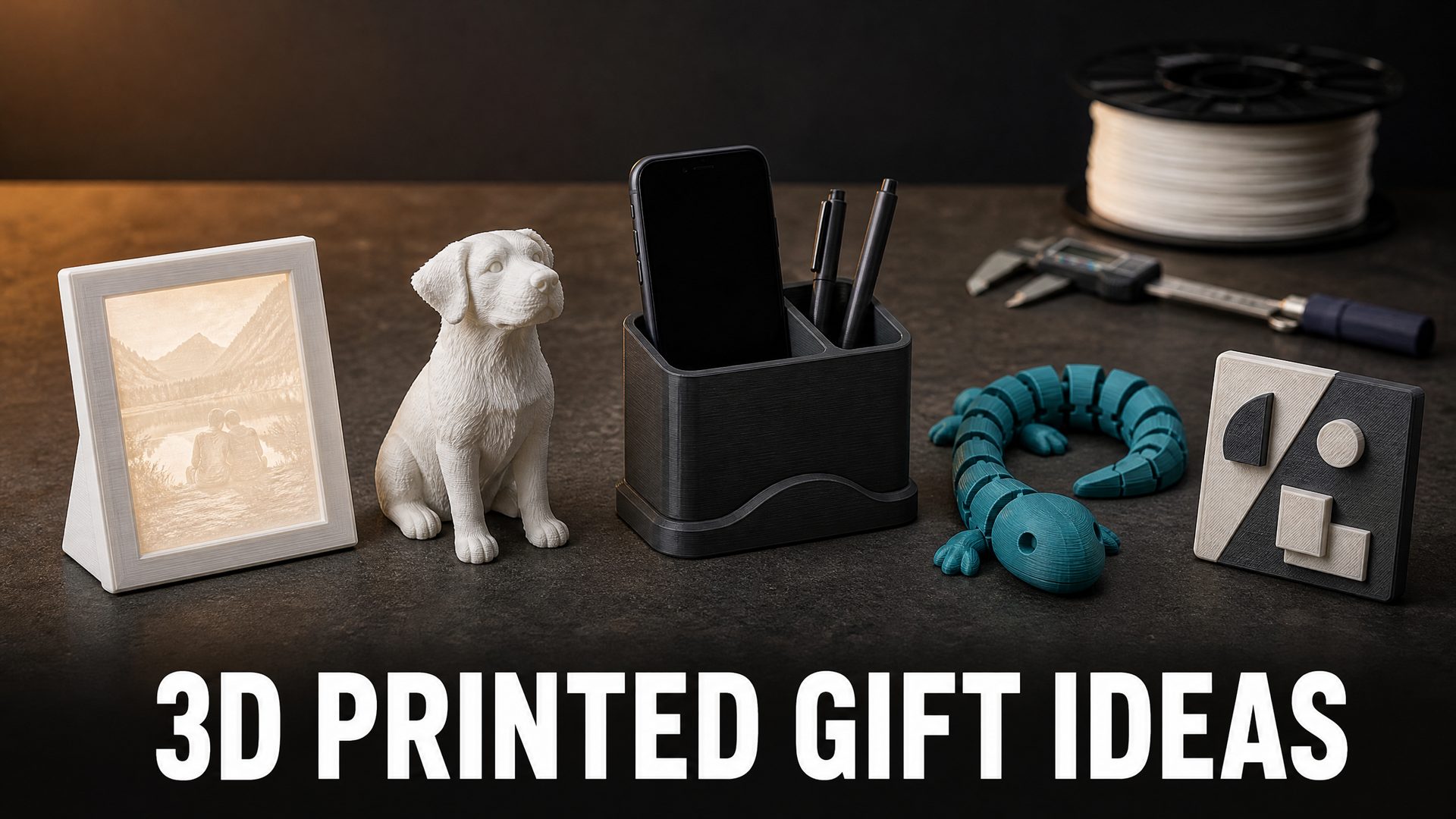
3D Printed Gift Ideas for Everyone on Your List
Quick Summary
- The best printed gifts fit a habit: a desk someone uses, a game someone plays, a photo someone keeps. A generic model is a nice gesture; a model chosen for one person gets used.
- Twelve printed ideas, grouped by recipient, each with the one design decision that decides whether it prints well.
- Five gifts for the person who already owns a printer, because “3d printer gift ideas” often means a gift for the printer owner, not a printed object.
- Print time and cost come from your slicer, not from a gift guide. The planning sections show how to check both before you commit to a batch.
The best 3D printed gift ideas start with a person, not a file. A downloaded model can be a thoughtful gesture, but a gift that matches how someone works, plays, or displays things is the one that stays on the desk after the holidays. This guide has 12 printed gifts grouped by recipient, and each one includes the decision that decides whether it prints well. It also covers five gifts for the person who already owns a printer, a photo to model workflow for one-off presents, and the safety and cost questions that decide whether a printed gift is actually a good idea.
How to Choose 3D Printed Gift Ideas That Get Used
Most gift guides start with a model. Start with the person instead. Five checks rule out most bad matches before you open a slicer, and they take less time than printing a test piece you will not give away.
Name where it will live. If you cannot say “it goes on her monitor stand” or “it replaces the cracked soap dish,” the gift is probably a novelty. Novelty is fine for a coworker exchange and weak for a partner. A specific place also tells you the size, the color, and whether the object has to survive sunlight or water.
Match the material to the room. PLA is the easy default for decorative pieces and indoor use, but it softens in a hot car or a sunny window. PETG is the better choice for a planter that lives outside or a part that gets handled hard. The Prusa material guide is a useful cross-check when the gift will sit near heat or weather.
Check the age and the mouth. Small parts, magnets, and thin protrusions turn a gift into a hazard for a young child. Food contact is a separate problem: layer grooves trap residue, and a printed bowl or cup is not a safe upgrade from a normal one. Both issues have simple rules, and both are covered in the safety section below.
Put the finish in the plan. A raw print with a blob of support scars reads as a prototype. Sanding, a primer coat, or a two-color filament swap can move the same model from “3D printed thing” to “gift.” Decide which finish you will actually do before you choose a model with fine detail that needs it.
Work backward from the date. The slicer estimate is the only reliable print time. Add a test print, a failed print, and finishing time. If the gift has to be in the mail, add shipping. A gift that arrives late is worse than a smaller gift that arrives on time.
| Gift | Best for | Main constraint |
|---|---|---|
| Photo lithophane | Partner, parents, grandparents | Needs a backlight and a tight crop |
| Photo figurine | Partner, pet owners, family | A single photo leaves hidden geometry |
| Name or anniversary plaque | Partner, new homeowners | Letter stroke width |
| Desk organizer | Coworkers, teachers | Measure the real phone and pens |
| Keychain or bag tag | Coworkers, new drivers | Loop thickness |
| Planter | Hosts, plant owners | Pot fit and drainage |
| Miniature or terrain | Tabletop players | Scale and support strategy |
| Dice tower or game insert | Board game groups | Fit tolerances |
| Articulated fidget | Teens, desk workers | Print-in-place clearance |
| Name puzzle | Toddlers, young kids | Small parts and edges |
| Toy vehicle or building set | Kids | Axle fit and drop test |
| Drawing to figurine | Kids, teens, artists | Original design and simple shapes |
For a Partner or Close Family Member: Gifts That Could Only Be Theirs
These three ideas depend on something only you have: a photo, a name, or a date. That is what separates them from a downloaded model that thousands of other people are printing this month.
A backlit photo lithophane
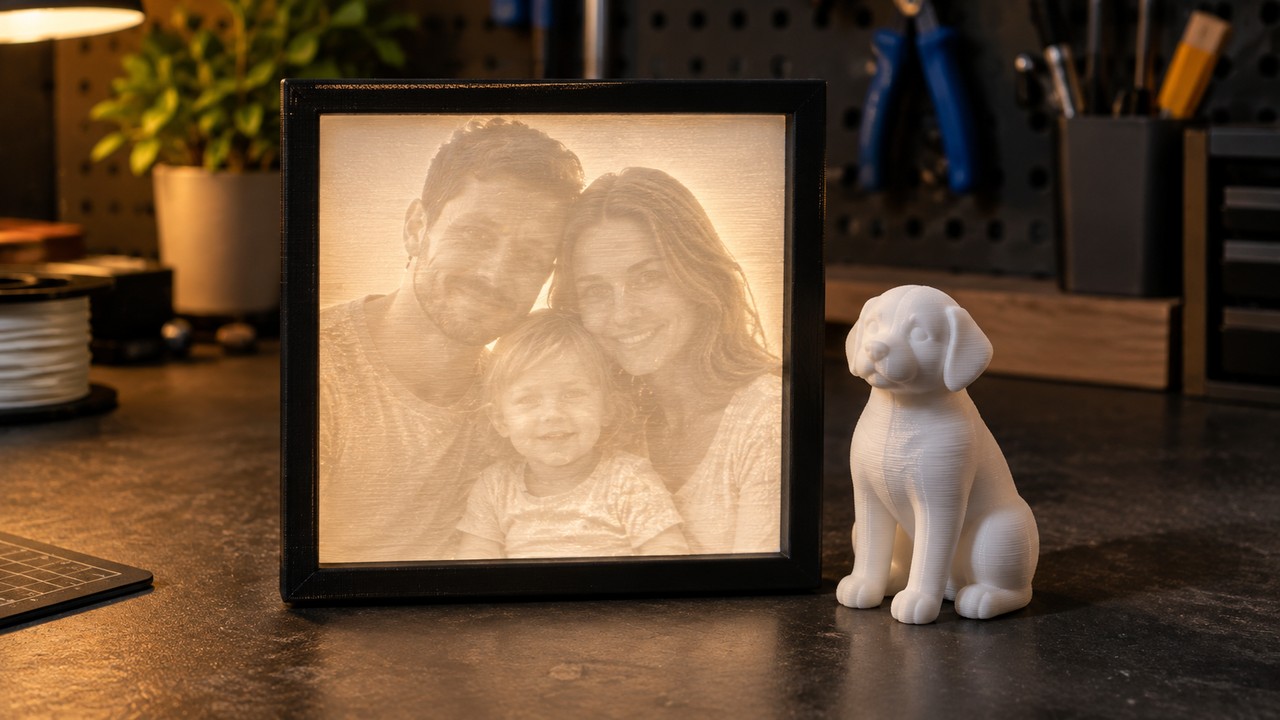
A lithophane is a flat panel where the plastic thickness controls how much light passes through. Held against a window or a small LED, a photo appears in grayscale relief. It is one of the few printed objects that looks better after it is finished, and it is a strong gift for a grandparent, a partner, or a parent who already has too many mugs.
The decision that matters: the light source and the crop. A lithophane without backlight looks like a blank tile. Plan the frame and the light before you print, crop tight to the subject, and avoid a busy background that turns into gray mud. White or translucent filament gives the cleanest result. N4D has a dedicated AI lithophane maker, and the Christmas 3D print guide covers the frame and backlight in more detail.
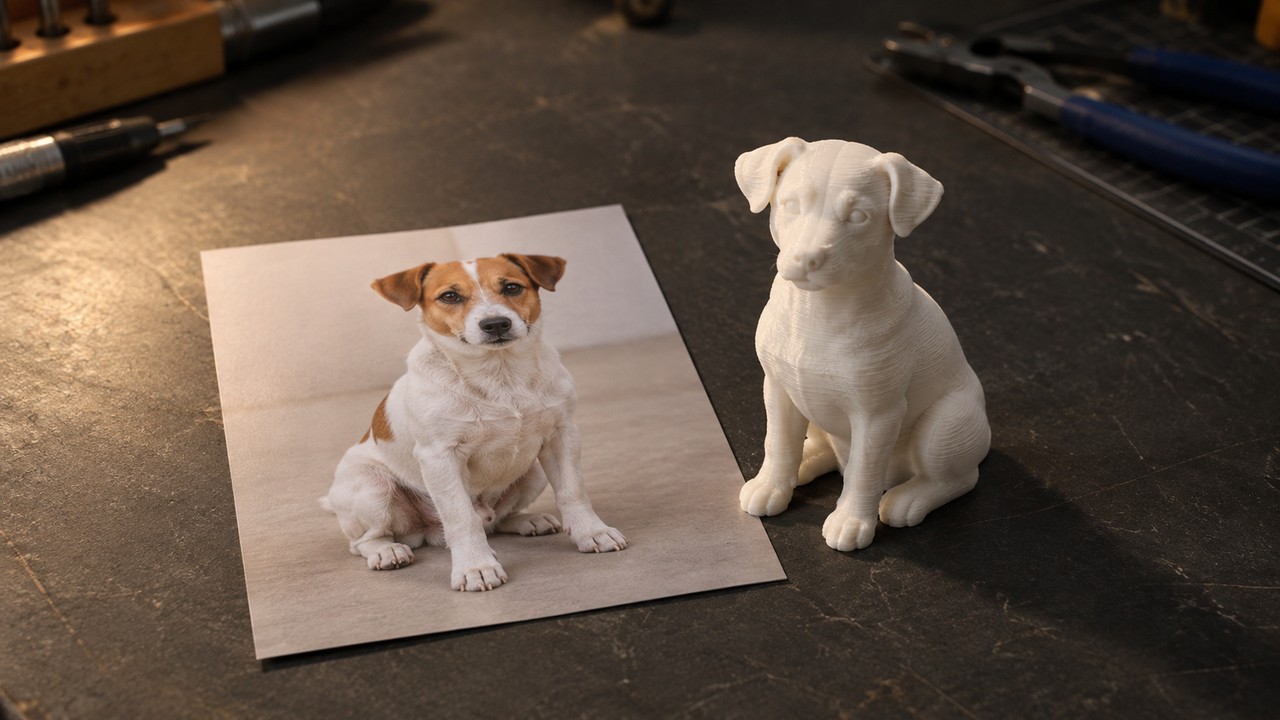
A small figurine from one clear photo
A figurine of a pet, a couple, or a grandparent is the most personal item on this list. It is also the one most likely to disappoint if the photo is wrong. Use a single subject, even light, and a clear outline. A photo where the subject is half hidden behind a couch gives the model too much to invent.
The decision that matters: print for the silhouette, not for the pores. At a small size, the outline and posture carry the recognition. Fine facial detail is the first thing to disappear, and a palm-sized figure reads better than a thimble-sized one. Generate the model, rotate it, and look at the back and the sides before you print. A single photo leaves hidden geometry to the model’s estimate, so check the angles the camera never saw.
Finish it like a gift. Sand the layer lines that catch the light, apply a primer, then paint with acrylics. A simple matte base and one accent color are enough. Let the paint cure fully before the gift goes in a box.
A name or anniversary plaque with raised lettering
A desk nameplate, a house sign, or a small anniversary plaque is a practical gift that still feels personal. The lettering is the whole design, which makes it an easy place to get a disappointing result.
The decision that matters: stroke width and letter height. Thin strokes blur or break, especially on a 0.4 mm nozzle. Choose a bold sans serif, keep the letter height generous, and print a small sample before the final piece. Check the spelling letter by letter; generated text can look right at a glance and be wrong on the second read. A filament swap at a set layer gives a two-color plaque without any painting.
If you want to build the sign from a written description rather than a downloaded template, a text to model tool such as text to STL can produce the base shape, and you can still set the final size and layer height in the slicer.
For Coworkers, Teachers, and Hosts: Small Gifts You Can Batch
These gifts have a different job. They need to be useful, inexpensive, and repeatable, because you are making several. A batch also means one design decision gets multiplied, so test one before you print five.
A desk organizer sized to their actual phone and pens
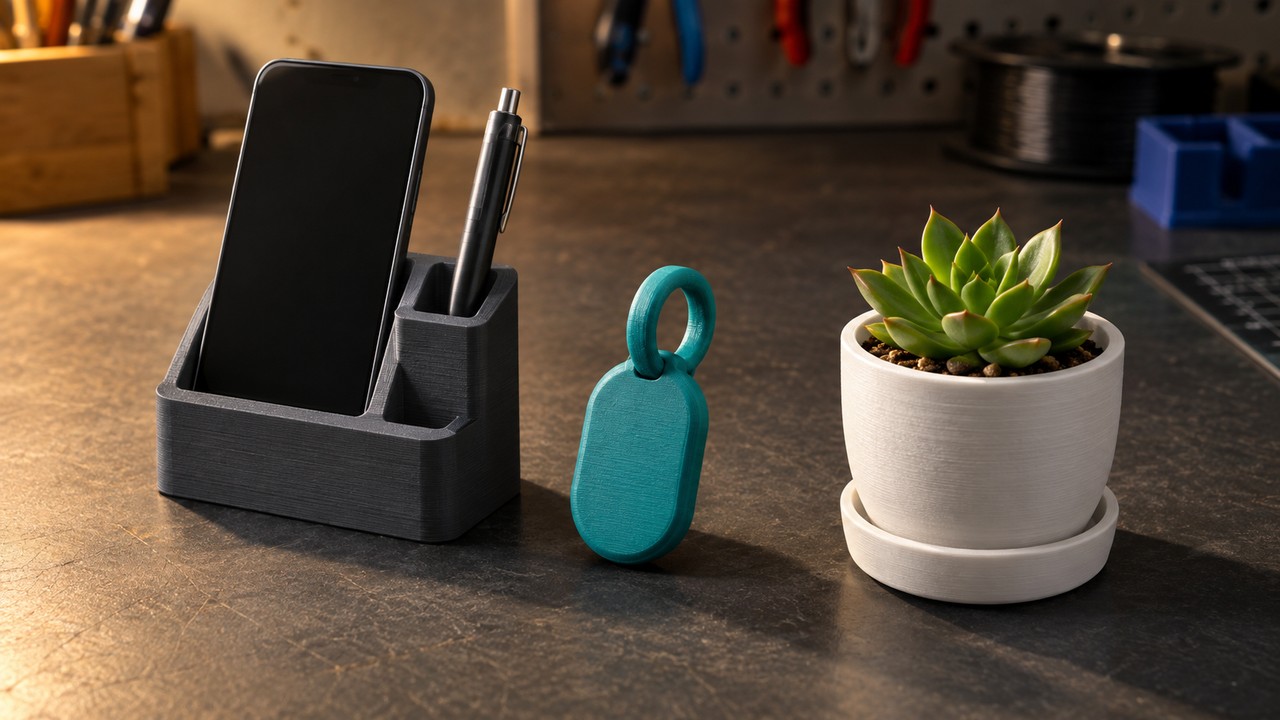
A generic phone stand is a commodity. A stand that fits the phone case they actually use, with a slot for the pen they actually carry, is a small but noticeable upgrade. The same logic applies to a cable clip, a headphone hook, or a drawer tray.
The decision that matters: measure, then add clearance. Phone thickness with a case, pen diameter, cable width, and the height of the monitor bezel all matter. Leave a little play so the object does not scratch the phone or jam. Print one, test it with the real items, then adjust the model before making the rest.
A personalized keychain or bag tag
A name tag for a work bag, a keychain for a new driver, or a luggage tag for someone who travels is small, useful, and easy to personalize. It is also the best last-minute option on this list because it fits on a small plate and uses very little filament.
The decision that matters: the loop. A thin loop is the first part to break, especially in a pocket. Make the loop generous, orient the print so the layers run across the loop rather than along it, and avoid sharp internal corners. A two-color name is a nice touch, but a single color with a clear embossed name is more durable. If the recipient has a young child, treat the keychain as a small part and keep it out of reach.
A planter matched to a real nursery pot
A printed planter is a good gift when it fits a pot the recipient already owns or a plant you are giving with it. A cachepot hides the plastic nursery pot and lets water drain into a saucer, which is more forgiving than a sealed decorative pot.
The decision that matters: measure the pot rim and height, then add a little clearance. Include a drainage path, or design it as a cachepot with a separate saucer. PLA is fine indoors, but PETG is the safer choice for a sunny windowsill, a balcony, or anything that gets watered heavily. A plant is a gift that keeps living after the plastic is forgotten, which is the point.
For Hobbyists and Collectors: Display and Play
For someone with a shelf, a table, or a game group, the gift is part of a hobby rather than a standalone object. That makes fit and scale more important than novelty.
A tabletop miniature or terrain piece
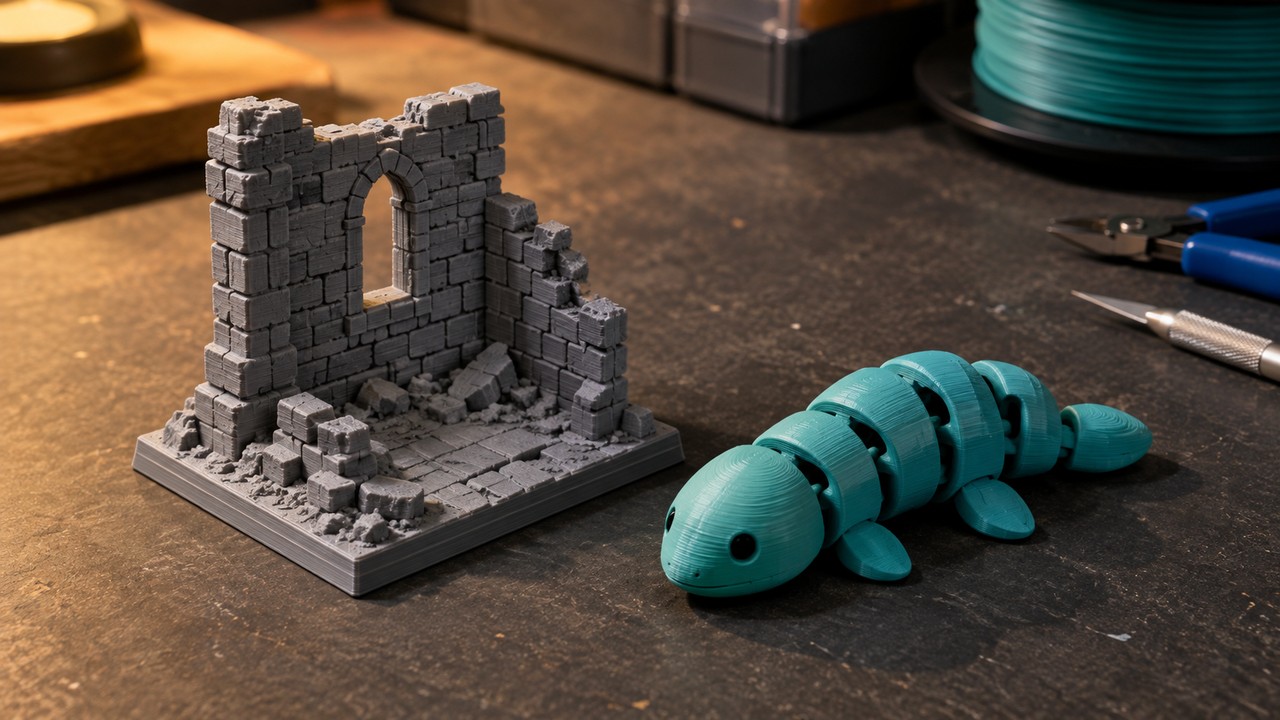
A miniature, a piece of scatter terrain, or a small display base is a reliable gift for a tabletop player. The recipient already knows the scale and the setting, so a piece that fits their collection is more valuable than a random figure.
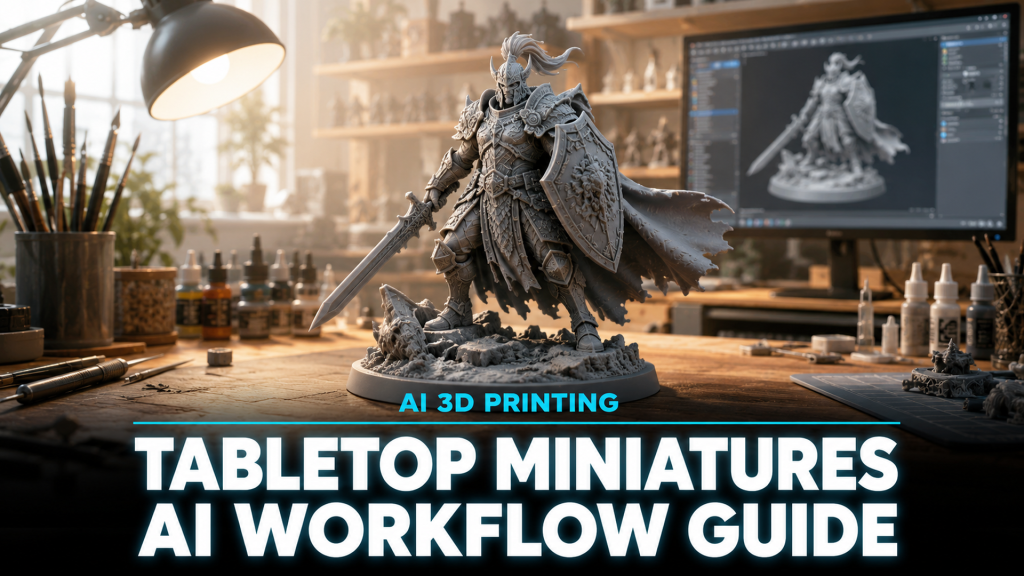
The decision that matters: scale and support strategy. Ask what game and what scale they play, then print one piece and put it next to an existing model before making a set. FDM handles terrain, walls, and bases well. Faces and fine hands are where the layer lines show, so a resin print or a simpler silhouette is often the better gift. The guide to 3D tabletop miniatures covers scale and supports in detail.
A dice tower or game insert
A dice tower is a gift with a small performance built in: the dice go in the top and come out the bottom. A box insert is quieter but more useful, because it keeps a game organized between sessions.
The decision that matters: fit tolerances. A dice tower needs a ramp that does not trap dice and an opening that lets them out. An insert has to match the exact box edition, the card sizes, and the components the recipient owns. Measure the real box and print a single test piece before committing to a full insert. A tower that jams is worse than no tower.
An articulated fidget or desk toy
An articulated animal, a print-in-place mechanism, or a small desk toy is a gift that invites handling. It suits a fidgety adult, a teen, or a collector who likes mechanical objects.
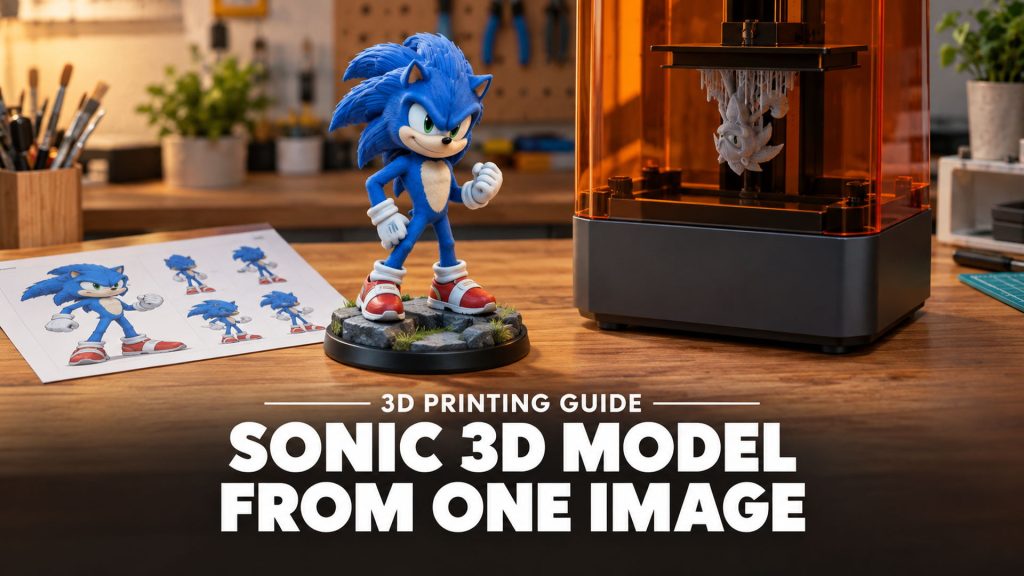
The decision that matters: print-in-place clearance. The joints need enough gap to move without fusing, and the first layer needs to stay flat. Print one, work every joint, then decide whether to batch. Keep the design original or use a file whose license allows the use; a recognizable character from a film or game is not something you can sell or safely imply is official. The Halloween prop guide covers designing original props without borrowing a licensed look.
For Kids and Teens: Play That Survives
Gifts for children have two jobs: be fun, and survive being used the way children actually use things. Rounded edges, sturdy joints, and no small parts matter more than fine detail.
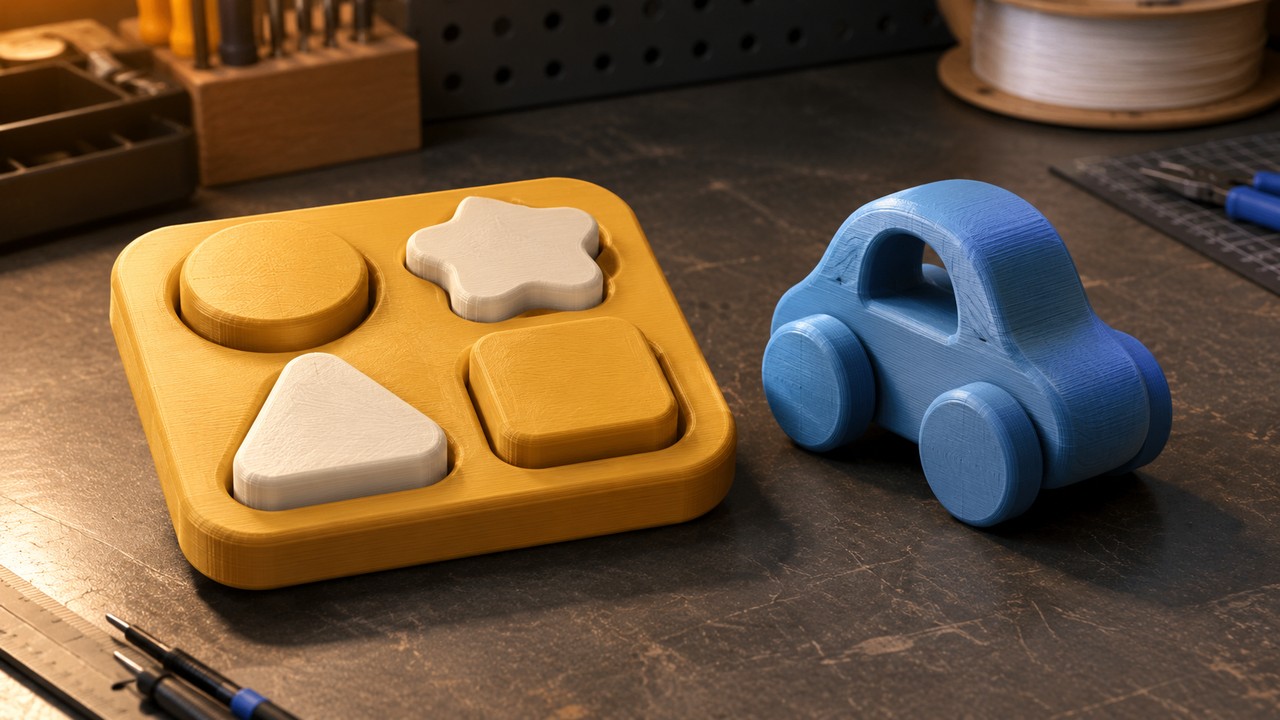
A name puzzle
A name puzzle is a classic printed gift for a toddler or a young child. It teaches letter shapes, it is personal, and it looks good on a shelf when it is not being played with.
The decision that matters: letter thickness and edges. Thin letters snap, and sharp edges are unpleasant in small hands. Make the letters thick enough to grab, round the outer edges, and sand any rough spots. For a child under three, the small-parts rule applies: letters that fit inside a small-parts cylinder are a choking risk. The US rule bans small parts in products intended for children under three (16 CFR part 1501) and requires warning labels on toys with small parts (16 CFR 1500.19). A handmade gift is still a gift a child will put in their mouth.
A toy vehicle or building set scaled to toys they own
A small car, truck, or building set is a gift that fits an existing play pattern. The advantage of printing it is scale: you can make a vehicle that fits the track, the garage, or the dollhouse the child already has.
The decision that matters: axles, snap fits, and the drop test. Wheels need clearance to roll, snap fits need enough flex to assemble without cracking, and the whole thing needs to survive a drop onto a hard floor. Test one with the child’s existing toys before printing a fleet. Avoid small removable wheels for a child under three, and check that no part can break off into a mouth-sized piece.
A figurine of their own drawing or original character
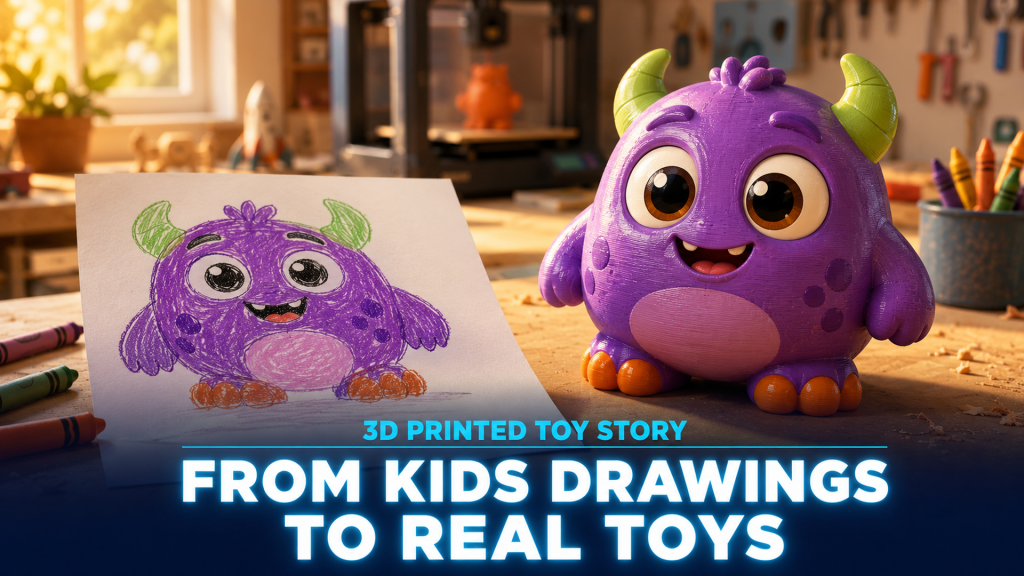
A child’s drawing turned into a figurine is a gift that lands twice: once as the object, and once as proof that the drawing was worth taking seriously. A teen’s original character works the same way.
The decision that matters: keep it original and keep it simple. A drawing with a clear outline and a few large shapes translates well. A crowded scene with tiny details does not. Avoid trademarked characters, even for a personal gift, because the model can drift toward a licensed look without meaning to. Smooth the edges, print it at a size that feels solid in the hand, and skip any small accessories that could break off.
For the Person Who Already Owns a 3D Printer
Not every “3d printer gift idea” is a printed object. If the person on your list already has a printer, the useful gift is often something that makes printing easier. These are bought gifts, not prints, and none of them require you to know their printer model.
Filament in a material they already use. Ask first. A spool of PLA or PETG in a color they choose is more useful than a novelty filament they will feel obliged to test. If they print functional parts, PETG is the safer guess than a decorative silk PLA.
Digital calipers. Almost every design decision in this article depends on a real measurement. A pair of calipers is inexpensive, small, and used constantly by anyone who designs their own parts.
A deburring tool. Printed parts have sharp edges, support scars, and stringing. A deburring tool cleans the inside of holes and the edges of flat parts faster than a knife and with less risk to fingers.
A filament dryer. Wet filament causes stringing, popping, and weak parts, especially with PETG and nylon. A dryer is a practical gift for someone who has struggled with a spool that sat out too long.
A nozzle and tool kit. Nozzles wear out, clog, and get swapped for different sizes. A small kit with a nozzle wrench, cleaning needles, and a few spare nozzles is the equivalent of a good set of screwdrivers: unglamorous and used for years.
How to Make a One-Off Gift From a Photo
The most personal gifts on this list start with a photo or a written description, not a downloaded file. The workflow is short, but each step has a failure mode that is cheaper to catch before printing.
Step 1: Choose one clear input
For a photo, pick one subject with a clear outline, even light, and no heavy filter. A full-body shot works better than a cropped face when the gift is a figurine. For a written description, be specific about the object, the pose, and the style. “A seated corgi with a rounded body and a small collar” gives the model more to work with than “a cute dog.”
Step 2: Generate the mesh and inspect it from four angles
Generate the model, then rotate it. Look at the front, the back, both sides, and the underside. A single photo leaves the hidden geometry to the model’s estimate, so the back of a head or the far side of an object may be plausible rather than correct. If the silhouette is wrong, change the photo or the description and generate again before you spend time on cleanup.
Step 3: Export an STL and set the real size in the slicer
N4D exports STL along with other formats, and its generated models are scale-agnostic, so the size you set in the slicer is the size you get. Decide the final dimensions before you slice: a figurine that is too small loses the face, and a planter that is too large may not fit the pot. N4D states that its STL exports are watertight and ready for slicing, but check the model in your own slicer before committing to a long print. The image to STL page explains the export options.
If you want to see the whole path in motion, this official N4D walkthrough covers a photo to a finished print in about ten minutes.
Step 4: Orient, support, and slice
Orientation decides where the support scars land and which direction the layers run. Put the visible face away from supports, and put the strongest layer direction across the part that will carry load. Check the slicer estimate for time and filament use, then add a margin for a failed print. If the model has thin limbs, a base, or a tall narrow section, consider splitting it or choosing a different pose. The guide to printing AI generated models covers the slicer settings in more detail.
Step 5: Finish and pack
Remove supports, sand the contact marks, and decide whether the gift needs paint. A primer coat hides layer lines and gives acrylic paint something to grip. Let everything cure before packing. A small care card that says what the object is and how to clean it makes a printed gift feel finished.
Print, Finish, and Give It Safely
Safety is the part gift guides skip. It is also the part that decides whether a printed gift is appropriate for the person receiving it, especially when that person is a child or the gift is going near food.
Material choice
PLA is the easiest material to print and the right default for decorative objects, desk items, and indoor planters. It is not a good choice for a hot car, a sunny windowsill, or anything that holds hot liquid, because it softens with heat. PETG is tougher and more heat resistant, which makes it the better pick for outdoor planters, functional parts, and gifts that will be handled roughly. Neither material is food safe by default.
Small parts and children
If the recipient is under three, avoid small removable parts entirely. The US small-parts rule bans them in products intended for children under three, and toys with small parts carry mandatory warning labels. Printed gifts are not exempt because they are handmade. For older children, check that no part can snap off into a mouth-sized piece, and supervise play with anything that has magnets or small accessories.
Food contact
Do not give a printed bowl, cup, plate, or utensil as a food-contact gift. Prusa’s guidance is direct: layer grooves trap food residue, they are hard to clean, and the company does not recommend using 3D prints as food containers. A printed cookie cutter is sometimes treated as a lower-risk, short-life item, but it should still be treated as disposable. If you want a printed object in the kitchen, make it a mold, a stencil, or a dry storage item rather than the surface that touches food. The full explanation is in Prusa’s food-safe FDM guidance.
Paint, glue, and magnets
Acrylic paint and a primer are fine for display pieces. Avoid painting anything a child will put in their mouth, and let all finishes cure fully before the gift is handled. If you embed magnets, capture them behind a glued cap so they cannot pop out, and treat the finished object as a small-parts risk around young children. Superglue leaves a white haze on some plastics; test on a scrap piece first.
Packing and shipping
Printed gifts break at thin protrusions, not at the middle. Remove supports, wrap the fragile parts, and leave space around anything that sticks out. Flat pieces such as a lithophane or a plaque ship better in a rigid box with padding on both faces. If the gift is going through the mail, avoid a design with a tall, thin antenna or an unsupported loop.
Time, Cost, and the Last-Minute Plan
A printed gift has three costs: material, machine time, and your time. Material is usually the smallest. The mistake is choosing a design that consumes a weekend and then discovering the finish is the part that takes longest.
Use the slicer estimate. It is more reliable than any rule of thumb. As a planning band on a typical 0.4 mm FDM setup, small flat items fit into an evening, while anything tall or support-heavy tends to run overnight. A batch of five small gifts can take a weekend once you include a test print and a failure. If the estimate is longer than the time you have, change the gift, not the deadline.
Calculate material cost from grams. Your slicer reports the filament used. Multiply grams by the price per gram on the spool you bought, then add a failure allowance. A 40 gram gift is a small fraction of a spool, so plastic is rarely the expensive part. The real cost is the hours, which is why a batch of identical gifts is more efficient than five different designs.
Batch the repeatable parts. Print the same model on one plate, then personalize with a color swap, a name insert, or a different top layer. Batching reduces setup time and makes a failed print less painful. Test one complete gift, including the finish, before you start the batch.
Keep a last-minute option. A keychain, a bag tag, or a small plaque fits on a small plate and can be finished in an afternoon. If the date is close, choose one of those instead of a large figurine. A small gift that arrives on time beats an ambitious one that arrives late.
If you do not own a printer. You can still give a printed gift. Local makerspaces and some public libraries offer printing, online print services will produce a file you upload, and marketplaces such as Etsy have makers who print and ship. Ask for the material and the layer height, and allow extra time for personalization. A bought printed gift is still a printed gift; the recipient does not need to know which machine made it.
Common Questions About 3D Printed Gifts
What makes a good 3D printed gift?
A good printed gift fits a habit the recipient already has, survives normal use, and looks finished. A specific desk item, a planter that matches a real pot, or a photo-based keepsake usually beats a generic figurine. Check the material, the edges, and the finish before you wrap it.
How long does it take to print a gift?
Your slicer estimate is the reliable answer. Small flat items often fit into an evening, while tall or support-heavy models can run overnight. Add time for a test print, a possible failure, and finishing. If you are making several gifts, batch the same model on one plate.
Are 3D printed gifts safe for kids?
They can be, with the same rules as any toy. Avoid small removable parts for children under three, round the edges, use safe finishes, and supervise play with magnets or small accessories. Printed gifts are not exempt from the US small-parts rule, and a handmade object is still something a child may put in their mouth.
Can I 3D print a gift from a photo?
Yes. A single clear photo can be turned into a mesh, then exported as an STL and sliced. The photo has to show the subject clearly, because the model estimates anything hidden from the camera. Inspect the result from four angles before printing. N4D offers a photo to 3D workflow with STL export.
Is it cheaper to print a gift or buy one?
Material is usually cheap; time is the real cost. A small gift may use a dollar or two of filament and several hours of machine time. Printing wins when the gift is personal, custom-sized, or part of a batch. Buying wins when you need one item quickly or do not own a printer.
What if I do not own a 3D printer?
Use a local makerspace, a library with a printer, an online print service, or a maker on Etsy. Ask what material and layer height they use, and allow extra time for personalization. You can also give a gift for a printer owner, such as filament, calipers, or a deburring tool.
Conclusion: Pick One Person, Then One Print
The best 3D printed gift is not the most complex model. It is the one that fits one person well enough that they keep it. Pick one name, decide where the gift will live, and choose a design that can be finished before the date. If the gift depends on a photo or a name, the personalization workflow above is the shortest path from an image to a printable model.
Print one test piece, check the size and the edges, and only then make the final version. A small gift that is finished, safe, and on time will beat an ambitious print that is still on the plate when the occasion passes.