Text to 3D API: The Backend for Infinite Asset Generation
Quick Summary
A Text to 3D API turns text prompts into production-ready 3D models through an asynchronous generate-and-poll workflow.
- Generation is asynchronous: submit a prompt, receive a UUID, and poll until the model URL is ready.
- Output formats include .glb, .fbx, .obj, .stl, .usdz, and .blend for Unity, Unreal Engine, and Three.js.
- The Neural4D text to 3D API costs 60 Power credits per generation, roughly $0.15 at paid-plan credit rates.
- Neural4D combines text, image, and multi-view inputs with watertight, manifold-closed output geometry.
Developers building asset pipelines for games, UGC platforms, or procedural environments use a text to 3D API to replace stored asset files with generated ones. The Neural4D text to 3D API exposes one async workflow: submit a prompt, poll with the returned UUID, and download the finished model. Endpoints, credit costs, status codes, and geometry guarantees determine whether that output is engine-ready.
Table of Contents
- Part 1: From Static Assets to Generative Pipelines
- Part 2: How the Neural4D Text to 3D API Works
- Part 3: Pricing, Rate Limits, and Concurrency
- Part 4: API Status Codes and Error Handling
- Part 5: Output Quality: Watertight Geometry and Mesh Tiers
- Part 6: When a Text to 3D API Makes Sense, and When It Does Not
- Part 7: Common Questions on Text to 3D APIs
- Conclusion
Part 1: From Static Assets to Generative Pipelines
Most game engines today still operate on a file retrieval mindset.
A designer defines a level.
Artists manually create props.
Developers import fixed files into the build. The result is predictable. Every player sees the same crate, the same barrel, the same bench.
A generative pipeline works differently.
Instead of storing assets, the system stores intent.
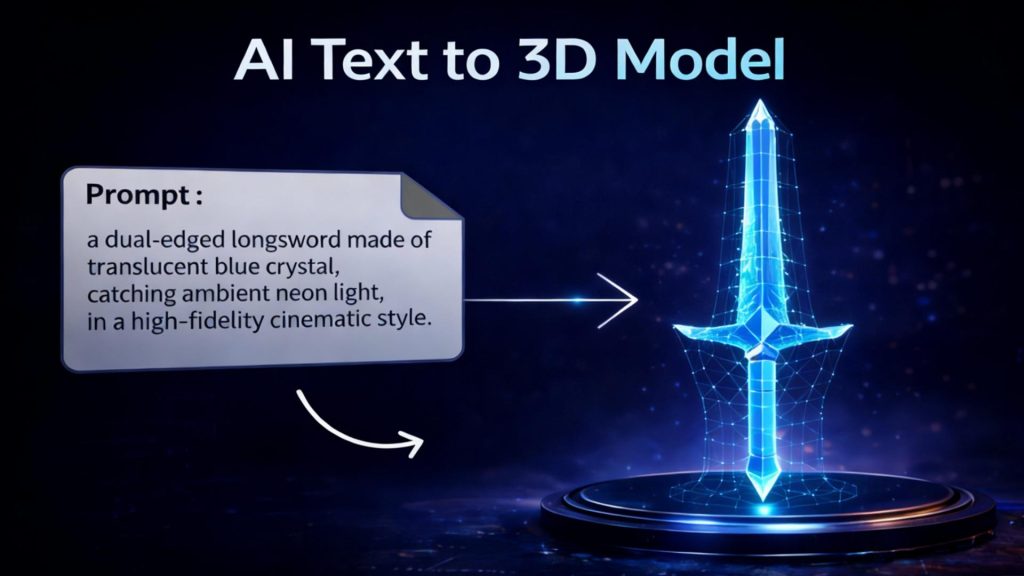
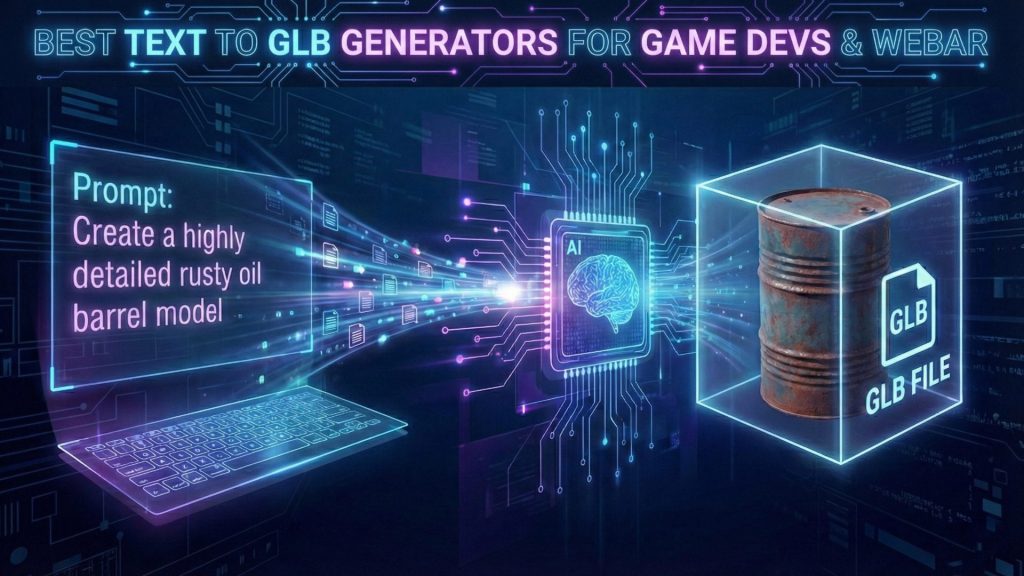
A level script can describe what it needs using text strings such as “rusty oil barrel”, “wooden supply crate”, or “alien artifact with glowing seams”. These descriptors are sent to a scalable generation endpoint, which produces unique assets on demand.
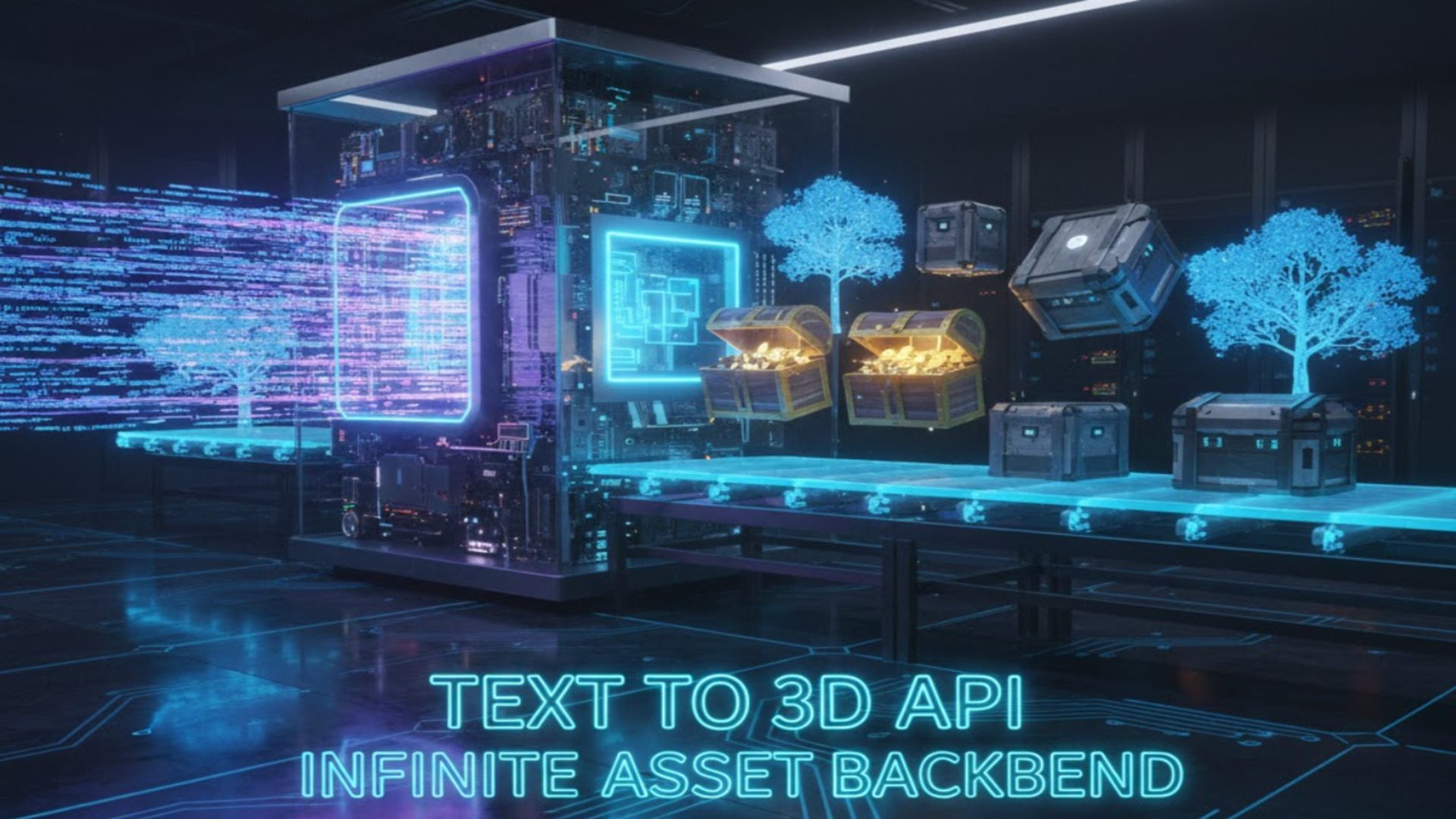
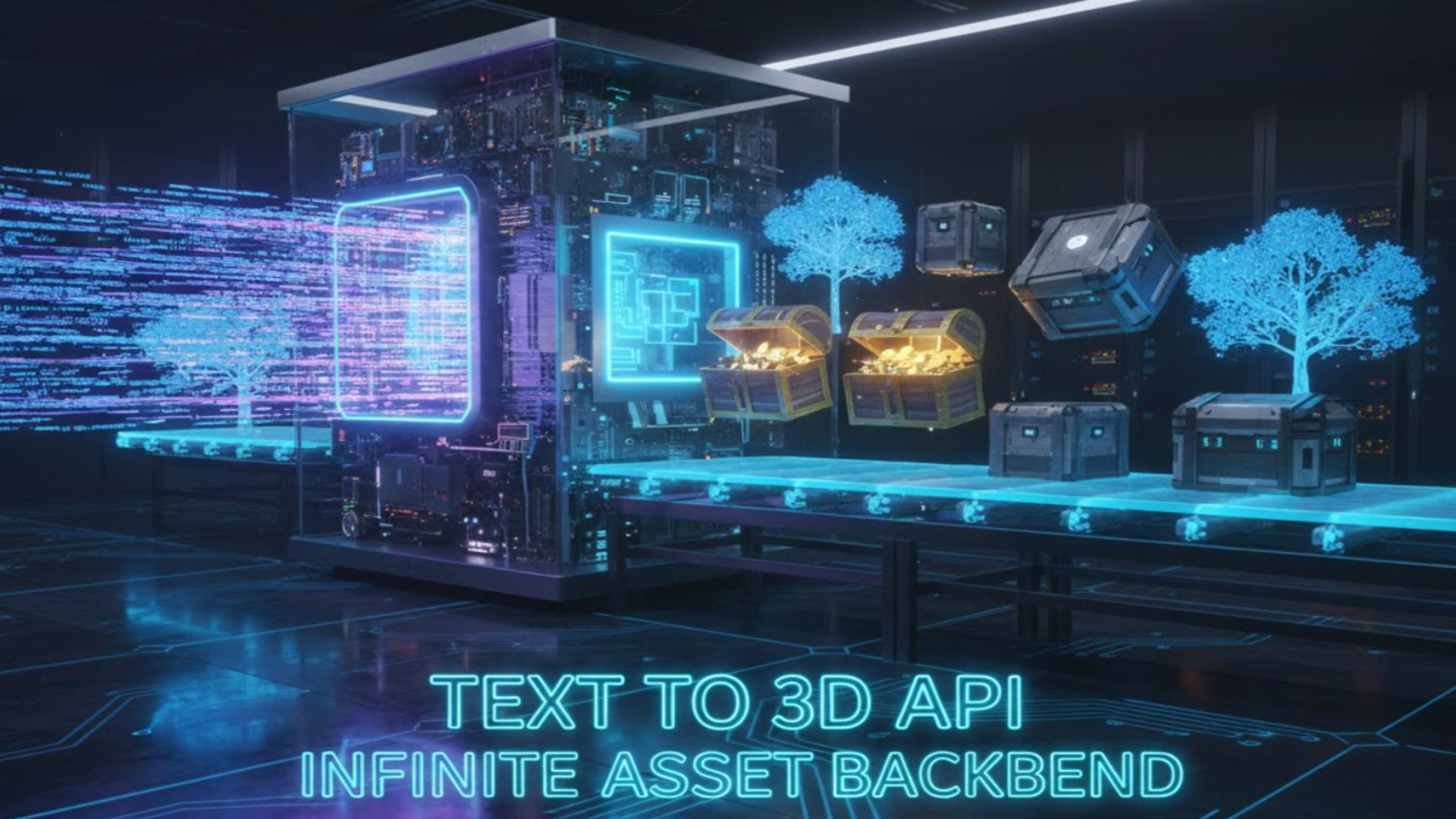
The asset library no longer exists as a folder. It exists as code potential.
This approach is fundamentally different from reconstructing a specific object from a reference image, which is better handled by an Image to 3D API.
This is exactly the design philosophy behind the Neural4D Text to 3D Studio, which exposes text based 3D generation both through UI tools and programmatic pipelines.
Prompt Engineering for Consistent 3D Asset Generation
A common concern with text-driven generation is consistency.
If assets are generated from text, how do you ensure that a chair, a table, and a shelf all belong to the same visual universe?
The answer is not manual review. It is backend logic.
Because a text to 3D model API accepts raw strings, developers can enforce consistency by structuring prompts programmatically rather than passing user input directly.
A common pattern is to define a global style constraint at the server level. This constraint is concatenated to every request before it is sent to the API.
Material type, shading style, polygon density, and texture resolution can all be enforced automatically.
Consistency in generative systems does not come from randomness.
It comes from constraints. This is why text to 3D generation works best when treated as an engineering problem rather than an artistic one.
Neural4D’s generation pipeline is designed around this assumption, making it suitable as a production-ready text to 3D backend rather than a one-off creative tool.
Turn Text Prompts Into Production-Ready 3D Assets
Send a prompt, receive a watertight GLB. Generation runs on demand, no stored asset library required.
Free users get 50 credits per week. No credit card required.
For procedural level generation, live service games, and UGC platforms, this shift removes a hard ceiling on scale. Content generation becomes elastic rather than linear with team size.
The API is built specifically for these scenarios, where assets must be generated reliably, consistently, and at scale.
Part 2: How the Neural4D Text to 3D API Works
High-fidelity 3D generation is computationally expensive. It cannot be treated as a synchronous request.
Neural4D’s API is designed to be asynchronous by default.
A generation request returns a set of UUIDs rather than blocking the connection. You keep the UUID, poll the retrieveModel endpoint, and download the finished model once the job reports completion. The official Neural4D API quickstart walks through this request and poll flow with examples in cURL, Python, Node.js, Go, and Java.
This architecture allows developers to trigger hundreds of generation requests without overwhelming their infrastructure. A forest, city block, or dungeon can be generated in parallel, with assets arriving as they are ready.
The output formats include .glb, .fbx, .obj, .stl, .usdz, and .blend, making the API compatible with Unity, Unreal Engine, and web-based 3D frameworks such as Three.js. Format conversion runs through a dedicated convertToFormat endpoint, and a queryJobProgress endpoint exposes progress for monitoring long-running batches.
For teams building automated pipelines, this asynchronous design is essential.
Text, Image, and Multi-View Input Modes
The API does not have to be text-only. The Neural4D API exposes the same asynchronous workflow across three input modes, each billed in Power credits:
- Text to 3D (
generateModelWithText, 60 credits): the core path covered here, taking a prompt string and returning model UUIDs. - Image to 3D (
mattingImagefollowed bygenerateModelWithImage, 80 credits): mat an image first, then generate from the matted result to preserve a specific silhouette or concept across a batch. - Chibi character models (
createCuteModelsFromImages, 30 credits): stylized cute characters from uploaded images, useful for avatars and UGC content.
All three modes reuse the same retrieveModel polling flow, so one integration pattern covers the entire API surface.
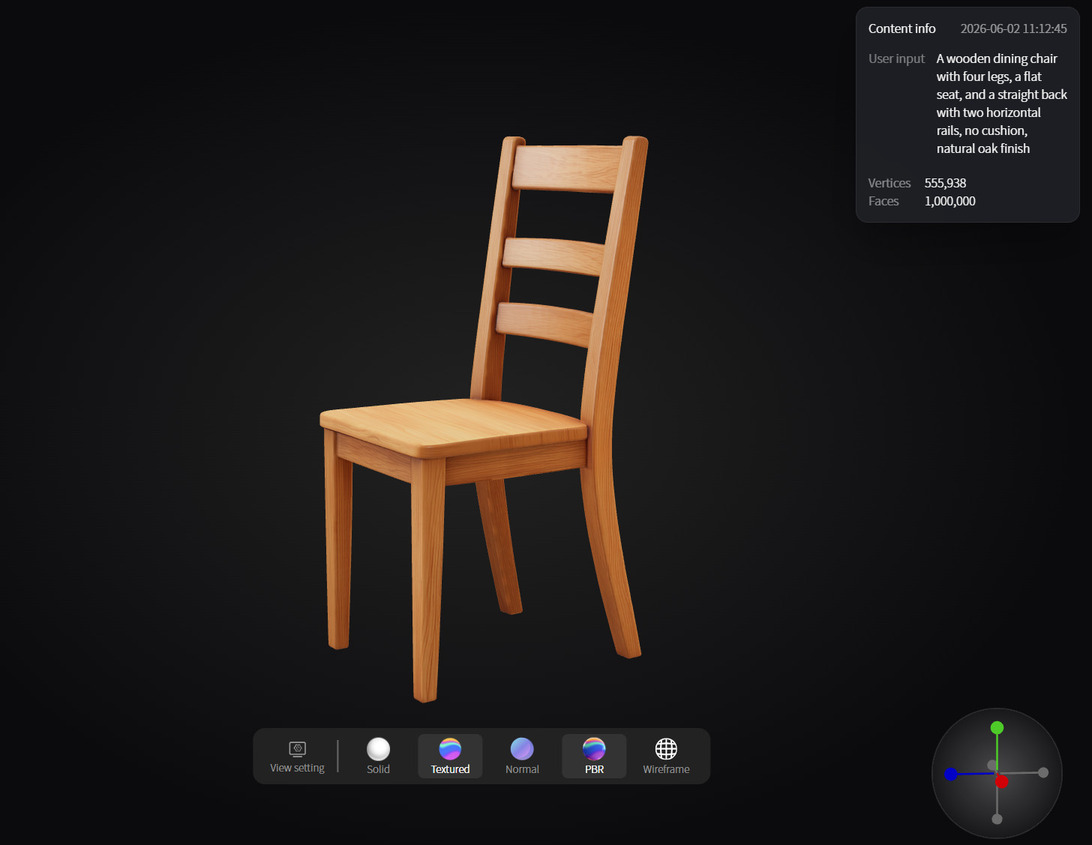
A Minimal Python Example
A complete text to 3D job takes two requests: create the job, then poll until the model URL is ready. Here is the full flow in Python:
import requests
import time

API_KEY = "your_token_here"
BASE_URL = "https://alb.neural4d.com:3000/api"

headers = {
    "Authorization": f"Bearer {API_KEY}",
    "Content-Type": "application/json",
}

# 1. Create the generation job
resp = requests.post(
    f"{BASE_URL}/generateModelWithText",
    json={"prompt": "a wooden supply crate", "modelCount": 1, "disablePbr": 0},
    headers=headers,
)
uuid = resp.json()["uuids"][0]

# 2. Poll until the model is ready
while True:
    result = requests.post(
        f"{BASE_URL}/retrieveModel",
        json={"uuid": uuid},
        headers=headers,
    ).json()
    code_status = result.get("codeStatus")
    if code_status == 0:
        print("Model ready:", result["modelUrl"])
        break
    elif code_status == -3:
        raise RuntimeError("Generation failed: " + result.get("message", ""))
    time.sleep(10)
The disablePbr flag controls textures: set it to 1 for an untextured base mesh (roughly 90 seconds) or 0 to have PBR textures generated in the same job (2 minutes or more). If you need the asset in a specific format, call convertToFormat with the target type.
Part 3: Pricing, Rate Limits, and Concurrency
The API documents its cost in Power credits rather than a flat per-call dollar price. A text to 3D generation consumes 60 credits, a format conversion consumes 10, and the credit rates on paid plans put a typical generation at roughly $0.15. The same balance covers generation and format conversion, so a batch of 100 assets costs about 7,000 credits including conversions.
A typical asset pack costs between $20 and $50. Once purchased, the assets are fixed. They cannot adapt to context, theme, or gameplay logic. Thousands of other projects use the same files. For the cost of a single asset pack, developers can generate over one hundred unique, project specific assets. Each one is tailored to its prompt and exclusive to the project.
There is also a hidden cost to static assets that teams overlook. Time spent searching libraries, adjusting mismatched styles, and reusing generic props adds friction to production.
For context, providers price by fidelity tier. WaveSpeedAI lists its Hunyuan 3D V3.1 Rapid tier at $0.0225 per generation for a fast, lower-fidelity output. Alibaba Cloud’s Tripo documentation splits the service into Tripo-H3.1, which supports up to 2 million polygons for film-quality output, and Tripo-P1.0, capped at 20,000 polygons for real-time game use. Neural4D’s single credit model bundles watertight geometry and optional PBR textures into one job, which removes the separate texture-generation step that other providers charge for.
The Neural4D API documentation states: “You can use uuids to retrieve the models while the generating is completed,” confirming that the cost per call is billed against the same credit balance you use in the Studio. Free users receive 50 Power credits per week, enough to prototype a pipeline before committing to a paid plan.
Because generation is asynchronous, client concurrency is decoupled from server throughput. You can fire hundreds of requests, collect the UUIDs, and poll them in parallel, which is the model the Python AI 3D model generator API walkthrough uses for batch pipelines.
The practical constraint is credit balance, not request rate. A batch of 100 text to 3D jobs consumes 6,000 Power credits before conversion, so pipeline design starts with a budget rather than a requests-per-second figure. Start with 5 to 10 concurrent pollers, back off on non-2xx responses, and use the queryJobProgress endpoint with the same UUID to monitor long-running batches instead of hammering retrieveModel.
Part 4: API Status Codes and Error Handling
The retrieveModel response carries a codeStatus field that drives the poll loop. Handle each value explicitly instead of treating any non-zero value as a generic failure.
| codeStatus | Meaning | Action |
|---|---|---|
| 0 | Model generation complete | Download modelUrl |
| 1 | Model still generating | Continue polling |
| -1 | Token invalid or expired | Refresh the Bearer token |
| -2 | UUID does not exist | Verify the UUID came from a generation call |
| -3 | Generation failed | Retry with a revised prompt |
Format conversion adds its own status. The convertToFormat response returns statusType: 0 means the conversion is complete and the model is ready to download, 1 means the conversion is still running and you should retry in a few seconds, and -1 means the request parameters were incorrect or the conversion failed.
Part 5: Output Quality: Watertight Geometry and Mesh Tiers
Automated pipelines fail quickly when geometry is invalid. Non-manifold meshes, open surfaces, and flipped normals can break physics engines, collision systems, and 3D printing workflows.
Every asset generated by the API is watertight by design. This makes it suitable for physics simulation, voxelization, destruction systems, and direct import into Unity, Unreal Engine, or Three.js.
This emphasis on topology quality is a direct consequence of Neural4D’s underlying architecture rather than post processing tricks.
Polygon budgets separate real-time game assets from film-quality reference models. The industry splits into two tiers: film-quality generation that reaches 2 million polygons, and real-time game models capped around 20,000 polygons. The Neural4D API takes a different approach: one generation endpoint that defaults to engine-ready meshes, with UV coordinates auto-unwrapped so the downloaded .glb imports directly into Unity, Unreal Engine, or Three.js.
Output control comes through parameters rather than separate product tiers:
- Format:
convertToFormatexports fbx, glb, obj, stl, blend, or usdz (default glb). - Scale:
modelSizesets the model size in millimeters, with any value above 1 accepted. - Textures:
disablePbrtoggles PBR maps; setting it to 0 generates Normal, Roughness, and Metallic maps in the same job.
Because PBR textures are generated in the same job, the output is ready for a physics-ready, material-assigned import instead of requiring a separate texturing pass.
Part 6: When a Text to 3D API Makes Sense, and When It Does Not
A text to 3D API is not a universal replacement for artists.
It excels when variety, scale, and speed are the priority.
It is ideal for environmental props, background assets, UGC content, and procedural systems where uniqueness matters more than exact design fidelity.
It is not designed for hero characters, licensed IP, or assets that must exactly match a predefined concept down to millimeter precision.
Neural4D is explicit about this boundary. The API is built to fill worlds, not to replace character artists or concept designers.
Knowing when not to use generative systems is part of building trust in them.
Part 7: Common Questions on Text to 3D APIs
A text to 3D API is a backend endpoint that accepts a text prompt and returns a generated 3D model. Generation runs asynchronously: the API returns a UUID, and the client polls until the model URL is ready.
The API exports .glb, .fbx, .obj, .stl, .blend, and .usdz through the convertToFormat endpoint, with .glb as the default. This covers Unity, Unreal Engine, and web frameworks such as Three.js.
A text to 3D generation consumes 60 Power credits, and a format conversion consumes 10. At typical paid-plan credit rates this works out to roughly $0.15 per generation. Free users receive 50 Power credits per week.
Yes. Because generation is asynchronous, a client can submit many requests, collect the UUIDs, and poll them in parallel. The cost scales with the credit balance: 100 text to 3D jobs consume 6,000 Power credits before format conversion.
The API produces watertight, manifold-closed meshes with auto-generated UV coordinates. This makes the output valid for physics simulation, collision systems, and 3D printing without a separate retopology or repair pass.
Conclusion
A text to 3D backend changes how developers think about content.
Assets stop being static files and become generated outputs of logic.
Variety becomes a system property rather than a production bottleneck. By integrating Neural4D as a backend text to 3D model API, developers gain a scalable, production-ready foundation for procedural worlds, UGC platforms, and dynamic experiences.
This is not about replacing creativity. It is about removing constraints.
Start experimenting with the Neural4D API and see how generative pipelines change what your project can scale into.
Start Generating Assets From Text Today
Get an API key, send your first prompt, and pull a watertight GLB into your pipeline within minutes. No stored asset library required.
Free users get 50 credits per week. No credit card required.