
AI 3D Generation Funding Boom: What It Means for Creators
Quick Summary
- In mid-2026, VAST raised over ¥1 billion and Hyper3D raised hundreds of millions, signaling the AI 3D generation industry’s shift from technical validation to commercial deployment.
- Capital influx accelerates product iteration, but funding scale does not equal product quality. Creators should focus on usability, workflow integration, and output consistency, not funding headlines.
- Neural4D chooses to focus on its Direct3D-S2 architecture and Spatial Sparse Attention, prioritizing output determinism and watertight quality over fundraising pace.
The AI 3D generation funding surge in summer 2026 has brought unprecedented capital attention to the space. Within weeks, two major rounds were announced. The industry is crossing the threshold from technical validation to commercial deployment. Creators need to understand what this actually means for their work.
Part 1: The Funding Surge and What’s Driving It
Between June and July 2026, VAST closed over ¥1 billion in Series A3 funding, with participation from Geely Capital, 4399, and Giant Network. Around the same time, Hyper3D (Yingjing Technology) completed a new round worth hundreds of millions and updated its Rodin product to Gen-2.5.
These numbers are drawing attention to the 3D generation track. The recent AI 3D generation funding activity reflects a deeper structural shift: 3D content demand is exploding across gaming, film, e-commerce, and 3D printing simultaneously. Traditional modeling pipelines simply cannot keep up.
Capital is not betting on a technology concept. It is betting on AI 3D generation becoming the next content infrastructure. The investor lineup confirms this: Geely, Giant Network, and other industrial players indicate that 3D generation is moving from the lab to the production line. Coverage by KuCoin News reinforces this reading: the involvement of gaming and automotive industrial capital signals a shift from experimentation to real deployment.
What is driving this surge? At its core, the AI 3D generation funding wave is a response to supply-demand imbalance. Game studios need massive character and environment assets. E-commerce platforms need 3D product displays. Film productions need rapid concept design. These demands have always existed, but traditional modeling pipelines could not scale to meet them. AI 3D generation has made batch production of 3D content possible for the first time. Whether text to 3D or image to 3D, generation speed has compressed from days to minutes. That is the opportunity capital sees. Not that 3D technology suddenly became cool, but that too many people cannot afford to wait.

Part 2: Funding Is Not a Shortcut to Quality
A company raising a large round can hire more people, buy more compute, and accelerate product iteration. But when headlines about AI 3D generation funding dominate the news, it is easy to confuse capital with capability. Funding does not automatically make the output more usable.
In practice, focus on three verifiable metrics:
Output usability: How much time do you need to spend fixing the model after export? Many tools look impressive in demos but produce non-manifold geometry, baked-in lighting artifacts, or broken UVs.
Workflow integration: Are export formats standard? Is the API mature? Can you import directly into Unity, Unreal, or Blender?
Output consistency: Do repeated runs with the same input produce stable results? Can you iterate through fine-tuning rather than regenerating from scratch?
Try any tool for 10 minutes on these three metrics. You will learn more than any funding announcement can tell you.
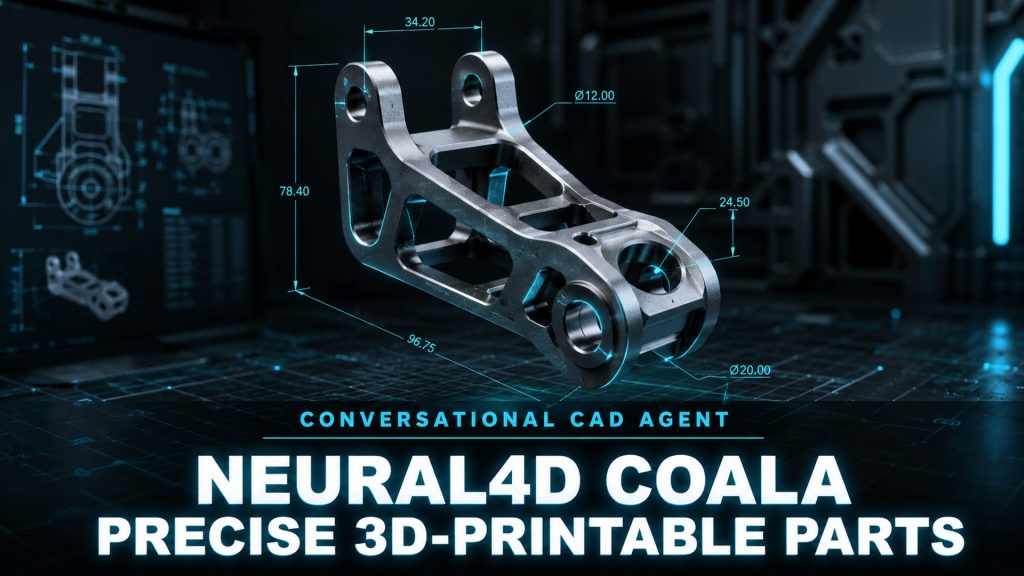
This is where Neural4D’s approach comes into focus. Instead of chasing fundraising pace, Neural4D invested in technical depth: the proprietary Direct3D-S2 architecture with Spatial Sparse Attention. In practice, this means topological quality is predictable, output meshes are watertight, and models can be used directly for 3D printing or game engine import without additional repair. All of our 3D generation features are built on the same underlying architecture. For more on AI 3D tool applications, check out other articles on the Neural4D blog.
This technical approach is validated by enterprise deployments. Neural4D’s partnership with ByteDance and other leading companies demonstrates that in the commercialization phase, technical determinism and delivery capability matter more than funding size.
Do not just read about it. Try it.
Upload an image or type a prompt. See what AI 3D generation actually delivers.
New users get 50 Power per week. No credit card required.
Part 3: Practical Advice for Creators
During a period of rapid tool iteration, maintaining flexibility matters more than chasing the best tool.
Do not lock into a single tool. Product positions can flip within six months at this stage, especially with so much AI 3D generation funding flowing into the market. Keep evaluating multiple tools so your workflow serves you, not the other way around.
Pay attention to export formats and portability. Make sure your assets can be exported in standard formats (OBJ, FBX, GLB, STL) and will not be trapped in any platform’s proprietary format. Asset portability directly determines your long-term creative freedom.
Check communities before demos. The real experience of a tool lives in Discord and Reddit, not on the official showcase. Other users’ pain points are more informative than marketing copy. For deeper comparisons, the Neural4D blog regularly covers practical tool evaluations and workflow tips.
As for Neural4D, every free user gets 50 Power per week for generation. No funding story needed. Open Studio and try it yourself.
Part 4: FAQs About AI 3D Generation Tools
Q: Are AI 3D generation tools mature enough yet?
A: For concept design, rapid prototyping, and e-commerce display, AI 3D generation has reached practical usability. But if your project requires millimeter-level precision or complex topology for animation rigging, AI-generated models may still need manual adjustments. Use AI tools as a starting point to compress the time from concept to first draft, then refine based on your project’s specific requirements.
Q: Does more funding mean a better tool?
A: Funding reflects the capital market’s assessment of the sector’s potential and team execution, not a product quality certification. Many teams with modest funding deliver solid results on specific technical metrics. Judge tools by the output itself: generation quality, export formats, API stability, and community feedback. These tell you more about a tool’s current state than its funding number.
Q: Which tool should my team choose?
A: It depends on your use case. If you need high-precision output and reliable topology, look at the underlying architecture rather than the feature list. If you need rapid concept exploration and batch iteration, prioritize generation speed. If your team needs API integration for automated pipelines, evaluate enterprise API maturity. Running multiple tools in parallel is the most pragmatic approach at this stage.
Q: What scenarios is Neural4D best suited for?
A: Neural4D excels wherever production-ready 3D models are needed: game character and environment assets, 3D printing prototypes, and industrial concept design. Watertight meshes and PBR texture support mean exported models go directly into Unity, Unreal, or slicing software without additional repair or retopology. For iterative workflows, Neural4D-2o’s natural language conversational modeling provides flexibility that traditional AI generation tools do not offer, letting you refine proportions, materials, and details through dialogue rather than starting over.
Start Creating with Neural4D
The 2026 funding wave confirms a simple fact: AI 3D generation is no longer a question of if, but how fast. For creators, starting with these tools now is how you build future competitiveness.
Neural4D will keep advancing along the technical depth path. Not because we need more resources, but because in 3D generation, architectural depth ultimately determines product height. Funding can accelerate a company’s growth, but only technology earns users’ trust over the long term. Want to see the difference? Visit the features page and check the actual output quality of AI 3D generation.
Try it once. See the difference.
Upload an image or type a prompt. Generate your first AI 3D model in Studio.
50 Power per week. No credit card. Results in seconds.