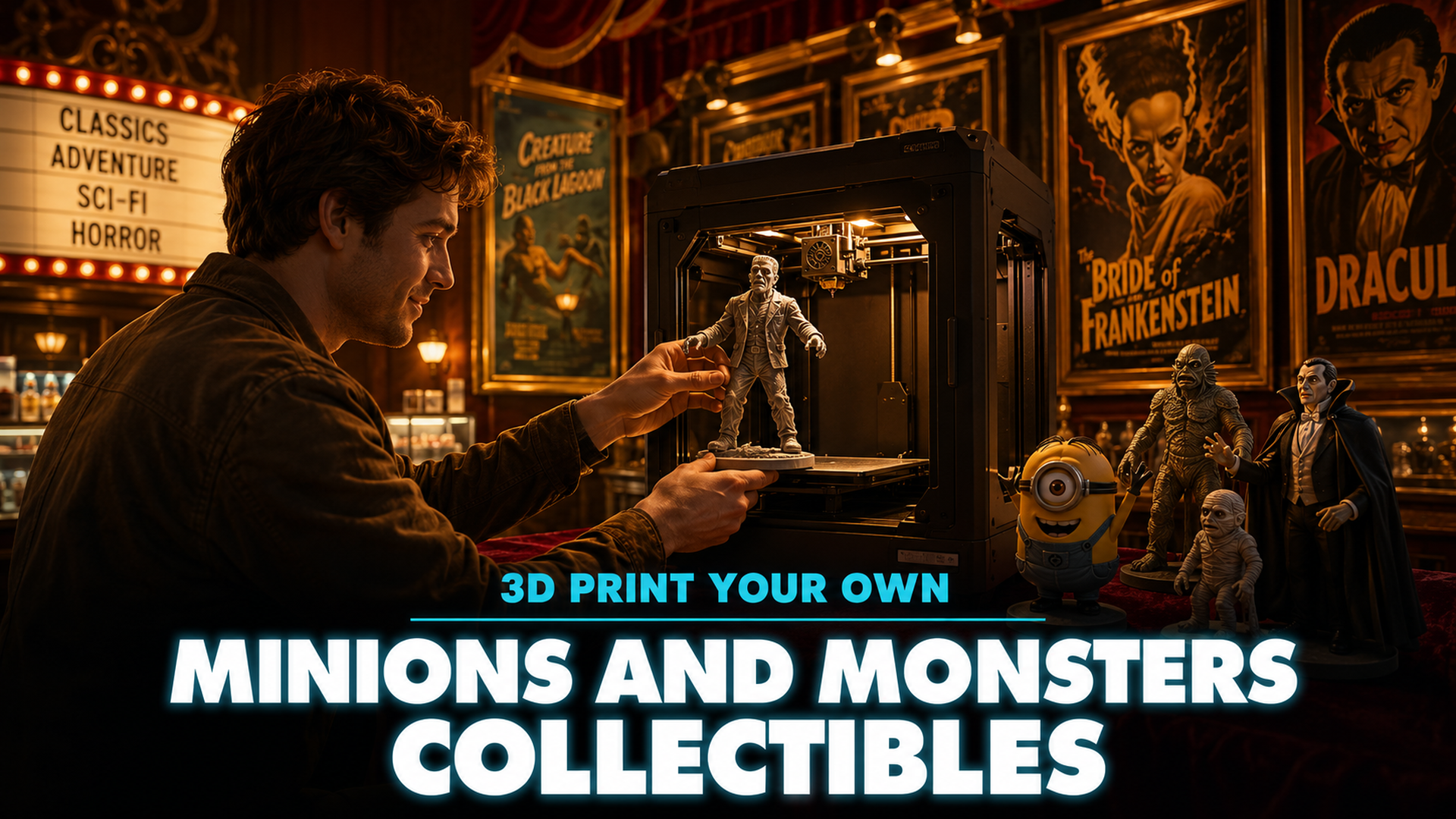
Minions and Monsters 3D Collectibles Guide: Print at Home
Quick Summary
- Minions and Monsters 3D collectibles fill the gap between the July 1 movie premiere and official merchandise hitting retail shelves in late summer
- Moose Toys and Wendy’s are producing official Minions & Monsters merchandise, but fan-created 3D printed figures offer unlimited customization and immediate availability
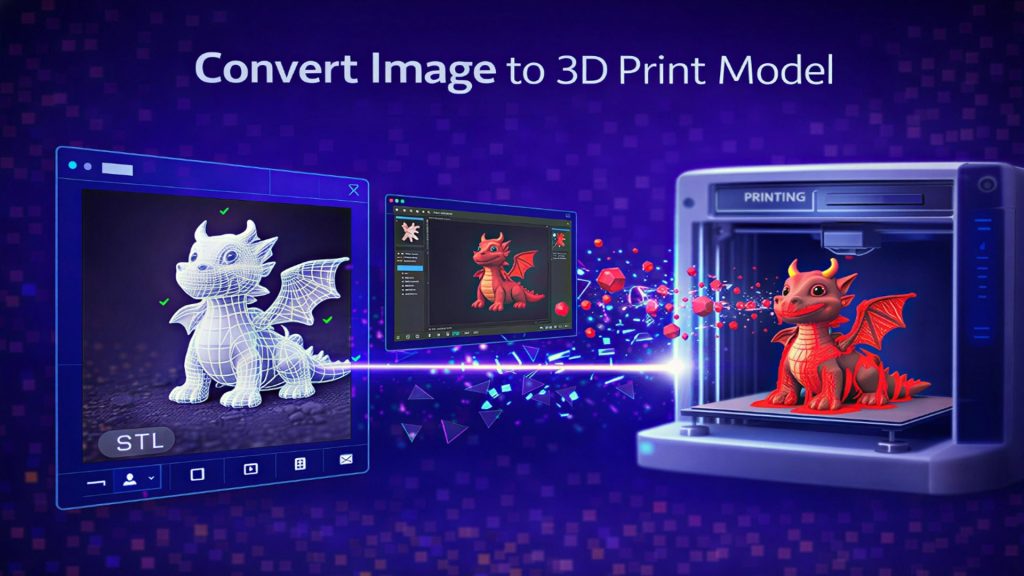
- AI image to 3D tools convert any movie screenshot or promotional image into a watertight STL file ready for printing in under two minutes
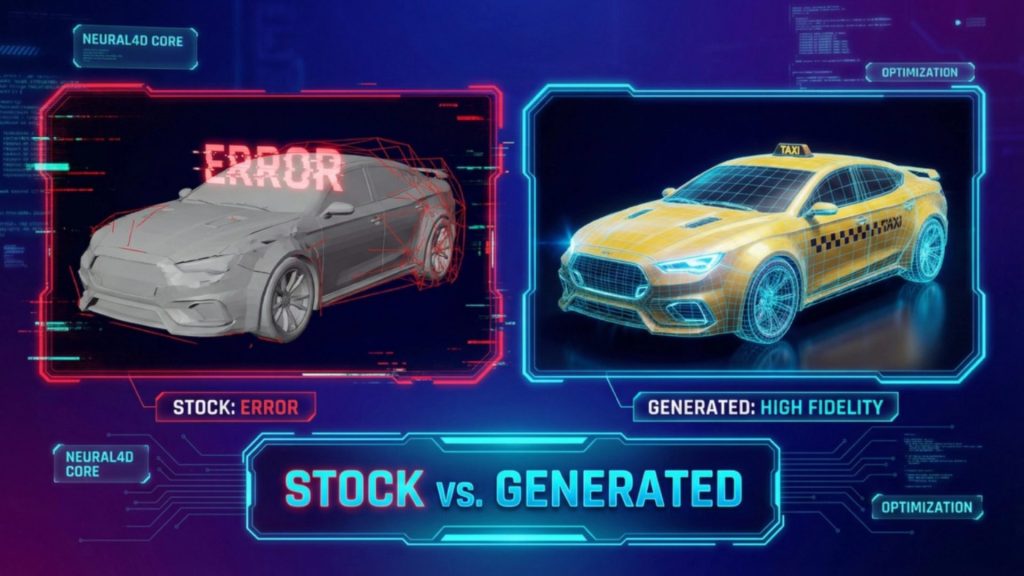
- Neural4D’s Direct3D-S2 engine outputs mathematically watertight geometry that goes straight into Cura or PrusaSlicer with zero mesh repair
Minions and Monsters 3D collectibles are what every fan wants right now. Illumination’s latest film hit theaters on July 1, and the gap between that release date and the official Moose Toys merchandise shipping later this summer is a window where 3D printing takes over. You do not need a modeling degree or a studio license. One movie screenshot, 90 seconds of AI generation, and a few hours of printing later, you have a Kevin, Bob, or Stuart on your desk that looks like it walked off the screen.
- Part 1: What Is Minions and Monsters?
- Part 2: Why 3D Printed Collectibles Matter for This Release
- Part 3: How to Create Minions and Monsters 3D Collectibles with AI
- Part 4: Tips for Print-Ready Movie Collectibles
- Part 5: Common Questions on Minions and Monsters 3D Collectibles
- Start Printing Your Minions and Monsters 3D Collectibles
Part 1: What Is Minions and Monsters?
Minions and Monsters is the third standalone Minions film and the seventh entry in the Despicable Me universe. Directed by Pierre Coffin (who also voices the Minions) and co-directed by Patrick Delage, the movie had its world premiere at the Annecy International Animation Film Festival on June 21 before its wide theatrical release on July 1.
The plot lands the Minions in 1920s Hollywood, where they accidentally stumble into movie stardom. Their next idea is to produce their own monster film. The problem: their antics summon actual monsters into the real world, and the Minions have to clean up the mess. The voice cast includes Zoey Deutch, Allison Janney, Christoph Waltz, Jeff Bridges, Jesse Eisenberg, Trey Parker, and a confirmed cameo from George Lucas. The film runs approximately 85-90 minutes with a PG rating.
🎬 Opening weekend context: Major animated releases consistently drive a measurable spike in 3D printing searches within 48 hours of opening. For the Super Mario Movie, searches for printable models jumped over 400% in the first week. Early data suggests Minions and Monsters is following the same trajectory.
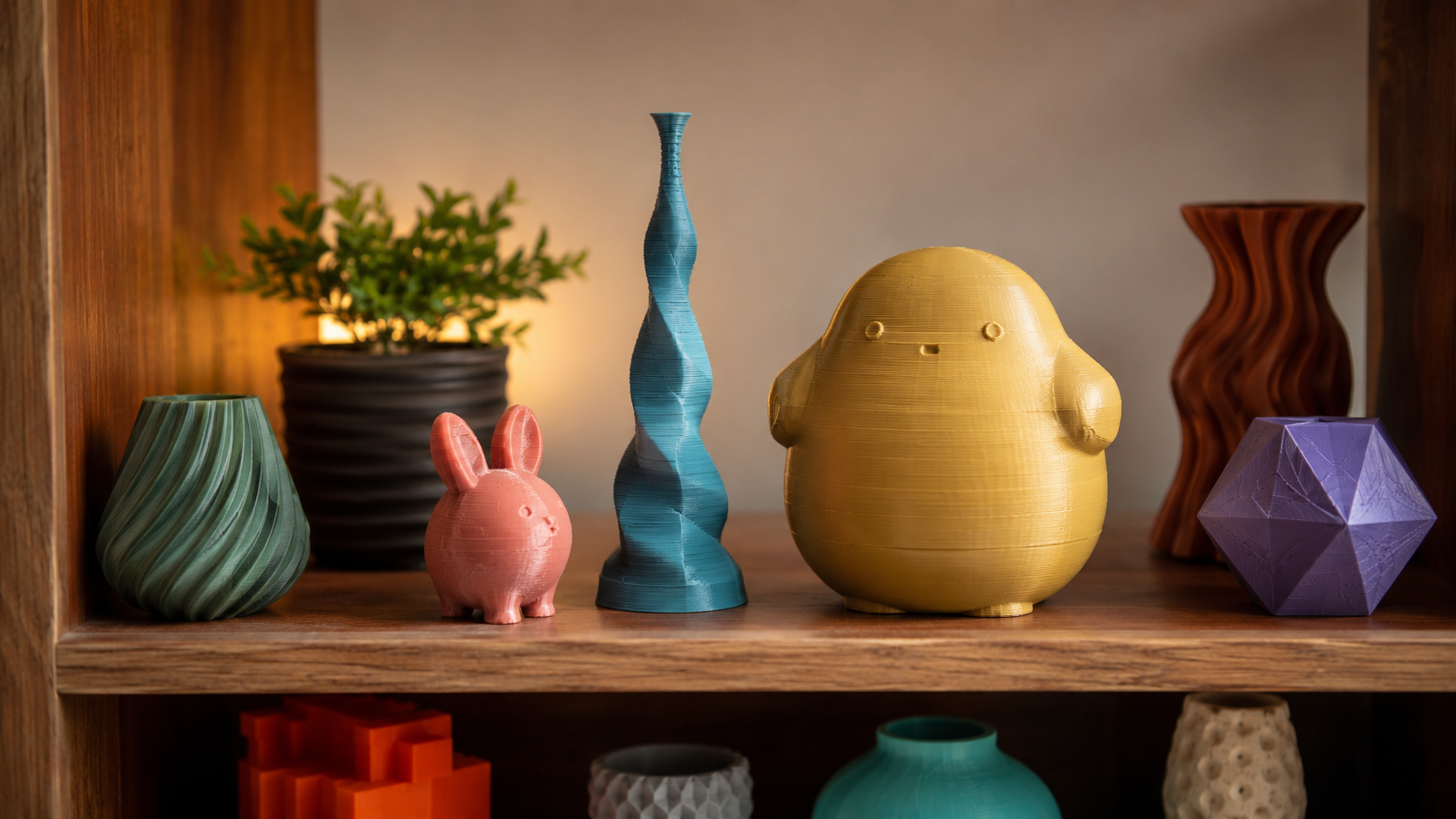
Part 2: Why 3D Printed Collectibles Matter for This Release
Official Minions and Monsters merchandise is already in motion. Moose Toys is producing Cast and Crew Mini Figures, Sound Stages, Fart Blaster Pro, and Quest for Monsters sets priced from $3.99 to $29.99. Wendy’s launched a Minions and Monsters meal with exclusive collectible toys. Entertainment Earth has pre-orders for 3D foam bag clips. But all of this has a problem: availability is limited, selection is fixed, and customization is zero.
That is where 3D printing changes the equation. Three specific factors make this movie an ideal candidate for fan-printed collectibles:
- Character variety. The Minions themselves come in dozens of variants across the film. Kevin, Stuart, Bob, and the new monster characters give you more subjects to print than any single retail line can cover.
- Costume distinctiveness. The 1920s Hollywood setting gives the characters unique period costumes that make each figure visually distinct from standard Minion merchandise. A studio-director Kevin in a vintage suit and fedora is a display piece, not just another yellow figure.
- Monster originality. The movie introduces original monster designs that have no existing toy analogs. Printing these from promotional images gives you a collectible that does not exist anywhere else.
The practical constraint that stops most fans from creating movie collectibles is the modeling skill gap. Converting a 2D image into a printable 3D file traditionally requires Blender or ZBrush proficiency. AI generation removes that constraint entirely.
📊 Market note: The global 3D printing market was valued at $16.16 billion in 2025 and is projected to reach $35.79 billion by 2030, growing at a 17.2% CAGR. Consumer adoption is accelerating as printer prices fall and AI-assisted design tools remove technical barriers. Source: MarketsandMarkets, 2026.
Part 3: How to Create Minions and Monsters 3D Collectibles with AI
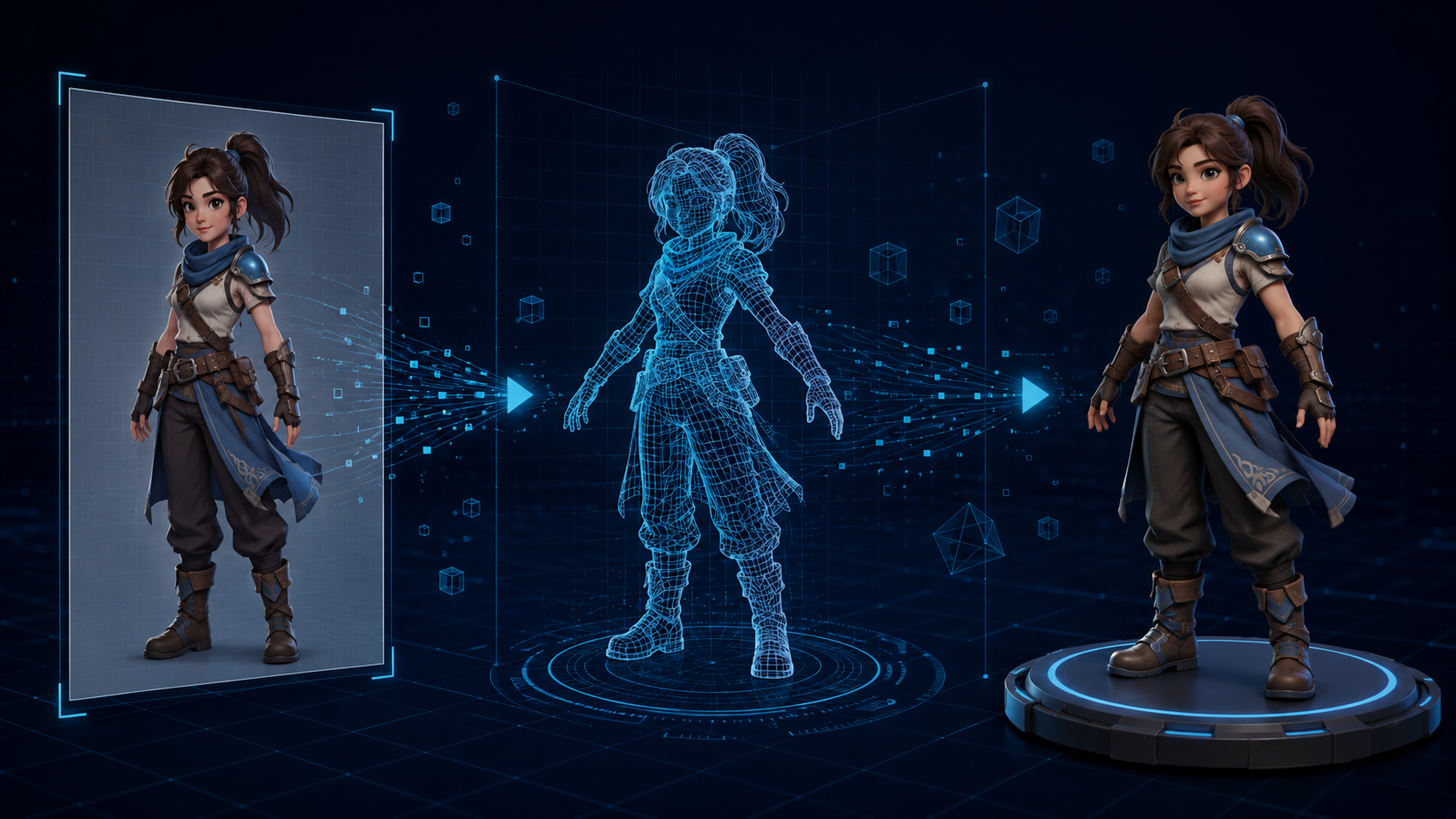
The workflow from screenshot to printed figure takes four steps and about two hours of total time, most of which is the printer running. Your hands-on work is under 10 minutes.
Step 1: Find a clean reference image
Start with a promotional still or screenshot that shows the character in a clear, front-facing pose. Avoid action shots where the character is twisted or partially obscured. The cleaner the silhouette, the better the AI reconstruction. Movie posters, character posters, and official trailer stills are ideal sources.
Step 2: Generate the base mesh
Upload your reference image to the Neural4D Image to 3D feature. The Direct3D-S2 engine processes the full volumetric space at 2048 cubed resolution and outputs a watertight mesh that captures the character’s proportions and surface contours. Generation takes approximately 90 seconds for an untextured base mesh. The model comes out with clean triangular topology and no non-manifold edges. This means the STL file is ready for your slicer the moment it downloads, with no Meshmixer or Netfabb repair pass required.
Step 3: Refine with conversational editing
If the initial result needs adjustments, Neural4D’s refinement tools let you describe changes in plain text. If the monster’s horns need to be longer or the Minion’s goggles sit too low, type the correction and the model updates while keeping the original base geometry intact. For models generated with Neural4D-2o, the conversational editing is even more precise, allowing you to adjust proportions through natural language prompts.
Step 4: Export and print
Export as STL for standard FDM or SLA printing. The watertight geometry means the file goes directly into Cura, PrusaSlicer, or Bambu Studio without a repair pass. For multi-color prints, export as OBJ to carry material zone information. For a quick preview of how the finished figure will look before committing to a print run, use GLB format. The image to STL conversion guide covers export settings in more detail.
Video walkthrough: See the full image to 3D workflow in action.
Turn a Screenshot into a 3D Printable Figure
Upload a movie still. Get a watertight STL. Print it in under two minutes of generation time.
50 free credits every week. No credit card required.
Part 4: Tips for Print-Ready Movie Collectibles
Getting a good 3D model is only half the process. These four tips separate a display-quality collectible from a failed print that ends up in the scrap bin.
Scale for your printer and purpose
A Minion figure prints well at 4-6 inches tall for desk display. At that size, FDM printing at 0.12mm layer height produces a surface that takes paint smoothly. For monster busts or larger display pieces, scale up to 8-10 inches and use 0.2mm layers to keep print time under 12 hours. The polygon count guide for 3D printing explains how mesh density maps to different print sizes so you do not overcomplicate your files.
Pick the right material
PLA is the default for decorative collectibles. It prints easily, takes acrylic paint well, and the yellow-gold body of a Minion is a standard PLA color, so you can print the body in yellow and hand-paint the overalls and goggles. For monster models with translucent elements, PETG or resin gives better light transmission. For durable cosplay props, ABS or ASA provides impact resistance but requires an enclosed printer.
Orient for minimum supports
Print the model with the flattest face on the build plate. For upright character figures, tilting the model 15 degrees backward reduces support material on the face and chest, which are the most visible surfaces. Tree supports are easier to remove than standard supports and leave fewer marks. Test the orientation in your slicer’s preview mode before committing to the print.
Post-process for display quality
A raw FDM print has visible layer lines. Sanding with a 220-400-800 grit progression, followed by automotive filler primer, creates a smooth surface. Acrylic paints and a matte varnish seal produce a finish that rivals injection-molded figures. For a Kevin or Stuart figure, the post-processing time is about 45 minutes, and the result is a display piece that looks store-bought. The guide to preparing and exporting models for 3D printing covers the full finishing pipeline.
Part 5: Common Questions on Minions and Monsters 3D Collectibles
Yes, for personal use. Printing a Kevin figure for your own desk or a monster mask for Halloween falls under personal use and is not challenged by IP holders. Selling 3D printed models of copyrighted Illumination characters without a license is not legal and Etsy actively enforces takedowns for unlicensed character models. If you want to sell, create original monster designs inspired by the film aesthetic rather than direct copies of screen-accurate characters.
For figures under 6 inches, a Bambu Lab A1 Mini ($299) or Creality Ender-3 V3 produces excellent results at an entry-level price. For larger monster busts or props requiring higher temperature materials, a Bambu P1S or any enclosed CoreXY printer handles ABS and PETG reliably. Resin printers like the Anycubic Photon M7 deliver the highest surface detail for small collectibles but require post-processing steps and proper ventilation that FDM printers do not.
The reference image quality determines the output quality more than any other variable. Front-facing, evenly lit promotional stills produce the most accurate results. Action shots with occluded features or motion blur lead to less reliable reconstruction. Official character posters are better sources than mid-scene screenshots. If the first result is close but not exact, use conversational refinement to adjust specific areas or try a different reference image. Screen accuracy at the level of a studio maquette rarely happens on the first pass. Multiple refinement rounds are standard in professional 3D workflows.
For FDM printing, PLA in matte finish gives the best display results because it hides layer lines better than glossy PLA and takes primer without sanding. Silk PLA adds a subtle shimmer that works well for monster scales and textured surfaces. For resin printing, standard gray resin is the most versatile for painting. Avoid flexible filaments for display figures they do not hold fine details. For multi-part characters like a Minion with separate goggles and overalls, print each part in its matching color and assemble after printing.
Yes, organic shapes are actually easier for AI generation than mechanical ones. The Neural4D volumetric engine handles curves, fur-like textures, and asymmetrical monster features well because it processes full 3D volume rather than estimating surfaces from a single projection. The monsters in the film have distinct silhouettes that translate well to 3D printing. For best results, use a promotional image where the monster is fully visible without occlusion. Complex shapes like multi-eyed or tentacled designs may need support structures in the slicer, but the base mesh generation handles the organic topology naturally.
Start Printing Your Minions and Monsters 3D Collectibles
Minions and Monsters 3D collectibles are how you bridge the gap between the movie you just watched and the physical mementos you want on your shelf. Official merchandise from Moose Toys and Wendy’s is fun, but it cannot match the specificity of printing the exact character variant you want, at the scale you want, in the colors you choose.
AI generation removed the obstacle that used to stop this from being practical. You do not need to learn Blender, you do not need to subscribe to a CAD suite, and you do not need to spend hours repairing broken meshes. A clean promotional image, 90 seconds of generation, and your printer does the rest. Every collectible you print is unique, customized to your preference, and available today, not when the next retail shipment arrives.
Print Your First Movie Collectible Tonight
Image to 3D in 90 seconds. Watertight STL. Zero mesh repair. Free to start.
50 free Power credits every week. Commercial rights on paid plans.