From Off Campus to Your Desk: The New Way Fans Are Making Hockey Merchandise
Quick Summary
- Amazon Prime Video’s Off Campus reached 36 million viewers in its first 12 days, reigniting fan demand for college hockey culture and hockey merchandise that official stores don’t supply.
- AI 3D generation lets any fan turn a screenshot, sketch, or photo into a print-ready 3D model, covering player figurines, team mascots, and desk collectibles without modeling skills.
- Neural4D’s Image to 3D tool generates watertight, export-ready meshes in roughly 90 seconds, with STL, GLB, and OBJ outputs ready for 3D printing or digital display.
When Off Campus dropped all eight episodes on Prime Video in May, it became the third-most-watched debut season in Prime Video history. Thirty-six million viewers in twelve days. Fans flooded social media with love for Briar University’s hockey team, the Hawks, and the show’s blend of romance, rink drama, and college life. The one thing those fans couldn’t easily find? Hockey merchandise and fan gear that matched the energy of what they’d just watched.
Official licensed merch for a streaming series moves slowly. Fictional university teams don’t have an NHLShop page. And even for real college hockey programs or NHL franchises, personalized fan gear that goes beyond a generic jersey print is either expensive, restricted by licensing rules, or just doesn’t exist in the form fans actually want.
AI 3D generation closes that gap. With a tool like Neural4D, any hockey fan can take a screenshot, a reference photo, or their own sketch and turn it into a custom 3D model ready for printing or digital display. This guide walks through exactly how that works, what types of hockey fan gear translate best to AI-generated 3D, and where the legal lines sit for fan-made collectibles.
Table of Contents
- Part 1: Why Hockey Fan Gear Has a Gap AI Can Fill
- Part 2: How AI Image to 3D Works for Fan Merchandise
- Part 3: Three Types of Hockey Merchandise You Can Make
- Part 4: Fan Creation vs. Commercial Use: Knowing the Lines
- Part 5: Beyond Off Campus: Building a Personal Hockey Collection
- Part 6: Common Questions on AI Hockey Fan Gear
- Part 7: Start Making Your Hockey Merch with Neural4D
Part 1: Why Hockey Fan Gear Has a Gap AI Can Fill
The licensed sports merchandise market tops $38 billion globally, and hockey apparel alone sits at over $500 million in annual sales. But look at what that money actually buys: jerseys, hats, scarves, and replica pucks. The category is dominated by flat, wearable items. Three-dimensional fan gear, the kind that sits on a desk, lives in a display case, or becomes a conversation piece, is almost entirely absent from official channels.
The Off Campus phenomenon makes this gap visible. Fans want to represent Briar University’s Hawks in a way that goes beyond a piece of clothing they saw on a Netflix-rival streaming platform. They want something physical, specific, and personal. A mini figurine of their favorite player. A custom team mascot for their apartment shelf. A hockey puck display stand with a team-specific design engraved into it. None of these exist in any official store.
The same pattern applies to real hockey fandom. Your kid plays on a local club team that will never have licensed merchandise. Your college team has a fan shop that sells one hoodie style. Your favorite NHL team’s official store carries 200 products, none of which are the specific thing you’d actually want on your desk. The market serves mass demand, not personal connection.
The hockey fan gear opportunity in numbers:
Sports collectibles market: $26 billion globally (2025), growing at 6.8% annually
Hockey’s share of sports memorabilia: approximately 5.8%
Custom 3D printing for collectibles: fastest-growing segment within the category
Official licensing lag: 6 to 18 months from IP creation to retail product availability
AI 3D generation compresses that 18-month licensing lag to about 90 seconds. The fan who wants a Hawks-inspired desk figurine doesn’t need to wait for a licensing deal that will never happen. They need a reference image and access to a tool like Neural4D.
Part 2: How AI Image to 3D Works for Fan Merchandise
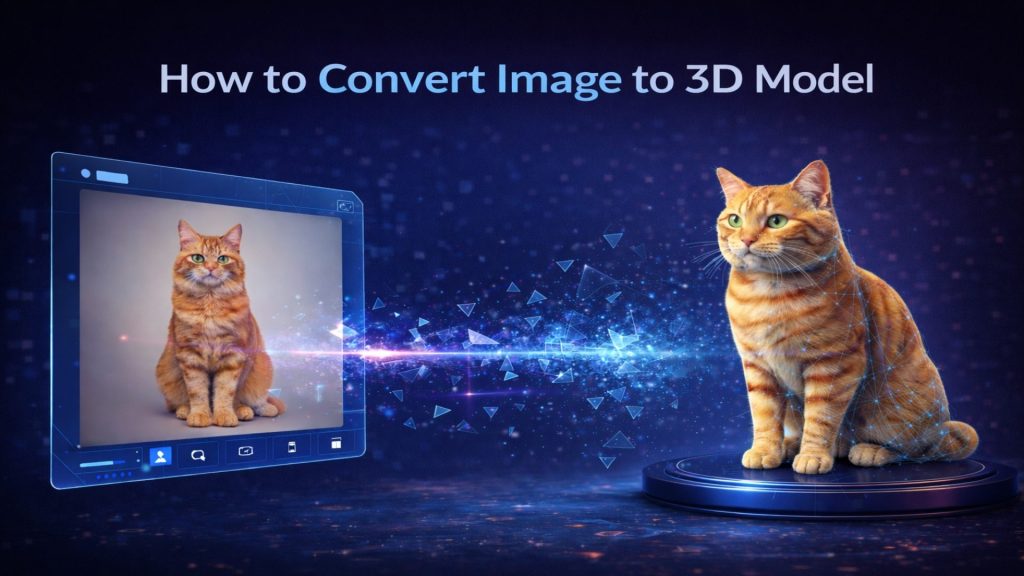
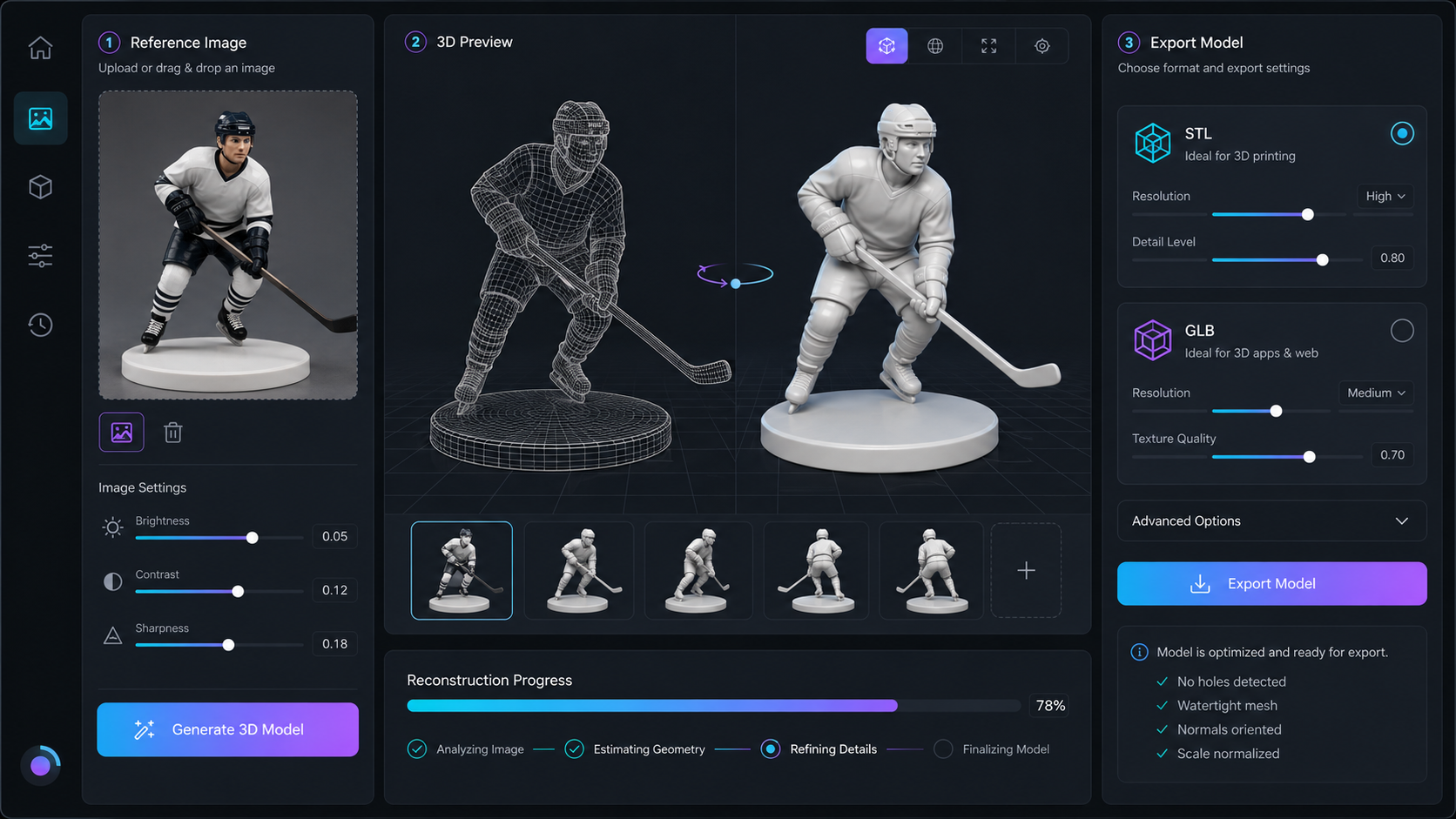
The core workflow is simpler than most people expect. You provide a reference image, an AI engine interprets the visual as volumetric geometry, and you receive a 3D mesh file ready for printing or digital display. No 3D modeling skills required. No CAD software. No topology work.
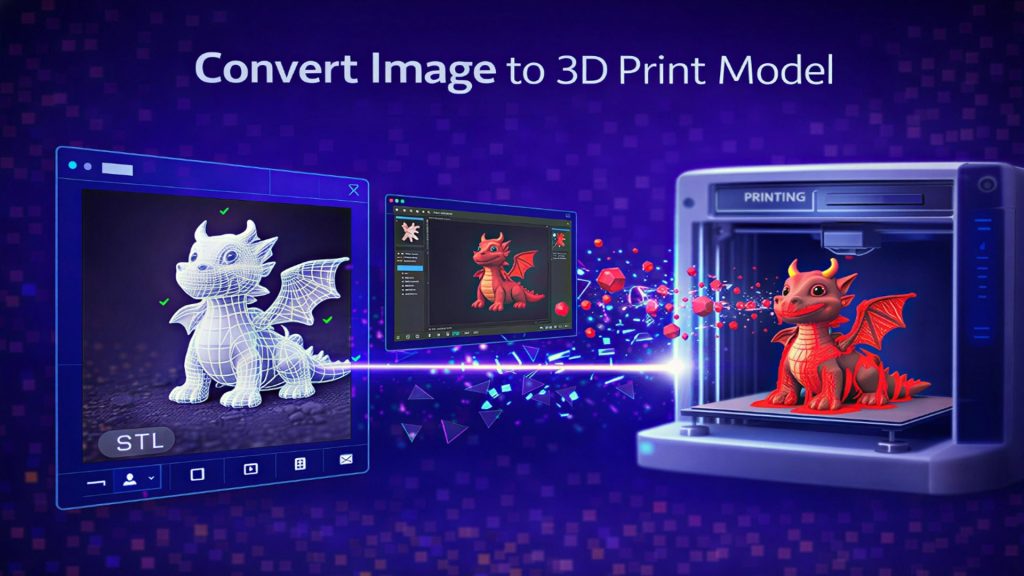
Neural4D’s Image to 3D uses the Direct3D-S2 engine, which processes images at 2048-cubed voxel resolution using Spatial Sparse Attention. That technical detail matters for one practical reason: the output is mathematically watertight geometry, not a depth map extruded into a surface shell. A watertight mesh is what slicers (Bambu Studio, PrusaSlicer, Cura) need to generate clean print paths. You skip the mesh repair step that usually turns a 10-minute project into a 3-hour one.
For hockey fan gear, the input images that work best are:
- Clear front-facing or three-quarter-view reference photos of the character, object, or mascot you want to model
- Screenshots from the show or official promotional artwork for fictional team items like the Briar University Hawks logo or jersey design
- Product photos of existing hockey equipment (helmets, sticks, skates) when you want a stylized desk collectible version
- Your own sketches or drawings if you have a custom design concept
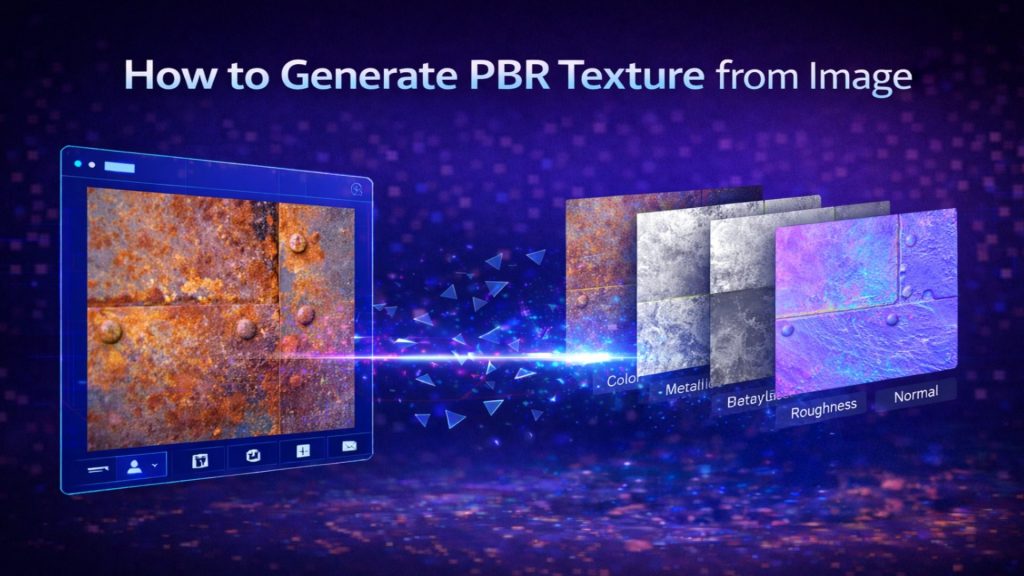
An untextured base mesh generates in approximately 90 seconds. If you want PBR material maps (color, roughness, metallic) baked into the model, the full generation runs to about two minutes. After generation, you can use Neural4D-2.5 to refine the model with plain-language commands: “add more detail to the helmet visor,” “make the base wider for stability,” “smooth the jersey texture.” The model updates without you touching a single vertex manually. For more on the full workflow from image to export, see the guide on how to convert an image to STL file.
Export formats cover all major use cases: STL for 3D printing, GLB for web-based display or AR, OBJ for Blender or other editing software, and FBX for game engine pipelines. A hockey fan making a desk piece will use STL. A fan who wants to display a rotating 3D model of their favorite team’s mascot on their website will use GLB.
Part 3: Three Types of Hockey Merchandise You Can Make
Not every fan creation idea translates equally well to AI 3D generation. These three categories work reliably and cover most of what hockey fans actually want on their desks or shelves.
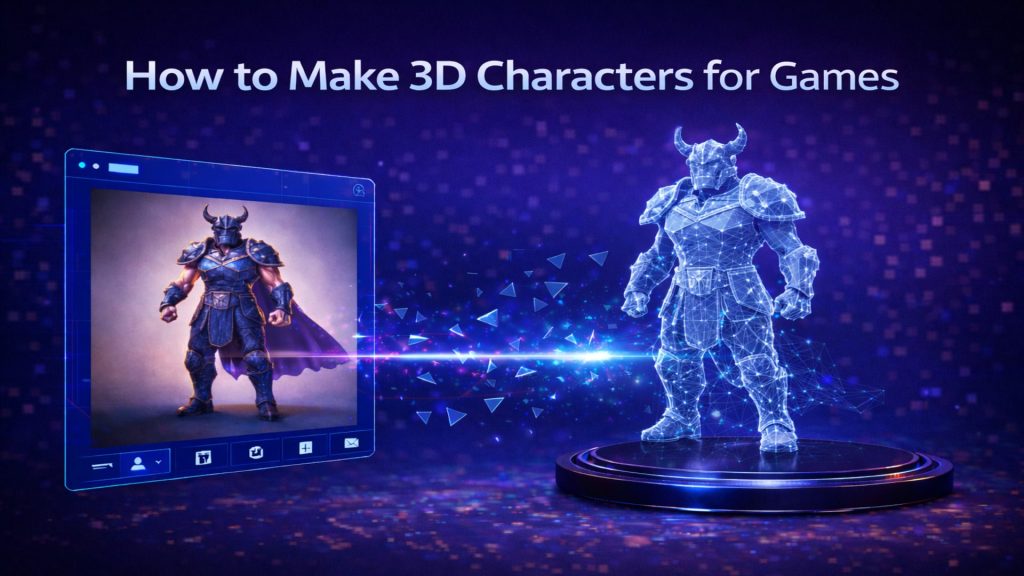
Mini Player Figurines
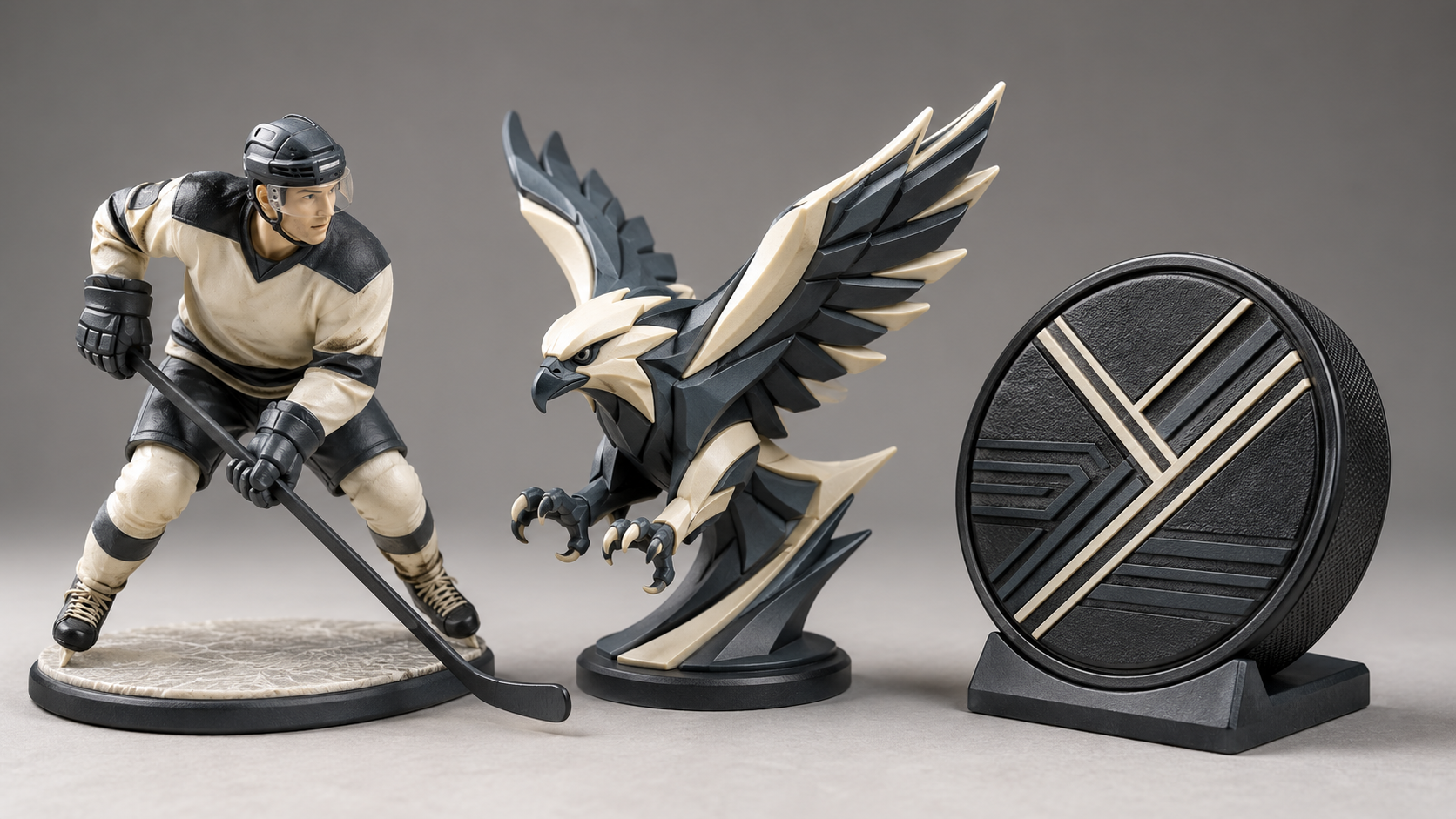
This is the category Off Campus fans will gravitate toward first. A palm-sized figurine of Garrett Graham in full Hawks gear, or Dean DiLaurentis in his defenseman stance, is exactly the kind of item that doesn’t exist in any official merchandise channel for a fictional university team.
The best input for a player figurine is a full-body reference image in a clear pose, front-facing or at a slight angle. Official promotional photos from the show’s press kit work well. Jersey details, number placement, and equipment specifics come through in the generated texture maps if you use a high-resolution source image.
For printing, a 15 to 20 cm figurine is the practical sweet spot: large enough for jersey details to read clearly, small enough to print in under 8 hours on a standard FDM printer. Resin printers produce sharper detail at smaller scales if you want a 10 cm desk piece with fine facial geometry.
The same workflow applies directly to real NHL players or college hockey stars. Use a clear action photo from a game as your reference image, generate the model, and print a figurine of the player you actually follow. This is the hockey fan gear equivalent of a custom bobblehead, produced at home in hours rather than weeks, and at a fraction of the cost.
Custom Team Mascots and Logo Sculptures
Briar University’s Hawks mascot doesn’t exist as a 3D object anywhere. That’s an opportunity, not a problem. Design your own interpretation of a hawk in hockey gear, upload that sketch or reference to Neural4D, and you have a mascot sculpture that no official store will ever produce.
Mascot sculptures work especially well for two fan groups: people who follow fictional teams from shows like Off Campus, and fans of real college or minor-league hockey programs whose merchandising budgets don’t extend to 3D collectibles. Both groups want the same thing: a physical representation of team identity that goes beyond what the official store offers.
For a standing mascot sculpture, input a full-body character illustration or concept sketch. Neural4D handles both photo-realistic inputs and illustrated/stylized art styles. The output mesh can be refined with a prompt like “make the base flat for stability” or “add more exaggerated proportions for a cartoon mascot look” before export.
Pro tip for mascot designs: Generate the base mesh first, then use Neural4D-2.5’s text-to-edit feature to add team-specific details in a second pass. This two-step approach gives you more control over the final design than trying to pack every detail into the initial reference image.
Hockey-Themed Desk Collectibles
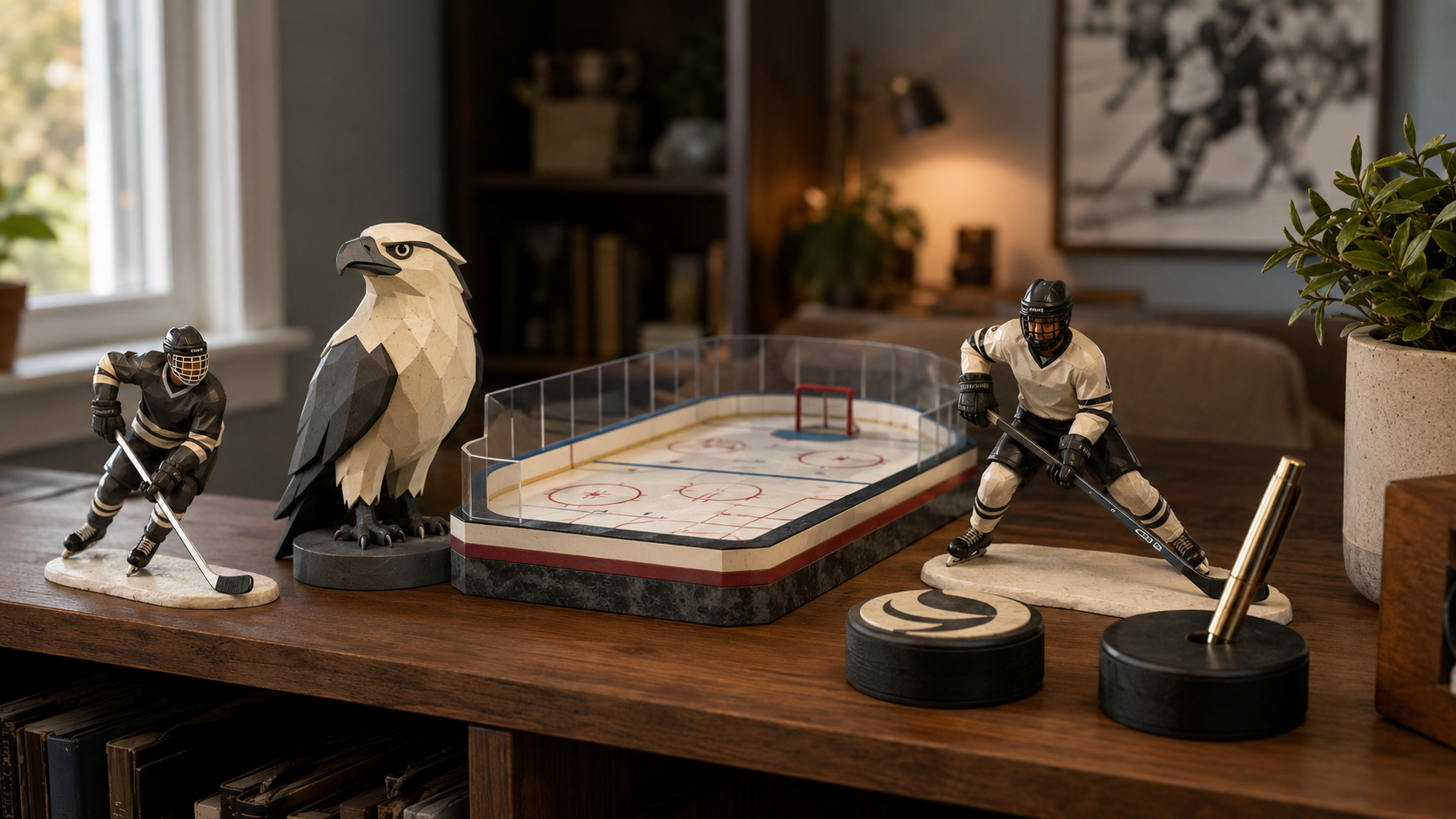
Not every fan wants a figurine. Some want a stylized puck display, a miniature rink diorama, a hockey stick desk holder, or a nameplate base with a jersey number carved into it. These object-type collectibles are arguably easier to generate than character figures because the reference images are simpler and the geometry is less demanding.
A hockey puck with a team emblem raised on the surface is a 20-minute project from reference image to sliced print file. A miniature version of a rink face-off circle with team logos at the center is slightly more complex but still achievable from a top-down diagram as your reference. These pieces make strong gifts for hockey fans and require no design background to produce.
For desk collectibles that will be handled frequently, print in PETG rather than PLA. PETG has better impact resistance and doesn’t soften in warm environments the way PLA does. For purely decorative display pieces that won’t be touched much, PLA or PLA+ is perfectly adequate and easier to sand and finish. The same material considerations covered in the image to STL guide apply here.
Part 4: Fan Creation vs. Commercial Use: Knowing the Lines
Before you print anything, it’s worth being clear on where fan-made collectibles sit legally. The rules aren’t complicated, but they do matter if you’re planning to sell what you make.
Fictional Teams Are Wide Open for Fan Creation
Briar University and the Hawks are fictional. Elle Kennedy created them for her novels; Amazon adapted them for screen. There is no licensing body managing “Briar University Hawks” merchandise. Creating fan art, fan-made figures, or custom collectibles inspired by fictional university teams falls squarely within fan creative tradition and does not carry the same legal exposure as reproducing official NHL or NCAA team marks.
This is the cleanest space for Off Campus fans who want physical representations of the show. You’re making fan art in 3D form, not copying a commercial product.
Real Team Logos Require Care
NHL team logos, NCAA team marks, and official player likenesses are all protected. Making a personal 3D print of your favorite team’s logo for your own desk falls into the grey zone that most rights holders don’t actively pursue. Selling that item, even on Etsy, is a different matter entirely. Marketplaces routinely receive takedown requests for unlicensed sports merchandise, and the legal exposure is real.
The practical guideline: personal-use fan creation is low-risk. If you’re designing something inspired by a real team’s aesthetic (colors, style, general vibe) without directly reproducing their trademarked logo or official marks, you’re in a safer creative space. Original mascot interpretations and stylized tributes are different from logo reproductions.
Player Likenesses
Creating a figurine of a fictional character like Garrett Graham (portrayed by an actor) for personal use follows the same fan art logic as any other fan creation. For real NHL players, right-of-publicity laws vary by jurisdiction and add a layer of complexity if you’re thinking about selling. For personal display, this is not generally an active enforcement area.
The simple rule: Fan creation for personal use and gifting to friends sits in a well-established creative tradition. The moment you start selling, you enter commercial territory where licensing matters. Neural4D’s tools generate the models; understanding the legal context of what you make with them is your responsibility.
Part 5: Beyond Off Campus: Building a Personal Hockey Collection
The Off Campus moment will pass. The hockey fan gear gap it revealed won’t. Every person who has watched college hockey, played recreational league hockey, or has a kid in a youth program has the same problem: official merchandise doesn’t cover the specifics that matter to them personally.
AI 3D generation turns that gap into an ongoing creative practice. Once you’ve made your first figurine or mascot sculpture, the workflow is repeatable for any hockey subject you care about:
- Your college team’s mascot as a desk piece, personalized with your graduation year
- A figurine of your child in their youth hockey gear, generated from a photo of them in their kit
- Your recreational league team’s custom trophy designed specifically for your league’s annual awards
- A miniature replica of a memorable moment from a game you attended, built from a photo reference
- Equipment-inspired objects like a stylized skate blade bookend or a helmet pen holder
None of these exist in any store. All of them are achievable with a reference image and Neural4D’s Image to 3D tool. The licensed sports merchandise industry will always prioritize mass-market demand. AI 3D generation exists for everything that market ignores.
For fans who want to explore 3D printing fundamentals before diving into character-scale projects, the guides on converting images to STL files and general AI 3D printing workflow basics cover the fundamentals that apply to any fan collectible project.
Part 6: Common Questions on AI Hockey Fan Gear
Q: Can I make hockey merchandise inspired by Off Campus using AI 3D tools?
Yes. Briar University and the Hawks are fictional creations with no official licensing body managing physical merchandise. Fan-made 3D collectibles inspired by the show fall within the same fan art tradition as any other fan creation. Upload a reference image from the show to Neural4D’s Image to 3D tool, generate your model, and print it for personal use or gifting. Selling items commercially based on the show’s characters or settings introduces different legal considerations.
Q: What kind of reference image works best for generating a hockey player figurine?
A clear, well-lit full-body photo or illustration in a defined pose works best. Front-facing or three-quarter-angle references give the AI the most geometric information to work with. High-resolution images capture jersey detail, equipment specifics, and facial features more accurately than low-resolution screenshots. Official promotional photos from a show or game photography tend to produce cleaner results than blurry action stills.
Q: How long does it take to generate and print a hockey fan figurine?
Neural4D generates an untextured base mesh in approximately 90 seconds. A textured model with PBR material maps takes around two minutes. A 15 cm figurine printed at 0.2 mm layer height on a standard FDM printer takes 6 to 10 hours depending on complexity and your printer’s speed. The full process from reference image to finished printed piece typically completes in a single day.
Q: Do I need 3D modeling experience to make hockey fan merchandise with Neural4D?
No. The Image to 3D workflow requires no modeling, sculpting, or CAD experience. You upload a reference image, the AI generates the mesh, and you export the file directly to your slicer. Post-generation refinements use plain-language text commands through Neural4D-2.5, so you describe what you want to change rather than editing geometry manually.
Q: Is it legal to sell AI-generated hockey fan merchandise based on real teams?
Selling merchandise that reproduces official NHL team logos, NCAA marks, or real player likenesses without a license is legally risky regardless of whether AI generated the model. Personal-use fan creation sits in a different category. If you want to sell hockey-themed collectibles, design original work inspired by hockey aesthetics rather than directly reproducing protected marks, and consider consulting a legal professional if you plan to operate at scale.
Q: What is the best material for printing hockey fan collectibles?
For desk display pieces that won’t be handled much, PLA or PLA+ is straightforward to print, easy to sand, and takes paint well. For pieces that will be picked up and handled regularly, PETG offers better impact resistance and doesn’t soften in warm environments. Resin printing produces the sharpest fine detail at small scales, which matters most for facial features on player figurines under 10 cm tall.
Part 7: Start Making Your Hockey Merch with Neural4D
The hockey merchandise market has always sold to the average fan, not the passionate one. An average fan buys a jersey. A passionate fan wants a specific thing that doesn’t exist in any catalog: a figurine of a fictional team captain, a custom mascot sculpture for their apartment, a miniature rink piece for their desk.
AI 3D generation exists for the passionate fan. Neural4D’s Image to 3D tool takes a reference image and produces a watertight, print-ready mesh in under two minutes. No modeling experience. No repair work. No waiting six months for a licensing deal that will never happen for a fictional university hockey team.
Whether you’re building your own Briar University Hawks collection or making custom hockey fan gear for a real team you love, the workflow is the same: upload your reference, generate your model, export to your printer.
Turn Your Hockey Fandom Into a 3D Collectible
Upload a reference image and get a print-ready 3D model in minutes. No modeling skills needed.
50 free credits every week · No credit card required