3D Printing Innovations in 2026: From AI-Driven Factories to Bioprinting Breakthroughs
Quick Summary
- 3D printing innovations in 2026 are defined by AI-driven process control, with agentic systems reducing thermal deviations by up to 30 percent and enabling fully unsupervised factory-floor production.
- Breakthroughs in multi-material printing and self-healing composites now deliver parts with 81 percent self-healing efficiency and fracture toughness up to 187 times higher than conventional concrete.
- Bioprinting has crossed the 800-micron vascularization barrier, making thick tissue constructs with functional blood vessels a clinical prospect rather than a lab experiment.
- Neural4D bridges the gap between digital design and physical production by generating watertight, printer-ready STL files from text or image input in approximately 90 seconds for the base mesh.
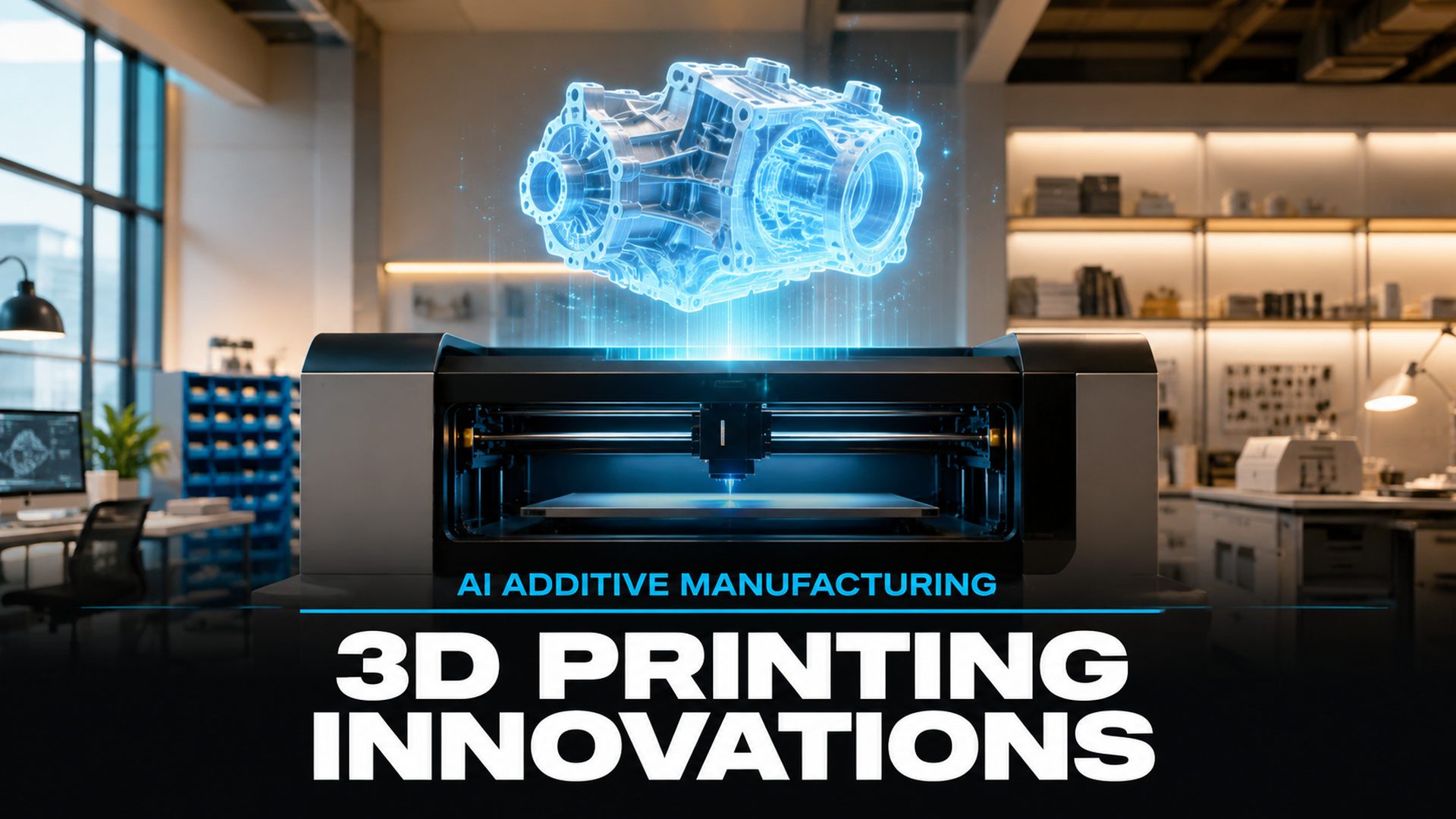
3D printing innovations in 2026 are no longer about incremental hardware improvements. The story this year is about AI rewriting the additive manufacturing workflow from end to end, spanning self-correcting factory floors, printable living materials, and bioprinted tissue with functional vascular networks. On the software side, from image to 3D design tools to AI assisted slicing, our AI 3D printing trends 2026 guide breaks down 10 workflow changes worth watching.
- Part 1: The Agentic AI Revolution in 3D Printing Innovations
- Part 2: Metal Additive Manufacturing and Advanced Materials at Scale
- Part 3: Bioprinting Breakthroughs in 2026
- Part 4: Construction-Scale 3D Printing
- Part 5: Neural4D as the AI Engine for 3D Printing Innovations
- Part 6: Common Questions on 3D Printing Innovations
- Start Your Next 3D Printing Project
Part 1: The Agentic AI Revolution in 3D Printing Innovations
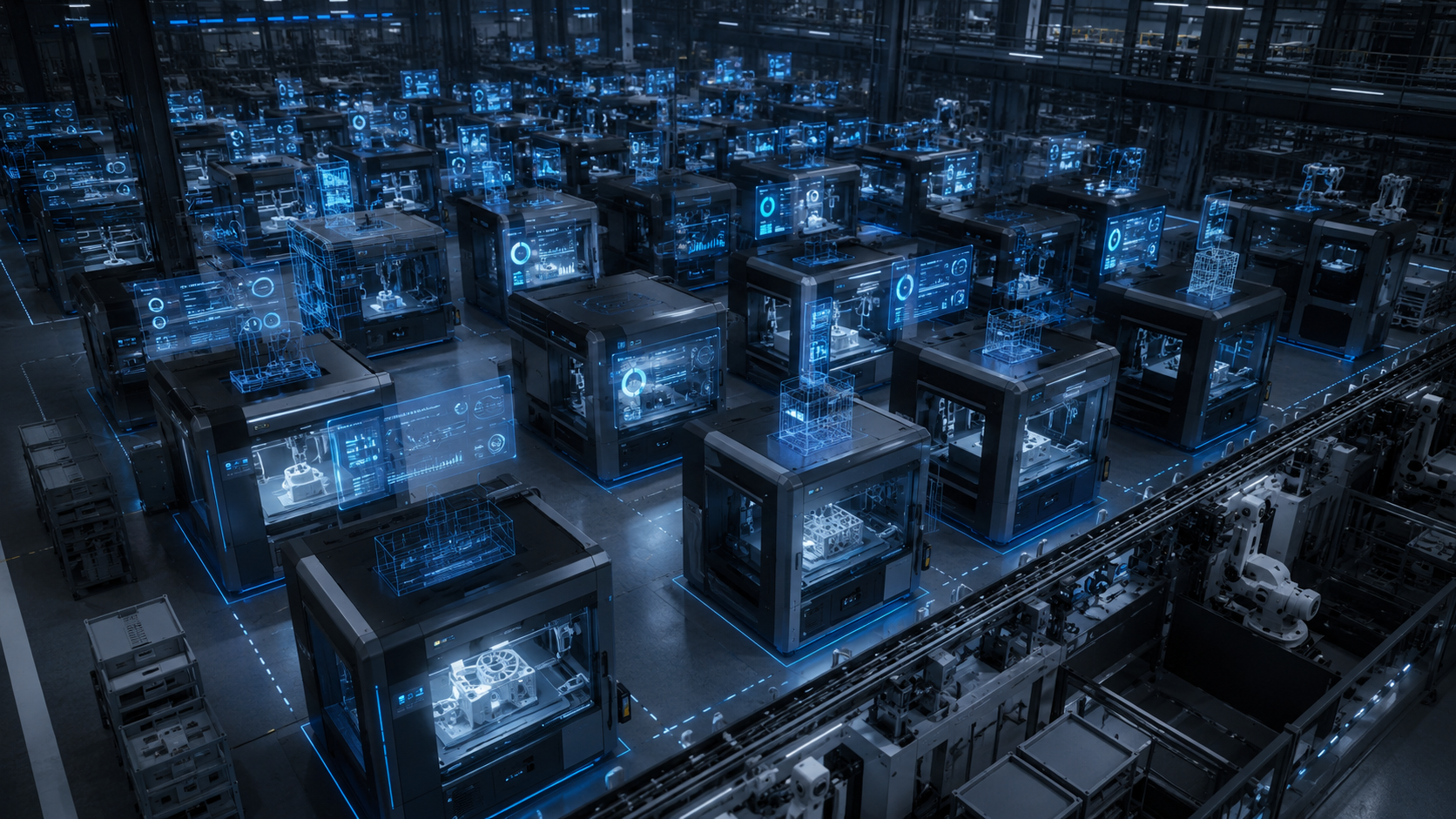
The single most transformative shift in 3D printing innovations this year is the rise of agentic AI systems that manage entire additive manufacturing workflows without human intervention. Unlike rule-based automation, these systems observe, predict, and correct in real time.
At Oak Ridge National Laboratory, researchers developed a computer vision controller that monitors melt-pool temperatures during large-scale composite printing. The system detects thermal deviations and adjusts print speed automatically, achieving roughly 30 percent fewer temperature excursions without retraining for new geometries[1]. The controller creates a digital twin of each print layer, closing the loop between sensing and actuation at millisecond intervals.

Industry analysts at 3DPrint.com reported that major OEMs including Siemens and Autodesk are now embedding orchestration agents that coordinate specialized AI sub-agents for design optimization, process simulation, and in-situ qualification. The goal is fully unsupervised printing: machines that start a job, detect anomalies, self-correct, and produce certified parts without an operator in the room.
Key stat: The additive manufacturing market is projected to reach approximately $44.5 billion in 2026, with 70.3 percent of AM executives reporting favorable business conditions, up from 51.2 percent for 2025. (Source: 3DPrint.com Industry Survey, 2026)
This shift matters because it transforms 3D printing innovations from a prototyping tool into a production-grade manufacturing method. When a printer can monitor its own quality and adjust on the fly, the cost per part drops dramatically, and the range of applications expands beyond what manual oversight could sustain. Neural4D’s AI for 3D printing feature connects this AI-driven production capability directly to model generation.
Part 2: Metal Additive Manufacturing and Advanced Materials at Scale
Metal additive manufacturing is experiencing its strongest growth year yet. Binder Jetting has emerged as the throughput leader for high-volume metal production, with systems depositing layers faster than laser-based equivalents and eliminating thermal distortion by operating at room temperature. A February 2026 analysis by Unionfab ranked Binder Jetting 10 out of 10 for batch production potential among all metal AM technologies. For a deeper look at how AI accelerates prototyping in industrial settings, see our guide on AI 3D modeling for industrial prototyping.
Cold Metal Fusion is gaining traction as a complementary process for preform forging of high-value alloys. Near-net-shape metal preforms produced via CMF reduce press time, tooling wear, and material waste compared to traditional billets, making low-volume specialty alloy production economically viable.
On the large-format side, MX3D in Amsterdam operates more than 15 specialized robots running Wire Arc Additive Manufacturing (WAAM) around the clock, depositing 2 to 8 kilograms of metal per hour for parts several meters long. The technology has moved beyond demonstration projects into commercial production for marine and energy sector components.
Materials science is keeping pace. Princeton engineers developed Architected Cementitious Composites by co-printing thin polymer layers within cement mortar, achieving up to 187 times higher fracture toughness and 22.6 times greater ductility than conventional concrete. The polymer layers arrest and redistribute cracks, enabling damage-tolerant building components that were previously impossible to cast.
Self-healing composites have also reached practical performance thresholds. A photocurable polycaprolactone-based resin demonstrated 81 percent self-healing efficiency within four hours and more than 95 percent shape memory recovery, making it suitable for 3D printing of durable flexible electronics and biomedical devices. These material advances expand what additive manufacturing can produce, moving beyond simple geometric brackets into functional, responsive parts.
Part 3: Bioprinting Breakthroughs in 2026
Medical 3D printing innovations in 2026 center on one critical achievement: vascularization. Until this year, bioprinted tissue constructs could not sustain cells deeper than approximately 200 micrometers from the nearest oxygen source, because no printed blood vessel network existed to deliver nutrients through the bulk of the tissue.
Researchers at UMC Utrecht broke through that barrier using volumetric bioprinting combined with liquid-liquid phase separation. By tuning light intensity to create macroporosity inside dextran-based hydrogels, they enabled endothelial vessel formation beyond 800 micrometers, more than four times the previous diffusion limit. Thick, vascularized tissues containing liver, bone, and pancreatic cells can now be printed in seconds rather than hours.
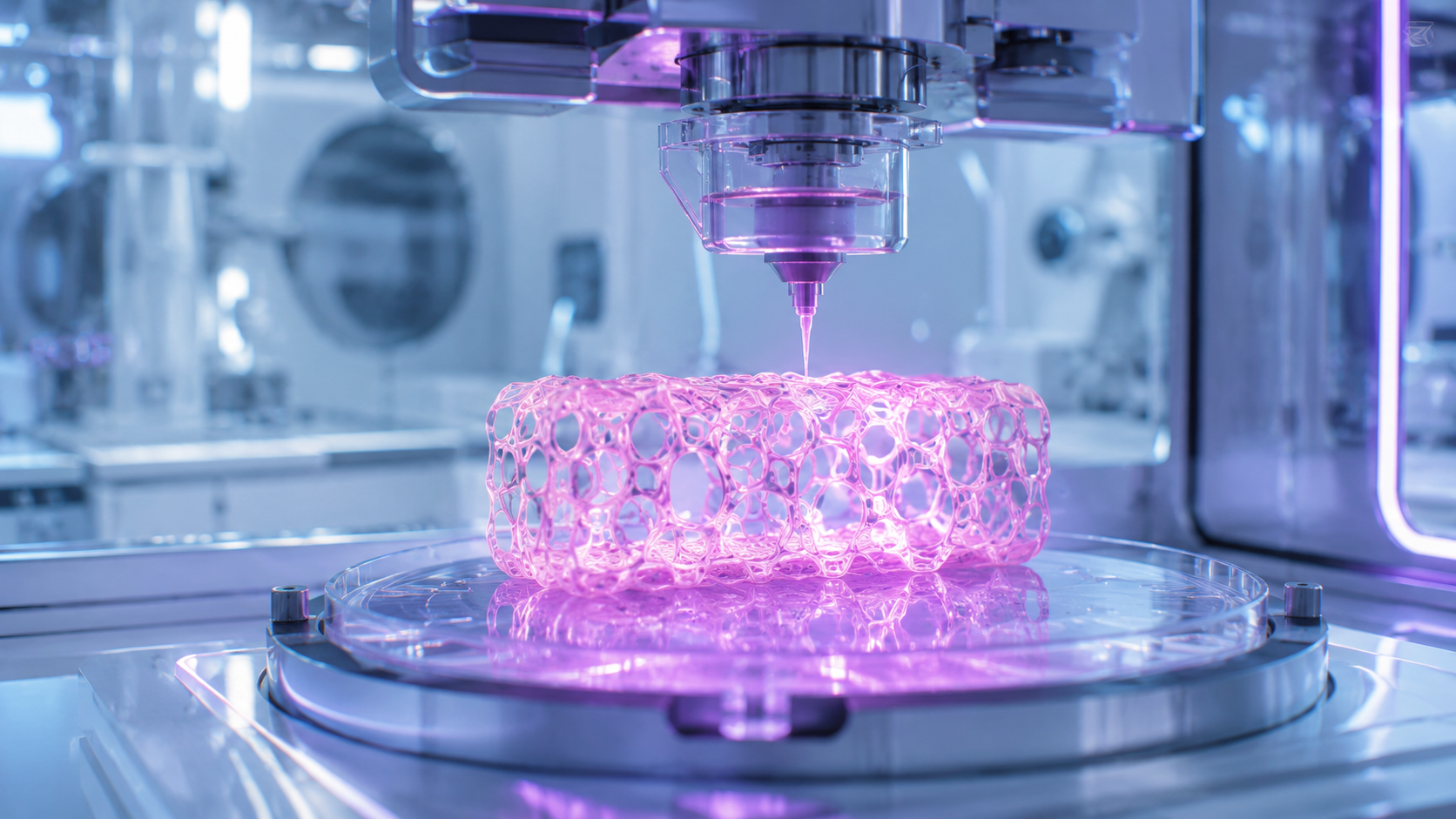
A parallel approach from Mayo Clinic affiliates uses cell-dense bioinks called CLINKs that eliminate the need for scaffold materials. Live cells at physiological densities are modified with acrylate bonds on their membranes, enabling the printing of neural circuits and rhythmically contracting mini-hearts from stem cells alone. In bone regeneration, miRNA-guided spheroid bioprinting achieved approximately 91 percent defect closure in animal models, combining microRNA-148b and microRNA-210 transfected stem cell spheroids with aspiration-assisted bioprinting.
These 3D printing innovations in medicine are moving out of academic labs. The convergence of volumetric printing speed, scaffold-free bioinks, and miRNA-guided differentiation means the first clinical applications for bioprinted tissue grafts are now on a definable timeline rather than an indefinite research horizon.
Part 4: Construction-Scale 3D Printing
Construction 3D printing crossed from novelty to industrial viability in 2026. In June, the world’s first 3D-printed supermarket opened in Neubulach, Germany, with a 1,700-square-meter floor area and over 1,300 square meters of printed wall surface. Two mobile INSTATIQ P1 concrete printers operating in parallel completed the structural work in approximately four weeks, using evoZero, the first carbon-captured near-zero cement.
In France, the ViliaSprint apartment block in Bezannes printed 12 units across three floors in 34 days, finishing three months ahead of schedule. The project used a COBOD BOD2 gantry printer with only three on-site workers, cut material waste from 10 percent to 5 percent, and achieved roughly 60 percent energy self-sufficiency through integrated photovoltaic panels and hybrid heating.
Factory-scale prefabrication is also accelerating. The UK’s first 3D-printed concrete factory, Forge I in North Lincolnshire, began producing precast foundation units at a rate exceeding 50 per week using robotic manufacturing without molds. The facility reduces concrete usage by up to 70 percent compared to traditional casting, and its first client, Costain, is using the units for carbon capture pipeline infrastructure. For smaller-scale 3D printing projects, converting images to STL for 3D printing is where most makers start their workflow.
Large-format polymer printing has also matured. BigRep’s ONE.5X printer now features XYZ autocalibration, adaptive bed leveling, and auto-sequential printing that detects available bed space and starts the next job automatically. The system runs unsupervised, with relay mode switching extruders mid-print for continuous fiber-reinforced production. These developments signal that construction-scale 3D printing innovations have moved beyond the demonstration phase and into commercial deployment where speed, material efficiency, and labor reduction are measurable.
Part 5: Neural4D as the AI Engine for 3D Printing Innovations
All of the innovations above share a common dependency: high-quality 3D models that are ready for production. A self-correcting printer is only as good as the geometry it receives. A bioprinted scaffold requires watertight, manifold-verified input. A construction project needs accurate large-format STL files that slice correctly on the first attempt.
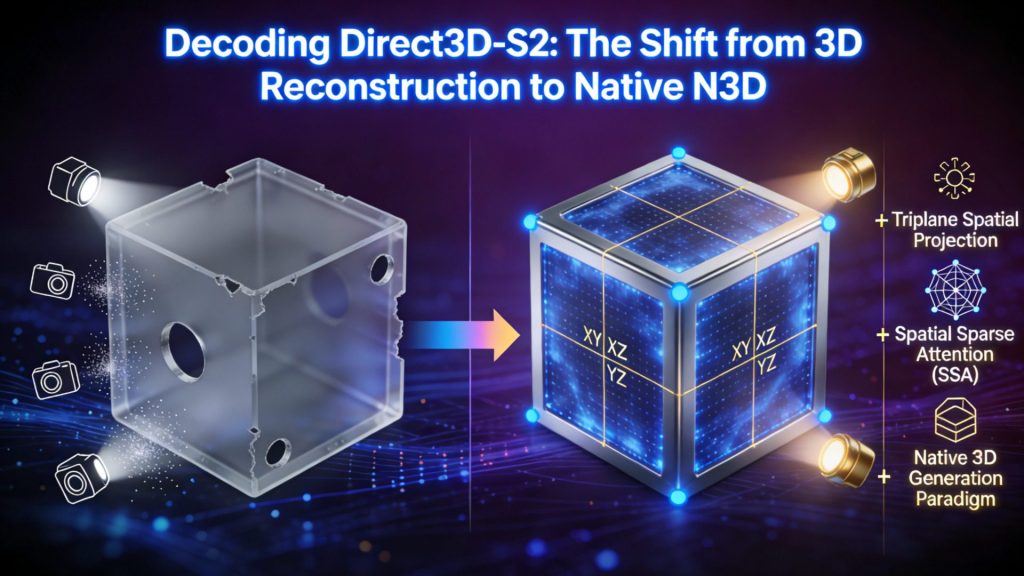
Neural4D fills that role. The platform converts text descriptions or 2D images into production-ready 3D models using the proprietary Direct3D-S2 algorithm, which processes the full volumetric space rather than estimating depth from a single angle. The output is a watertight, manifold mesh that exports as .stl directly into slicer software like Chitubox or Cura without manual hole-patching or geometry repair.
Generation time for an untextured base mesh is approximately 90 seconds. When PBR textures are needed for color-accurate prints or product visualization, the system generates normal, roughness, metallic, and albedo maps in a single pass with the geometry, completing a fully textured GLB in roughly two minutes or more. Neural4D-2o, the conversational editing model, allows natural language refinement of dimensions, proportions, and surface details after generation. For text-based input specifically, the text to STL generation workflow provides an alternative path from written description directly to printable geometry.
At TCT Asia 2026, DreamTech demonstrated a complete digital-to-physical pipeline: text input to Neural4D, model generation, STL export, and 3D-printed physical output via the YouZi WanWu platform. The demonstration was notable because it showed a single AI system covering both digital content creation and physical manufacturing in one closed loop, without manual geometry cleanup at any stage.
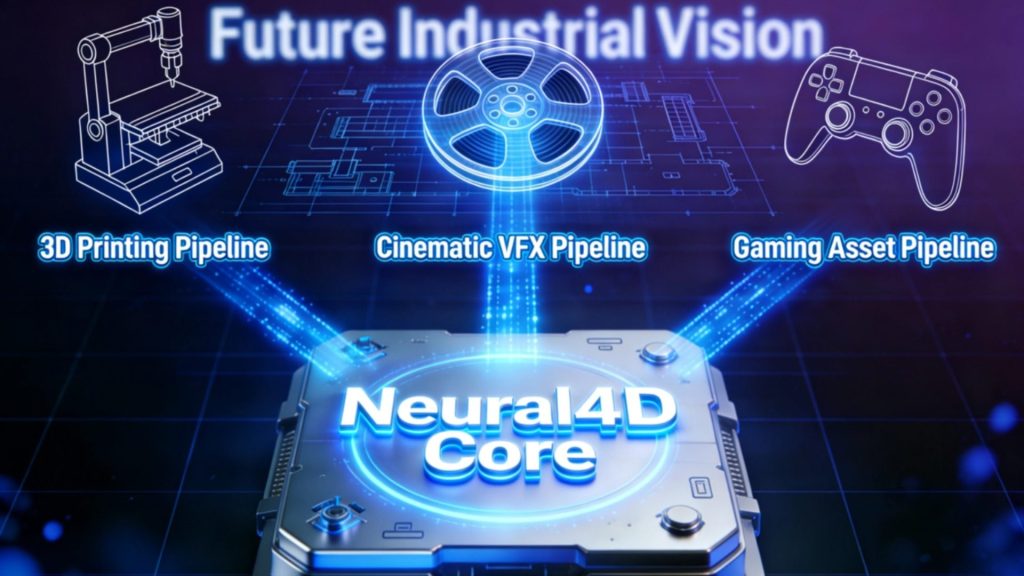
Where it fits: Neural4D is not a replacement for slicer software or printer control systems. It operates upstream, at the model creation stage, where most 3D printing failures actually originate. A printer that starts with a watertight, correctly dimensioned STL has eliminated the root cause of print failures: bad input geometry. For a detailed comparison of AI 3D generation platforms, see our Neural4D vs Meshy comparison.
Generate 3D Models Ready for Production
Skip the manual modeling bottleneck. Neural4D turns your idea into a watertight, printer-ready STL in minutes.
Free tier includes 50 weekly power to get started.
Part 6: Common Questions on 3D Printing Innovations
Q: What are the biggest 3D printing innovations to watch for in 2026?
The most impactful 3D printing innovations in 2026 center on AI-driven process control that enables unsupervised factory-floor production, bioprinting breakthroughs that cross the 800-micron vascularization barrier, and construction-scale printing that has moved from demonstrations to commercial projects like the 1,700-square-meter 3D-printed supermarket in Germany.
Q: How is AI changing the 3D printing industry this year?
AI is transitioning from a design-assistance role into real-time process control. Agentic systems now monitor melt pools, detect thermal deviations, and adjust print parameters mid-job without human input. This shift is what makes unsupervised 24/7 printing operationally realistic for the first time, reducing the cost barrier for production-scale additive manufacturing.
Q: Can AI really fix 3D printing errors in real time?
Yes, within specific parameters. ORNL’s computer vision system demonstrated real-time correction of thermal deviations during large-format composite printing, achieving roughly 30 percent fewer excursions. The system creates a per-layer digital twin and adjusts print speed to maintain target temperatures. However, real-time correction is currently more reliable for thermal and geometric deviations than for material-related failures like filament contamination or nozzle clogging, which require different sensor modalities.
Q: What is the most exciting medical breakthrough in bioprinting right now?
The Utrecht volumetric bioprinting breakthrough that enabled vascularization beyond 800 micrometers is arguably the most structural advance. Without a functional blood vessel network, thick tissue constructs cannot survive. Crossing that barrier means bioprinted liver, bone, and pancreatic tissues now have a path to clinical viability rather than remaining thin-layer lab models. Separately, CLINKs scaffold-free bioprinting eliminated the need for biomaterial scaffolds, producing mini-hearts and neural circuits from cell-dense bioinks alone.
Q: Is large-format 3D printing ready for building houses or commercial buildings?
Yes, 2026 is the year construction-scale printing proved commercial viability. The supermarket in Germany (1,700 square meters, four weeks of printing), the apartment block in France (12 units, 34 days), and the Forge I concrete factory in the UK (50-plus units per week) all demonstrate that the technology can meet real construction timelines and budgets. Current limitations include regulatory certification for load-bearing structures in some jurisdictions and the need for mobile mixing plants on site.
Q: What is the difference between Neural4D and other AI 3D generators like Meshy?
The primary architectural difference is that Neural4D’s Direct3D-S2 algorithm reconstructs the full volumetric space, producing watertight, manifold geometry by default. Meshy and other generators often output triangle soup with open edges that require manual repair before a slicer will accept them. Neural4D also offers Neural4D-2o for conversational refinement, built-in PBR texture generation, and native STL export. For a practical walkthrough of the full workflow from concept to physical print, see our guide on designing 3D printed custom toys.
Q: How long does it take to generate a 3D model with AI for printing?
Generation time depends on the output type. An untextured base mesh from Neural4D takes approximately 90 seconds. A fully textured model with PBR maps (normal, roughness, metallic, albedo) requires additional computation and completes in roughly two minutes or more. This is the total time from text or image input to a downloadable, watertight STL or GLB file that is ready for your slicer without any manual geometry repair between generation and printing.
Start Your Next 3D Printing Project
3D printing innovations in 2026 have made one thing clear: the bottleneck is no longer the printer hardware or the material cost. It is the quality of the 3D model that feeds the machine. A printer running advanced AI process control still needs a watertight, correctly dimensioned STL file to produce a successful part.
Neural4D eliminates that bottleneck by generating production-ready geometry from a text description or a single photo. The platform outputs export directly into any standard slicer, without mesh repair, hole patching, or manual retopology. This upstream quality control is what makes the downstream innovations in agentic AI, multi-material printing, and large-format construction deliver on their promise.
Turn Your Ideas Into Printable Models
Generate production-ready STL files in seconds, not hours. No modeling experience needed.
Free plan includes 50 power per week for testing.