2026 Year of the Horse: Generating Correct 3D Horse Models
Quick Summary: With 2026 being the Year of the Horse, production demand for equine assets is spiking. However, most generators create non-manifold meshes that fail in production. This guide explains how Neural4D generates watertight, rig-ready 3D horse models with proper edge flow for Blender and Cura.
It is 2026. The production cycle for the Year of the Horse has begun.
Whether you are printing limited-edition statues or updating mount skins for a live-service game, the demand for equine assets is peaking. But horses are structurally complex. Their muscle definition, hock joints, and volumetric manes often break standard image-to-3D algorithms.
Sculpting a realistic horse from scratch takes 20–40 hours. Most teams do not have that luxury. You need an automated workflow that respects anatomy.
This guide analyzes why standard generators fail at quadrupeds and how Direct3D-S2 provides a viable, topology-aware alternative.
Part 1. The Challenge: Why Most Generative Models Fail at Quadrupeds
If you have tested standard 3D horse model generators, you likely encountered geometric failures. The software struggles to distinguish between the limbs and the negative space between them.
• Fused Geometry: Legs are welded together, preventing rigging.
• Planar Manes: Hair is generated as a 2D sheet with zero thickness, causing print failures.
• Non-Manifold Mesh: Holes and flipped normals that confuse slicers like Cura.
• Incorrect Articulation: The hock (rear knee) often bends backward like a human leg.
Cleaning up these artifacts often takes longer than modeling from scratch. Efficiency requires a model that is manifold by default.
Part 2. Direct3D-S2: Generating Muscle Flow, Not Just Surface
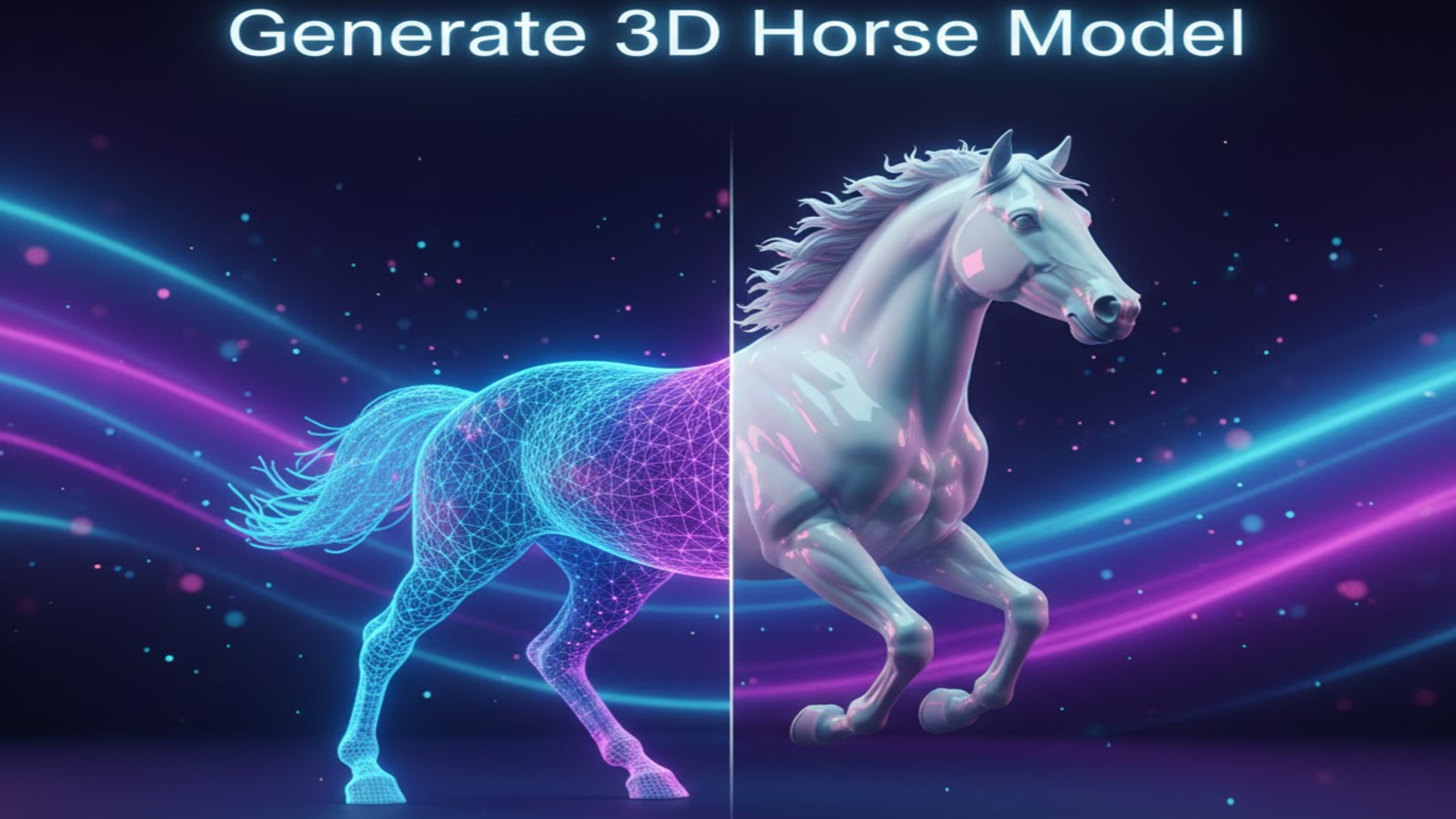
Neural4D approaches generation differently. Instead of wrapping a texture around a guessed shape, our Direct3D-S2 engine calculates the volume of the object.
Part 3. Comparison: Photogrammetry vs. Standard AI vs. Neural4D
Understanding the right tool for the job is critical. Here is how Neural4D compares to traditional methods for equine assets.
| Feature | Photogrammetry | Standard AI | Neural4D |
|---|---|---|---|
| Topology | High-poly Triangle Soup | Random Triangulation | Quad-Dominant |
| Lighting | Baked-in Shadows | Inconsistent | De-lit PBR Albedo |
| Rigging | Requires Retopology | Frequent Joint Failure | AI Retopo |
Need a Rig-Ready Horse Asset?
*Includes automatic .obj export & commercial rights
👉 For 3D Printing: Solving the “Thin Leg” Problem
The Year of the Horse will see a surge in printed miniatures. Horses are structurally weak; their ankles (pasterns) are common snap points during support removal.
Manifold Geometry by Default
Neural4D outputs a solid volume. You can export a Horse STL that is immediately printable. We guarantee a watertight mesh, meaning no “Repair” steps are needed in PrusaSlicer or Bambu Studio.
Slicer Strategy for Stability
To ensure a successful print on FDM or Resin printers:
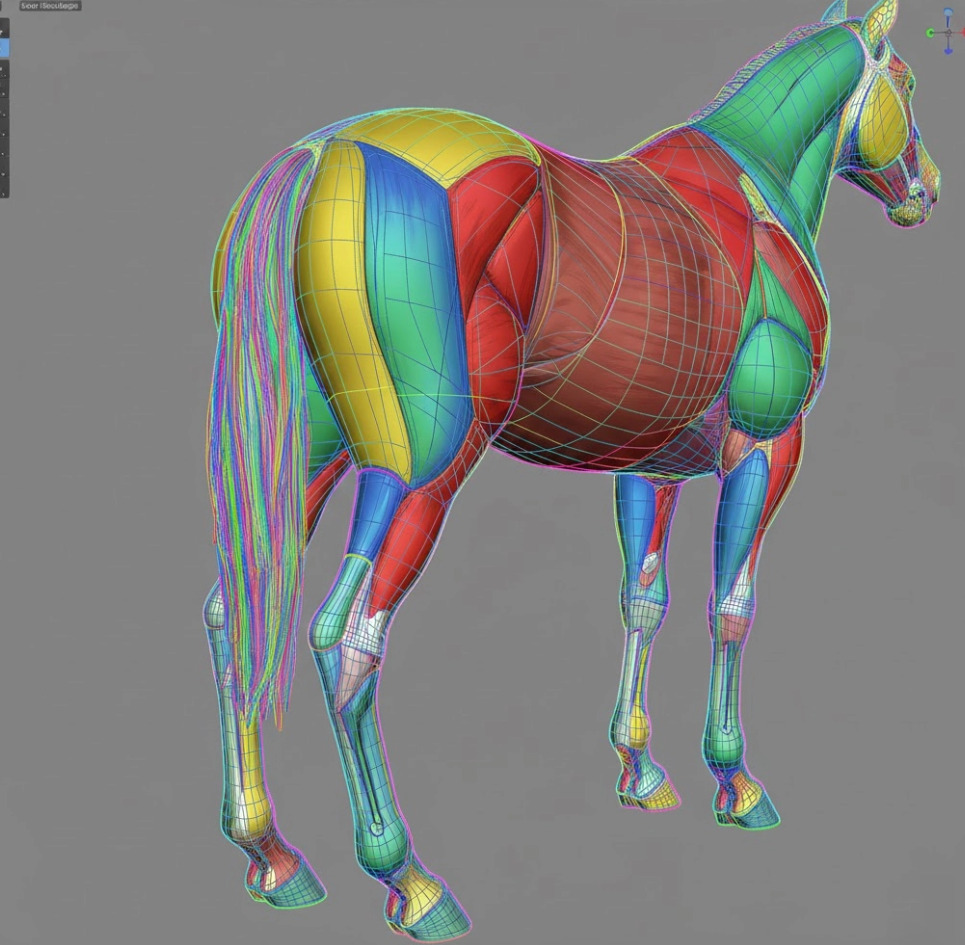
- Orientation: Tilt the horse back by 45 degrees. This shifts support generation to the belly, protecting the delicate legs.
- Tree Supports: Use “Organic” or “Tree” supports in Cura. These wrap around the legs without fusing to the muscle detail.
- Wall Thickness: Direct3D-S2 ensures the mane and tail meet minimum thickness requirements for 0.4mm nozzles.
👉 For Game Dev: Quad Topology for Rigging
Static statues work for printing, but games require movement. A horse’s run cycle (gallop) puts immense stress on the mesh topology.
The Stifle Joint Challenge: The rear leg of a horse bends differently than a human knee. If the topology is composed of random triangles, the mesh will collapse or “pinch” when the leg extends.
Neural4D’s AI Retopo rebuilds the mesh as a quad-dominant structure at a topology and face count you choose: open the asset on the generation page and click Remesh, then select Quad.
Quad-dominant topology is the layout rigging tools expect, so weight painting in Blender (using Rigify) or Maya needs far less artifact correction than a random triangle mesh.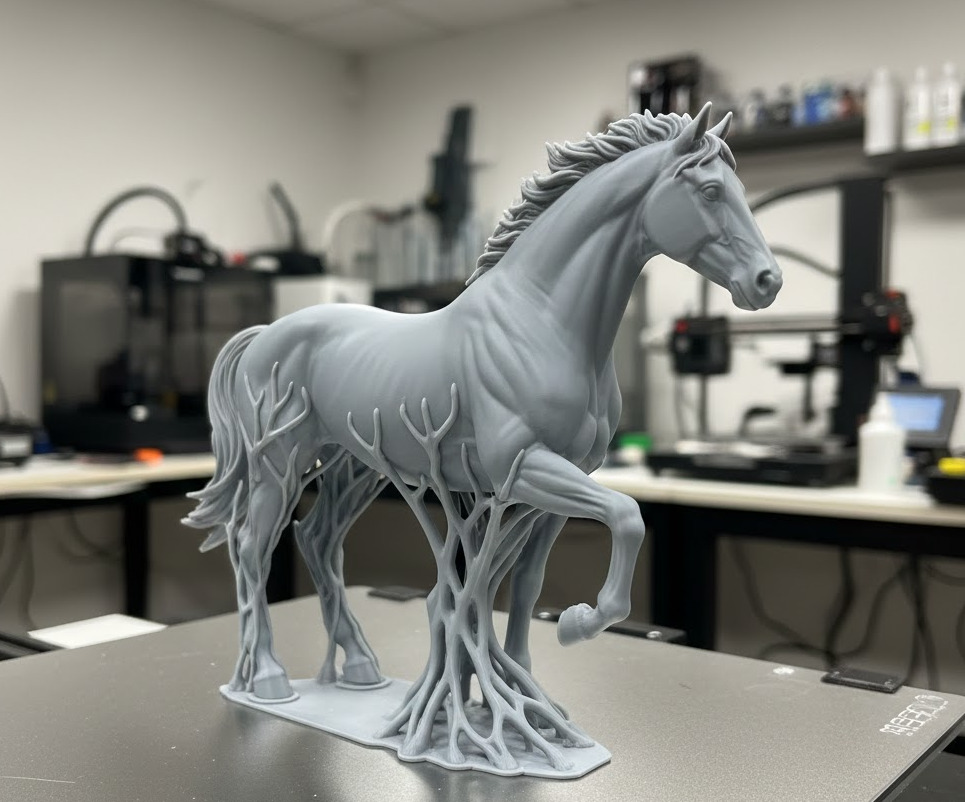
Part 4. How to Generate a 3D Horse from Photos
Follow this workflow to get the best results for your 2026 projects:
- Input Selection: Go to the Image to 3D studio and upload a high-contrast Side Profile photo. Avoid front-facing angles, as the AI needs to see the full body length and leg separation.
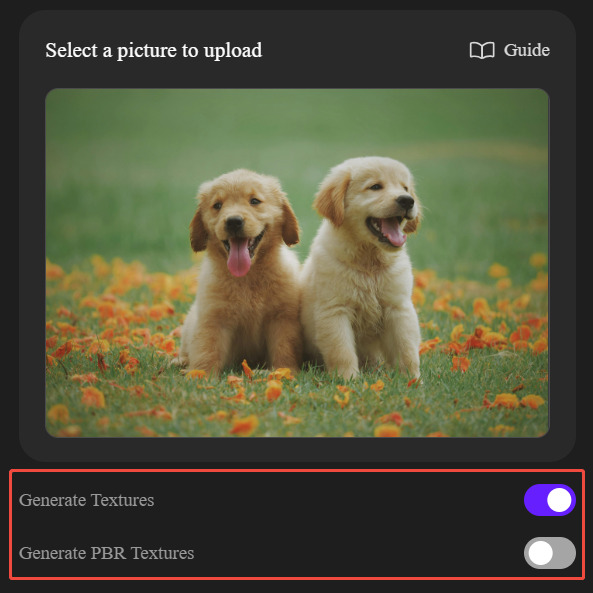
- Generation: Select either “Generate Textures” or “Generate PBR Textures” mode. The Direct3D-S2 engine will then process the volume in approximately 15-30 seconds.
- Review: Check the “Clay View” to verify leg separation and mane thickness.
- Export:
- For Printing: Download .stl (High Poly).
- For Games: Download .obj (Quad Mesh) + Texture Maps.
Read also: AI 3D Game Assets: The Guide to Engine-Ready Models
Pert 5. Ready for the Production Rush?
The 2026 Year of the Horse will demand high-quality equine assets. Relying on manual sculpting for every background asset is inefficient.
Neural4D provides the geometry foundation you need: watertight, anatomically grounded, and production-ready.
Frequently Asked Questions
Can I rig these horse models in Blender?
Yes. Unlike raw photogrammetry, Neural4D models use quad-dominant topology. This edge flow supports deformation, making them compatible with Blender’s Rigify “Horse” meta-rig or Mixamo’s auto-rigger.
Is the mesh watertight for 3D printing?
Yes. Direct3D-S2 generates a solid volume. The exported STL is manifold, meaning it has no holes or open edges. You can load it directly into Cura or PrusaSlicer without running mesh repair tools.
Do I own the commercial rights?
Yes. If you are on a paid plan, you own full commercial rights to the generated assets, perfect for selling printed “Year of the Horse” ornaments or releasing game skins.
Start Your Horse Production
Generate anatomically correct, watertight horses instantly.