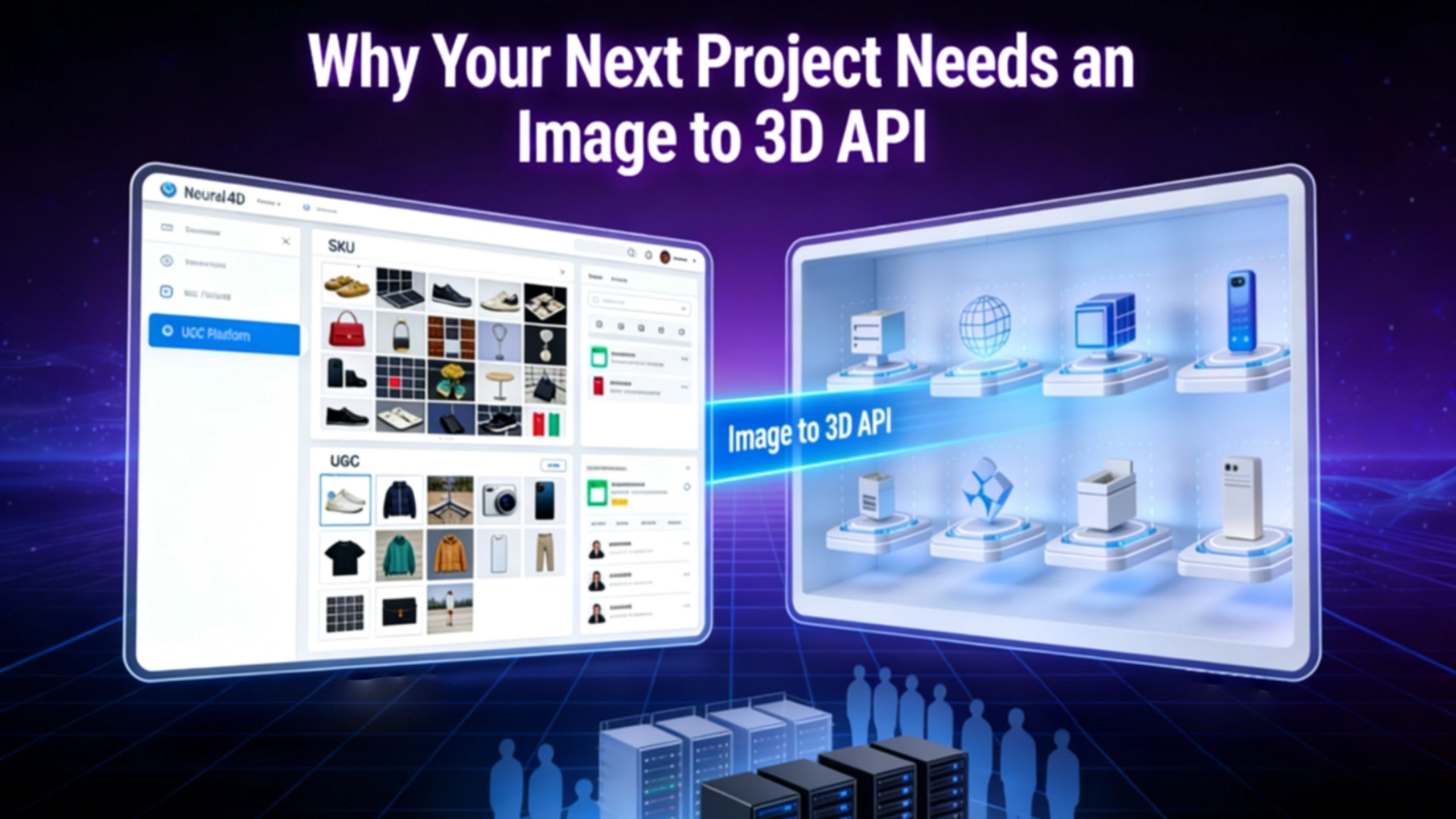
Why Your Next Project Needs an Image to 3D API
In the high-velocity digital landscape of 2026, manual 3D modeling has transitioned from a standard craft to a “legacy bottleneck.” With the 3D asset market projected to hit $37 billion this year, the industry is no longer asking if AI should be used, but how to integrate a professional Image to 3D API into existing CI/CD pipelines to achieve true scalability.
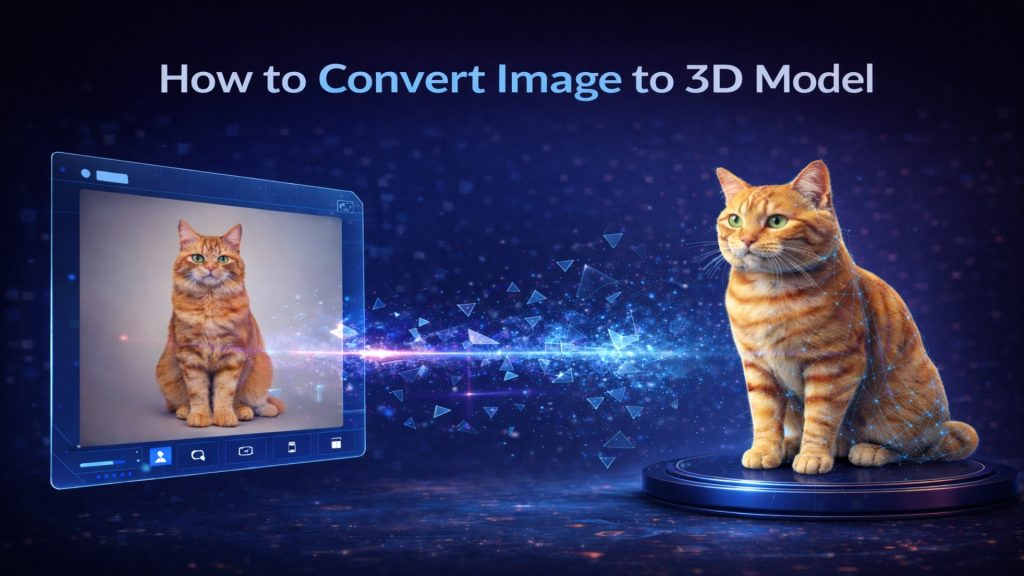
For enterprises managing thousands of SKUs or developers building dynamic UGC (User Generated Content) platforms, a 2D Image to 3D Model API is the only way to convert physical reality into a digital utility without the massive overhead of a traditional art department.
High-Fidelity Architecture: Inside the Neural4D Image to 3D API
Most early-stage 3D generators rely on visual “hallucination”, guessing the back of an object based on its front. Neural4D diverges from this via the N3D Paradigm, ensuring that every API call results in structurally sound, native 3D geometry rather than a simple visual reconstruction.
✅ The Power of 2048³ Spatial Resolution
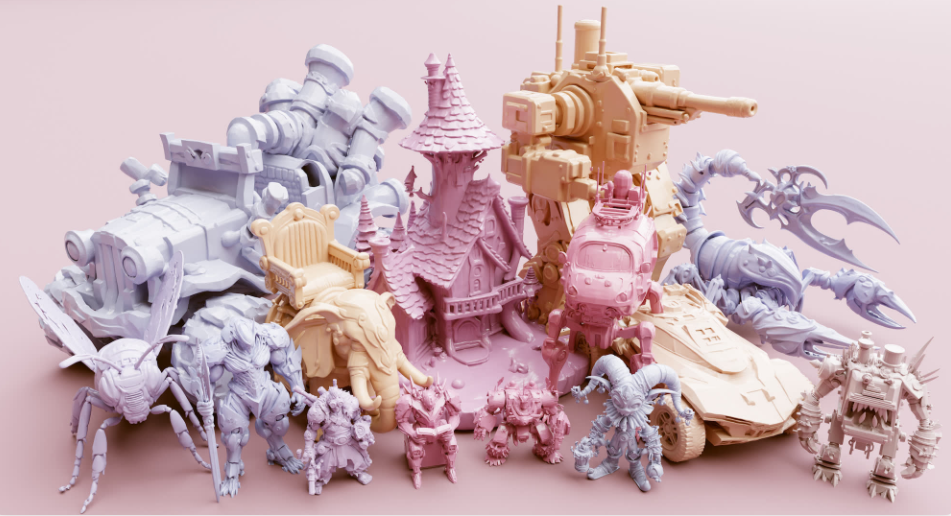
In the realm of 2D Image to 3D Model API solutions, precision determines the ROI. Neural4D’s Direct3D-S2 framework supports a staggering 2048³ resolution. This isn’t just a technical spec; it’s the difference between a blurry mesh and a pixel-aligned digital twin that mirrors its source photo with industrial accuracy.
✅ SSA Architecture: Achieving 3.9× Efficiency
Scalability requires efficiency. By utilizing Spatial Sparse Attention (SSA), the Neural4D API intelligently ignores empty voxels, focusing computational resources only on the active geometry. This architectural optimization delivers a 3.9× speedup, making high-concurrency batch processing viable for real-time applications.
Developer-First Integration: Deploying Your 2D Image to 3D Model API in Minutes
A robust API is only as good as its implementation. Neural4D is built with a “code-first” philosophy to ensure that shifting from a single prototype to an automated 3D pipeline is a frictionless experience for engineering teams.
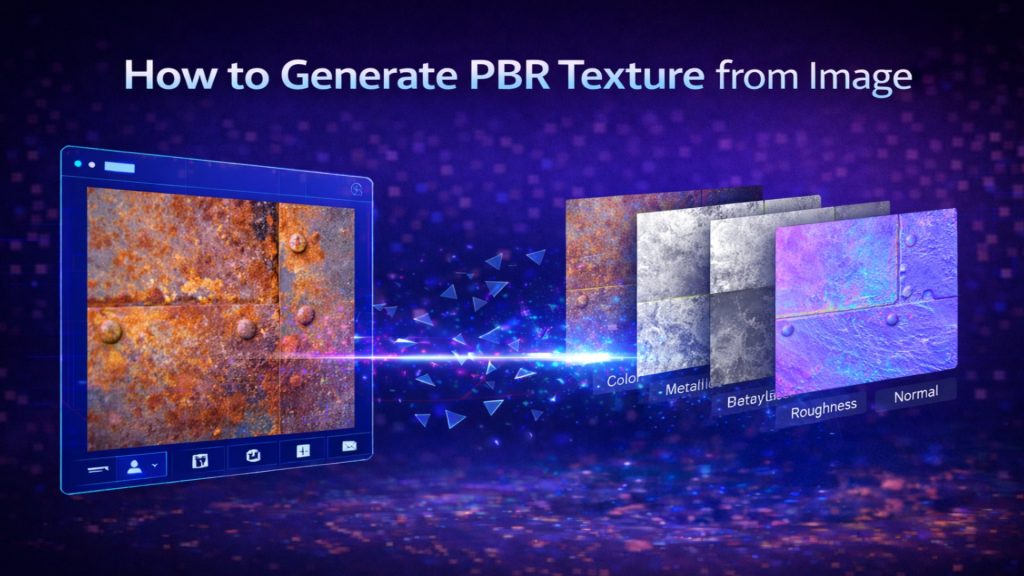
☑️ Production-Ready Formats: Forget about post-processing. The Image to 3D API natively exports in FBX, GLB, and USDZ, complete with PBR (Physically Based Rendering) materials that are engine-ready for Unreal Engine 5, Unity, or mobile AR.
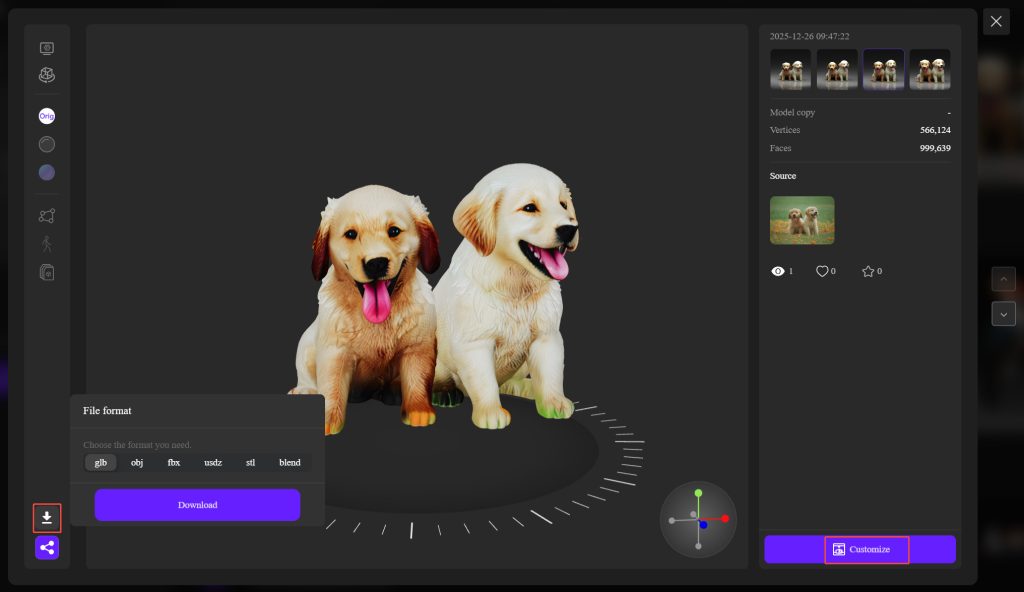
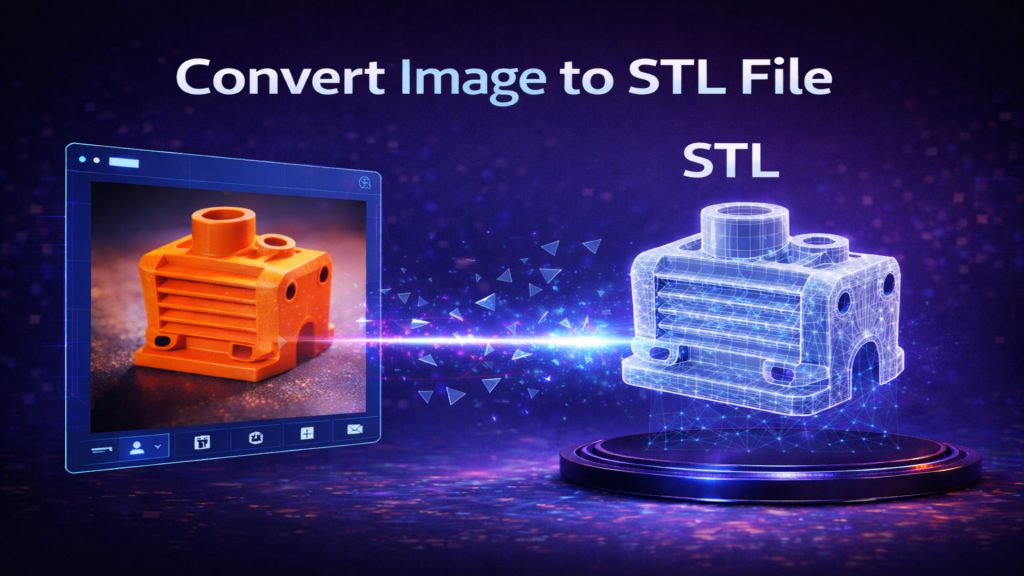
☑️ Watertight Mesh Integrity: Every asset generated is “watertight,” meaning it is structurally closed and ready for immediate 3D printing or complex physics simulations without the need for manual mesh repair.
☑️ A Low-Barrier Entry: To allow for technical stress-testing, Neural4D provides a starter balance of 600 free power for new developer registrations. This ensures you can tune your integration parameters and verify output quality before committing to an enterprise-tier volume.
Industrial Use Cases: Beyond Prototyping
The true value of an Image to 3D API lies in its ability to turn static content into interactive infrastructure at scale.
🛒 AR/VR & E-commerce Digitization
Retailers are moving beyond flat photography. By integrating a 2D Image to 3D Model API into their backend, brands can automatically transform product photos into immersive AR models. This automated SKU digitization has been shown to increase customer engagement by nearly 94%, turning a standard catalog into a 3D interactive gallery.
🎮 Gaming & Metaverse Scalability
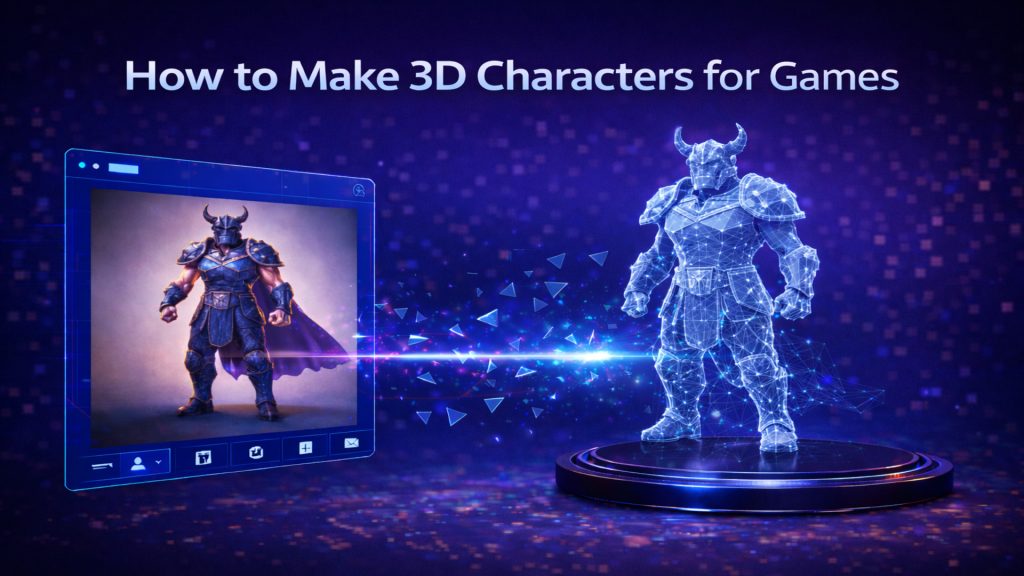
In the UGC gaming era, the API allows players to upload photos of real-world objects and see them instantly manifested as in-game assets. This “Photo-to-Asset” pipeline removes the friction of complex modeling tools, empowering a new generation of creators to build high-fidelity environments on the fly.
Read More: Build Production-Ready AI 3D Game Assets Easily with Neural4D
FAQs about Neural4D Image to 3D API
Q1: How does the Neural4D Image to 3D API handle lighting in the original image?
The N3D Paradigm is designed to decouple ambient lighting from the geometry, using a pixel-alignment mechanism to ensure the generated PBR textures remain consistent regardless of the source photo’s lighting conditions.
Q2: What is the concurrency limit for the Neural4D 2D Image to 3D Model API?
Thanks to the SSA (Spatial Sparse Attention) optimization, our infrastructure is built to scale. Enterprise accounts can handle thousands of parallel requests, making it ideal for large-scale batch processing of product catalogs or inventory.
Q3: Does the API support different mesh densities for mobile AR?
Yes. Developers can pass specific parameters to the Image to 3D API to define target polycounts, allowing for a balance between extreme 2048³ detail and mobile-optimized low-poly versions for faster web loading.
Q4: How do I manage API costs for high-volume production?
The API treats 3D generation as a variable cost. By starting with the 600 free power, teams can benchmark their consumption and move to professional or enterprise tiers as their volume increases.
Q5: Is Neural4D Image to 3D API free?
No, the Neural4D Image to 3D API is not totally free. But it has already been serviced at an ultra-low price.
Conclusion: The Move Toward 3D Asset Automation
In 2026, manual 3D asset creation is no longer the industry standard; it’s the bottleneck. The Neural4D Image to 3D API provides the high-resolution, architectural foundation needed to bridge the gap between 2D references and 3D reality. Whether you are digitizing retail SKUs or populating a metaverse, the era of automated 3D production is officially here.